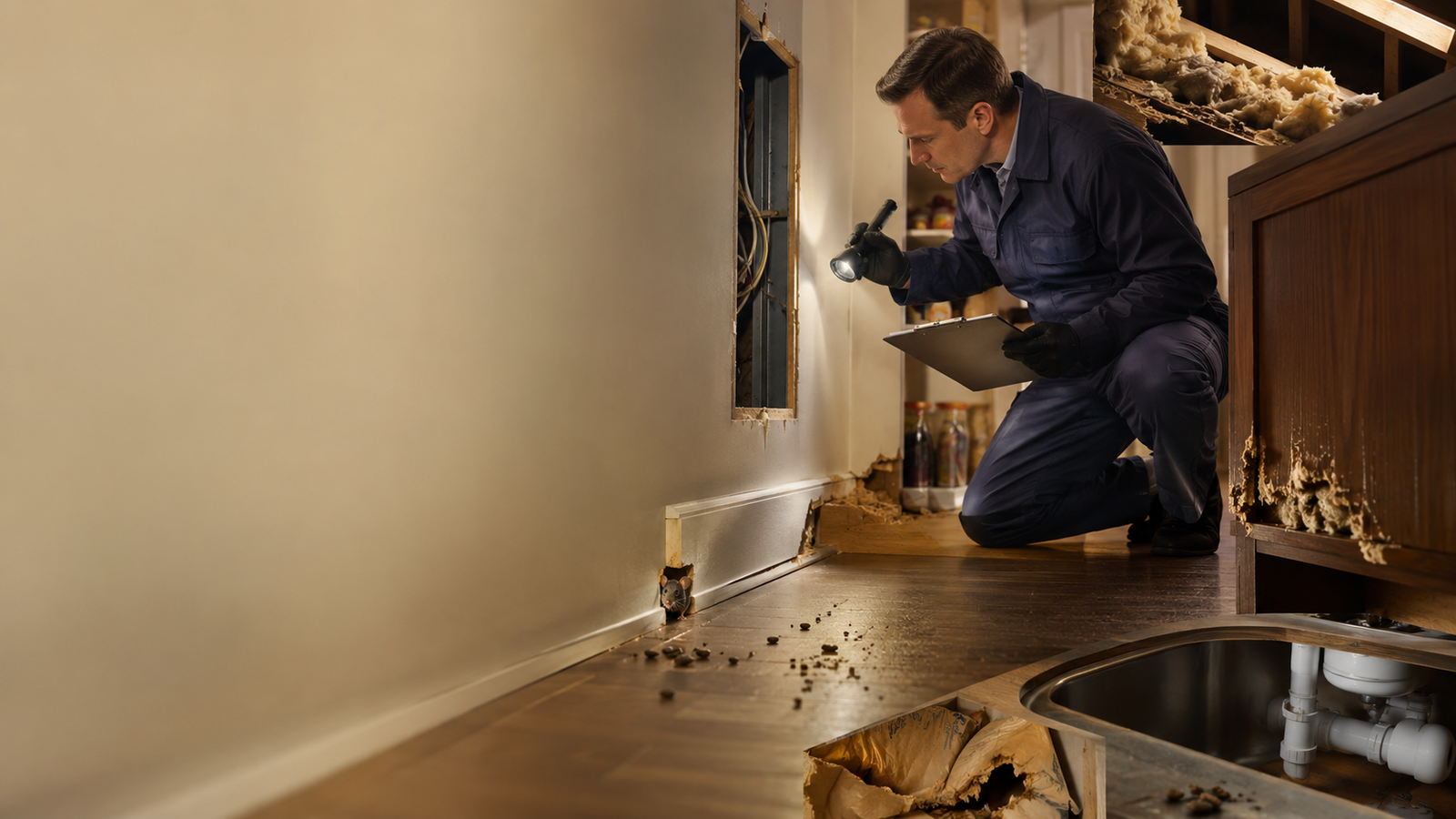
A single unsealed gap the width of a pencil is all it takes for a mouse to move in. A crack in your foundation no wider than a credit card is enough for cockroaches to slip through. If you want to keep your house free of unwanted visitors, learning how to pest proof home areas before an infestation starts is far more effective — and far cheaper — than dealing with one after the fact.
Every homeowner eventually faces the same short list of invaders: ants, cockroaches, termites, rodents, mosquitoes, spiders, and flies. Each one enters for a slightly different reason, but they all share the same basic needs — food, water, and shelter. When you pest proof home exteriors and interiors together, you remove those needs before pests ever get a foothold.
This guide walks through every entry point, every outdoor attractant, and every seasonal task involved in a complete pest proof home strategy, so you can protect your house and garden without waiting for the first sighting to take action.
Table of Contents
Why It Is Important to Pest Proof Home Areas
Deciding to pest proof home areas before you see a problem is one of the highest-value maintenance jobs a homeowner can take on. The benefits stack up quickly once you look at what’s actually at stake.
Prevention saves money. Sealing a foundation crack costs a few dollars in caulk. Repairing termite-damaged floor joists or rewiring chewed electrical lines can cost thousands. Every dollar spent on exclusion now avoids a much larger repair bill later.
It prevents structural damage. Termites and carpenter ants target the wooden framing that holds your house together, while rodents chew through wiring, insulation, and even plumbing. A home that’s properly sealed simply gives these pests nowhere to start.
It improves health. Cockroach droppings and shed skins are a documented asthma trigger. Rodents carry pathogens like Salmonella and Hantavirus. Mosquitoes transmit viral illness. Keeping pests outside keeps these risks outside too.
It reduces pesticide use. A house with sealed entry points and no standing water needs far less chemical intervention than one that’s constantly fighting active infestations. Exclusion is the least toxic form of pest control there is.
It protects pets. Fewer indoor pests means fewer pesticide applications near where your pets eat, sleep, and play — and it means less exposure to flea and tick populations that thrive in overgrown yards.
It protects food. A sealed pantry and a pest proof home kitchen keep ants, pantry moths, and rodents away from the food you and your family actually eat.
Taken together, these six benefits are why so many pest professionals describe prevention as the single best investment a homeowner can make in their property.
Common Entry Points Around the Home
Pests are opportunists. If your home has an unsealed gap, something will eventually find it — which is why identifying every entry point is the first real step to pest proof home areas that actually stay protected.
- Doors — gaps under exterior doors, especially without a proper sweep, are wide enough for insects and even small rodents to squeeze through. Even a gap as thin as a quarter-inch is enough for a mouse.
- Windows — torn screens or warped frames create openings for flying insects and small crawling pests alike, especially once a frame has swollen or shrunk with seasonal humidity changes.
- Utility pipes — the gaps around where pipes and cables enter the house are rarely sealed tightly at construction and become an easy highway for ants and rodents traveling between the yard and your walls.
- Foundation cracks — hairline cracks in concrete widen over time and give subterranean termites and ants direct access to your home’s interior framing.
- Roof vents — uncapped or damaged vents let squirrels, bats, and wasps establish nests directly in your attic space, often unnoticed for months.
- Crawl spaces — open vents and unsealed access doors provide a dark, humid environment that termites, spiders, and rodents actively seek out as a staging area before moving further into the home.
- Garage doors — worn weatherstripping along the bottom edge is one of the most overlooked entry points in the entire house, since most homeowners inspect windows and doors long before checking the garage.
- Attic openings — gable vents, soffit gaps, and areas where rooflines meet siding give squirrels and wasps easy access to insulation and wood framing.
Checking each of these eight zones twice a year is the single most effective habit in any pest proof home plan, since new gaps open naturally as caulk ages, wood shifts, and screens wear thin.
Outdoor Areas That Attract Pests
Before you can pest proof home exteriors effectively, you have to address what’s drawing pests toward the house in the first place. Outdoor conditions matter just as much as the physical gaps themselves.
- Mulch — thick layers against the foundation trap moisture and feed termites directly, especially in shaded areas that never fully dry out.
- Standing water — anything from a clogged flowerpot saucer to a low spot in the yard becomes a mosquito breeding ground within days, since mosquitoes need less than a tablespoon of water to complete their life cycle.
- Clogged gutters — trapped leaves and debris hold water against the roofline, creating conditions for both wood rot and insect activity right where your roof meets your walls.
- Compost piles — an unmanaged pile is an open invitation to flies, rodents, and foraging insects, particularly if food scraps sit exposed near the surface.
- Firewood — stacked against the house, it becomes a direct bridge for termites and a nesting site for spiders, especially once the bottom layers begin to decay.
- Shrubs — planted flush against siding, they trap moisture and give pests cover to approach the house undetected, day or night.
- Dense vegetation — overgrown grass and thick groundcover hold humidity that ticks and fleas depend on to survive between hosts.
- Outdoor lighting — standard white bulbs draw large numbers of flying insects directly toward doors and windows, increasing the odds some slip inside when the door opens.
- Trash bins — without tight lids, they provide an easy, constant food source for flies, rodents, and ants throughout the year.
- Bird feeders — spilled seed on the ground attracts rodents, which in turn can draw in secondary predators and further pest pressure near the house.
Addressing these ten outdoor conditions is just as central to a pest proof home plan as sealing the structure itself, since removing the attraction is often easier than blocking every possible entry point.
Best Ways to Pest Proof Home Exteriors
Once you know where pests get in and what draws them close, the actual work of exclusion is straightforward and mostly a matter of consistency.
Sealing cracks — use a quality silicone or polyurethane caulk on foundation gaps, and pack larger holes with steel wool before sealing, since rodents can chew through foam and standard caulk alone.
Weather stripping — replace worn strips around windows and doors annually, since UV exposure and temperature swings break the material down over time.
Door sweeps — install tight-fitting sweeps on every exterior door, checking that no daylight is visible underneath.
Repairing screens — patch or replace torn window and vent screens promptly rather than leaving small holes that will only grow larger.
Trimming vegetation — keep branches and shrubs at least two feet from siding and the roofline to eliminate natural bridges pests use to approach the structure.
Proper drainage — grade soil so it slopes away from the foundation, keeping the base of your home dry.
Removing standing water — empty containers and low spots after every rain, ideally on a weekly schedule.
Storing firewood correctly — keep stacks at least twenty feet from the house and raised off the ground on a rack.
Cleaning gutters — clear debris each spring and autumn so water flows away rather than pooling near the roofline.
Exterior inspections — walk the full perimeter of your home twice a year, checking for new cracks, damaged screens, and gaps that have opened since your last check.
Taken together, these ten steps form the practical core of any pest proof home plan — none of them require special tools, and most can be finished in a single weekend.
Pest-Proofing the Garden
A pest proof home strategy doesn’t stop at the foundation — a well-managed garden is just as important to keeping pressure off your house, since many indoor infestations start as an outdoor population that eventually moves inward.
Raised beds improve drainage and make it easier to monitor soil pests compared to in-ground planting.
Mulch management means using a thin, well-maintained layer rather than thick piles that trap moisture and attract termites and slugs.
Irrigation should be timed for early morning so foliage dries during the day, since prolonged leaf moisture invites fungal disease and certain pests.
Compost care requires a fully enclosed bin rather than an open pile, keeping rodents and flies away from decomposing scraps.
Plant spacing improves airflow between plants, reducing the humid microclimates that pests and disease both depend on.
Natural predators like ladybugs, lacewings, and birds provide free, ongoing pest suppression when you avoid broad-spectrum pesticides that kill beneficial insects along with the target pest.
Integrated Pest Management ties all of this together — combining physical barriers, biological controls, and targeted treatment only when needed, rather than routine blanket spraying.
A garden managed this way becomes an extension of your pest proof home efforts rather than a separate project, since it removes the outdoor populations that would otherwise migrate toward the house.
Seasonal Pest-Proofing Checklist
Pest pressure shifts throughout the year, so your pest proof home routine should shift with it. Treat this as a recurring checklist rather than a one-time task list.
| Season | Tasks | Common Pests |
|---|---|---|
| Spring | Repair screens, check for termite swarmers, clear gutters, seal winter-cracked foundation gaps | Termites, ants, early mosquitoes |
| Summer | Empty standing water weekly, maintain kitchen sanitation, monitor for wasp nests, keep vegetation trimmed | Mosquitoes, wasps, flies, cockroaches |
| Autumn | Seal gaps before rodents seek warmth, inspect firewood before storing, check weatherstripping | Rodents, spiders, stink bugs |
| Winter | Keep attics and crawl spaces ventilated, inspect stored items for signs of nesting | Rodents, overwintering insects |
Working through this table every three months is often all it takes to keep a pest proof home routine on track without it ever feeling like a big project.
Common Mistakes Homeowners Make
Even well-intentioned homeowners can undermine their own efforts to pest proof home areas without realizing it. These small oversights are responsible for the majority of preventable infestations.
- Ignoring moisture — a small, persistent leak under a sink can sustain an entire cockroach or termite population for months, even in an otherwise spotless kitchen.
- Leaving pet food outside — an overnight bowl is an easy, reliable meal for rodents and ants, and one of the most common reasons a yard develops a recurring pest problem.
- Storing cardboard — boxes in a garage or basement provide both shelter and a food source, since roaches and silverfish feed on the starch-based glue holding the material together.
- Overgrown vegetation — branches touching the roofline give pests a direct bridge past every other exclusion effort, no matter how well the rest of the house is sealed.
- Clutter — stacks of unused items create hiding spots that make inspection and treatment far more difficult, both for you and for a professional if one is eventually needed.
- DIY mistakes — spraying visible pests with repellent products often scatters a colony rather than eliminating it, pushing the problem deeper into wall voids instead of solving it.
- Ignoring early signs — a few ants or a single dropping are far easier to address than an established, breeding population, so early action always pays off.
Avoiding just these seven habits removes most of the risk that undoes an otherwise solid pest proof home effort.
Professional Pest Prevention Tips
After inspecting hundreds of homes, licensed technicians tend to notice the same patterns again and again when it comes to helping a family pest proof home areas for the long term. The properties that stay pest-free long-term are rarely the ones treated most aggressively with chemicals — they’re the ones where exclusion work is done consistently and revisited every season.
A trained eye looks first at moisture. Nearly every serious indoor infestation, whether it’s cockroaches, termites, or silverfish, traces back to a hidden leak or a humid, unventilated space. Fixing that root cause does more long-term good than any spray.
Professionals also lean heavily on Integrated Pest Management rather than routine spraying. IPM starts with inspection and identification, moves to exclusion and sanitation, and treats chemically only as a targeted last step. This approach uses less product, causes fewer callbacks, and holds up better over time than a blanket perimeter spray applied on a fixed schedule regardless of actual pest pressure.
If you want a professional-level result on your own, walk your property the way a technician would: flashlight in hand, checking foundation lines, utility penetrations, and attic vents twice a year, rather than waiting for an obvious sign of activity.
Technicians also stress documentation. Keeping a simple log of what you sealed and when makes it far easier to spot new gaps on your next inspection, and it’s the same habit that lets a professional track long-term success on any property they service.
Frequently Asked Questions
What does it mean to pest proof home exteriors? It means sealing every realistic entry point — cracks, gaps around pipes, damaged screens, and worn weatherstripping — so insects and rodents have no easy way inside.
How often should I inspect my home for pest entry points? Twice a year is generally enough for most homes, ideally in spring and autumn when seasonal pest pressure shifts.
Can I pest proof my home without using chemicals? Yes. Sealing, moisture control, and sanitation address the root causes of most infestations, and many homes stay pest-free with little to no chemical treatment.
Does mulch really attract termites? Yes. Thick wood mulch against a foundation holds moisture and provides a food source, both of which draw termites toward the structure.
What is the cheapest way to pest proof home entry points? Caulk, steel wool, and door sweeps are inexpensive and handle the vast majority of common gaps around doors, pipes, and foundations.
Do ultrasonic pest repellers help pest proof a home? No. Independent testing consistently shows these devices provide little to no measurable long-term protection.
How does standing water affect pest pressure around my house? Even a small amount of standing water can support a mosquito breeding cycle within days, so eliminating it is one of the highest-impact steps you can take.
Should I trim plants away from my house even if I don’t see pests? Yes. Vegetation touching the siding or roofline is a preventable bridge for pests regardless of whether you’ve noticed activity yet.
What’s the most commonly overlooked entry point? Garage doors. Worn weatherstripping along the bottom edge is frequently ignored compared to more obvious gaps like windows or foundation cracks.
Can a clean house still get pests? Yes. Sanitation reduces the odds significantly, but structural gaps and outdoor conditions can still let pests in even when the interior is spotless — which is exactly why exterior work matters just as much in any pest proof home plan.
How does Integrated Pest Management fit into a pest proof home plan? IPM combines inspection, exclusion, sanitation, and targeted treatment, making it a more sustainable long-term approach than routine spraying alone.
When should I call a professional instead of handling prevention myself? If you find active termite damage, a large rodent population, or recurring infestations despite consistent DIY exclusion work, a licensed professional can identify gaps a homeowner might miss and help you pest proof home areas more thoroughly.
Is it ever too late to pest proof home areas after an infestation has started? No. Sealing entry points and removing attractants still helps even during an active infestation, since it stops new pests from joining an existing population while treatment is underway.
Conclusion
A genuinely pest proof home isn’t the result of one big treatment — it’s the result of consistent, seasonal maintenance that closes gaps before pests find them. Sealing entry points, managing outdoor moisture, and keeping the garden tidy all work together to keep ants, cockroaches, termites, rodents, mosquitoes, spiders, and flies on the outside where they belong.
Make exterior inspections a regular habit, adjust your routine with the seasons, and treat prevention as ongoing maintenance rather than a one-time project. For more detailed guidance, explore our Household Pest Guide, our Pest Prevention Guide, our Outdoor Pests Guide, our Seasonal Pest Guide, our Pest Identification Guide, our Integrated Pest Management Guide, our Best Pest Control Products for Home, our Signs of Pest Damage guide, our Rodent Damage Guide, our Cockroach Prevention Guide, and our Termite Prevention Guide for a complete, room-by-room and season-by-season approach to keeping your property protected.
References and Further Reading
EPA: Citizen’s Guide to Pest Control and Pesticide Safety · CDC: Healthy Housing Reference Manual · UC IPM: Home and Landscape Pest Solutions · National Pesticide Information Center (NPIC) · University of Florida IFAS Extension · Clemson Cooperative Extension · Colorado State University Extension