Discovering unexpected bugs or rodents inside your living space is always frustrating. Whether it’s a line of ants marching across the kitchen counter, a late-night cockroach scramble, or a hidden termite colony chewing through structural framing, household pests are a universal challenge.
Pests enter our properties strictly out of necessity, seeking shelter, water, and food. Understanding their biology, habits, and entry points is the first step toward long-term eradication. This guide covers everything you need for accurate identification, prevention, and targeted control of household pests.
Table of Contents
What Are Household Pests?
In urban entomology, household pests are defined as insects, arachnids, or rodents that establish populations inside human structures. They cause structural damage, health hazards, or psychological distress.
Common characteristics: most indoor pests are nocturnal, highly adaptable, small, and capable of reproducing rapidly in hidden environments.
Why they enter homes: your house is an oasis for wildlife. When outdoor conditions turn hostile — extreme heat, heavy rain, or freezing winters — pests seek refuge. They enter through tiny structural flaws, missing weatherstripping, or unsealed utility lines, drawn in by exposed food, rotting trash, and hidden plumbing condensation.
Common Types of Household Pests
Managing an infestation effectively requires knowing exactly what you’re fighting. Different household pests demand entirely different treatment strategies.
| Pest | Common Habitat | Main Risks | Difficulty to Control |
|---|---|---|---|
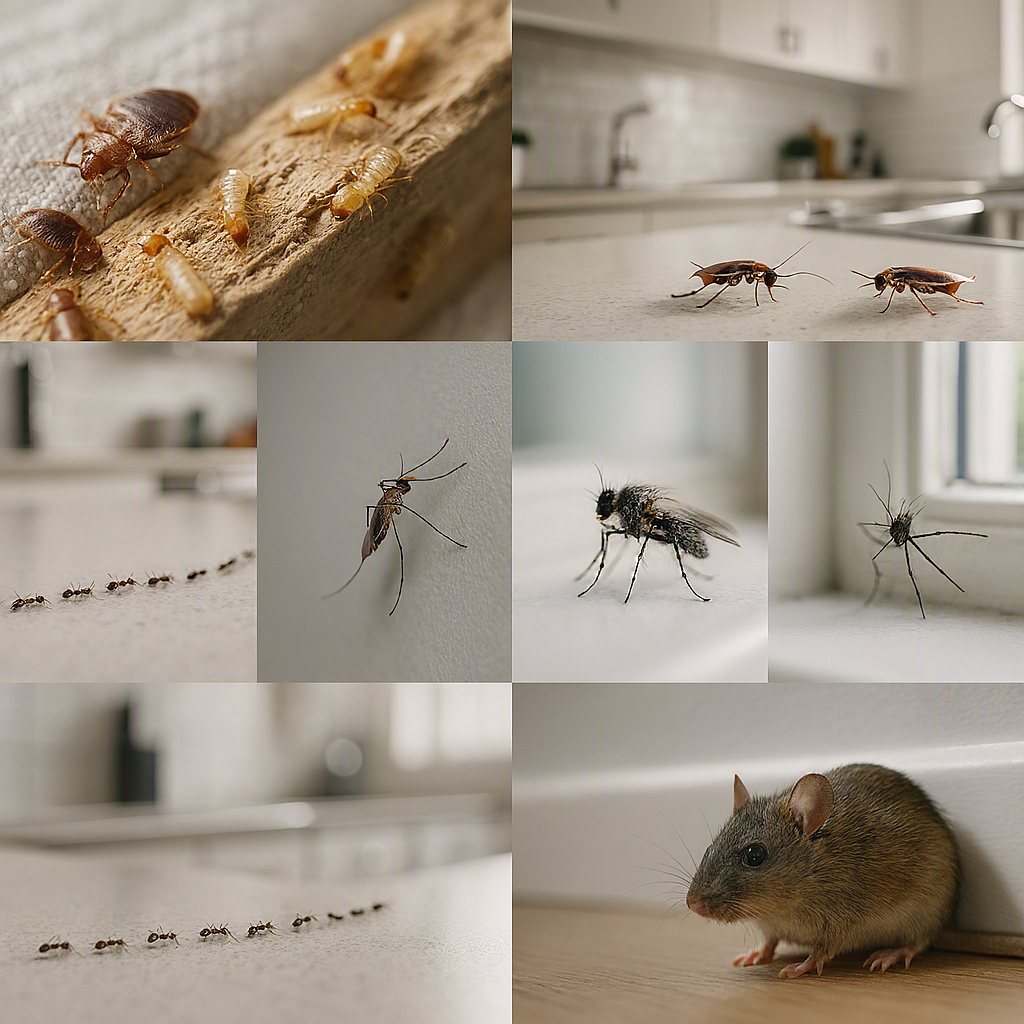
| Cockroaches | Kitchens, bathrooms, warm appliance motors | Salmonella, asthma triggers, food spoilage | High |
| Ants | Wall voids, beneath slabs, near sweet food | Food contamination, structural damage (carpenter ants) | Moderate |
| Termites | Structural framing, soil, damp crawl spaces | Severe structural wood collapse | Very High |
| Bed Bugs | Mattress seams, bed frames, furniture joints | Painful bites, sleep loss, stress | Very High |
| Rodents | Attics, basements, wall insulation | Wire chewing (fire hazard), Leptospirosis, fleas | High |
| Mosquitoes | Stagnant water, dense shaded foliage | West Nile virus, Zika, itchy bites | Moderate |
| Flies | Trash bins, exposed food, rotting matter | Rapid food contamination, bacteria spread | Low |
| Spiders | Dark corners, basements, crawl spaces | Rarely dangerous; hunt other bugs | Low |
| Fleas | Pet fur, carpets, upholstery, bedding | Tapeworms, anemia in pets, itchy bites | Moderate |
| Ticks | Tall grass, wooded borders, pet fur | Lyme disease, Rocky Mountain spotted fever | Moderate |
How to Identify Household Pests
Accurate identification prevents you from wasting time and money on the wrong control product.
- Physical appearance: a termite has a thick waist and straight antennae; an ant has a pinched waist.
- Droppings: rodent droppings look like dark, pointed grains of rice. Cockroach feces resemble coarse black pepper along cabinet corners.
- Structural damage: clean, smooth tunnels point to carpenter ants; wood packed with mud points to subterranean termites. Chewed wires signal mice or rats.
- Odors: heavy German cockroach activity produces a musty, oily smell. Bed bugs emit a sweet, coriander-like odor in large numbers.
- Sounds: scratching inside drywall at night usually means mice or rats.
- Nesting signs: shredded paper and insulation point to rodents; mud tubes on foundation walls point to termites.
Why Household Pests Are a Problem
Ignoring a few stray bugs can quickly escalate into serious consequences.
- Health risks: rodents, flies, and cockroaches carry Salmonella and E. coli, spreading bacteria across food prep areas.
- Property damage: termites and carpenter ants destroy support beams; rodents chew through pipes and wiring, creating fire and water damage risks.
- Food contamination: insects and mice ruin pantry goods by chewing packaging and leaving behind hair, urine, and droppings.
- Allergies and asthma: shed skins and droppings from cockroaches and dust mites are potent airborne allergens.
- Emotional stress: an active infestation causes sleep loss, anxiety, and lowered quality of life.
How to Prevent Household Pests
A strong defensive perimeter is far easier to maintain than eradicating an active colony.
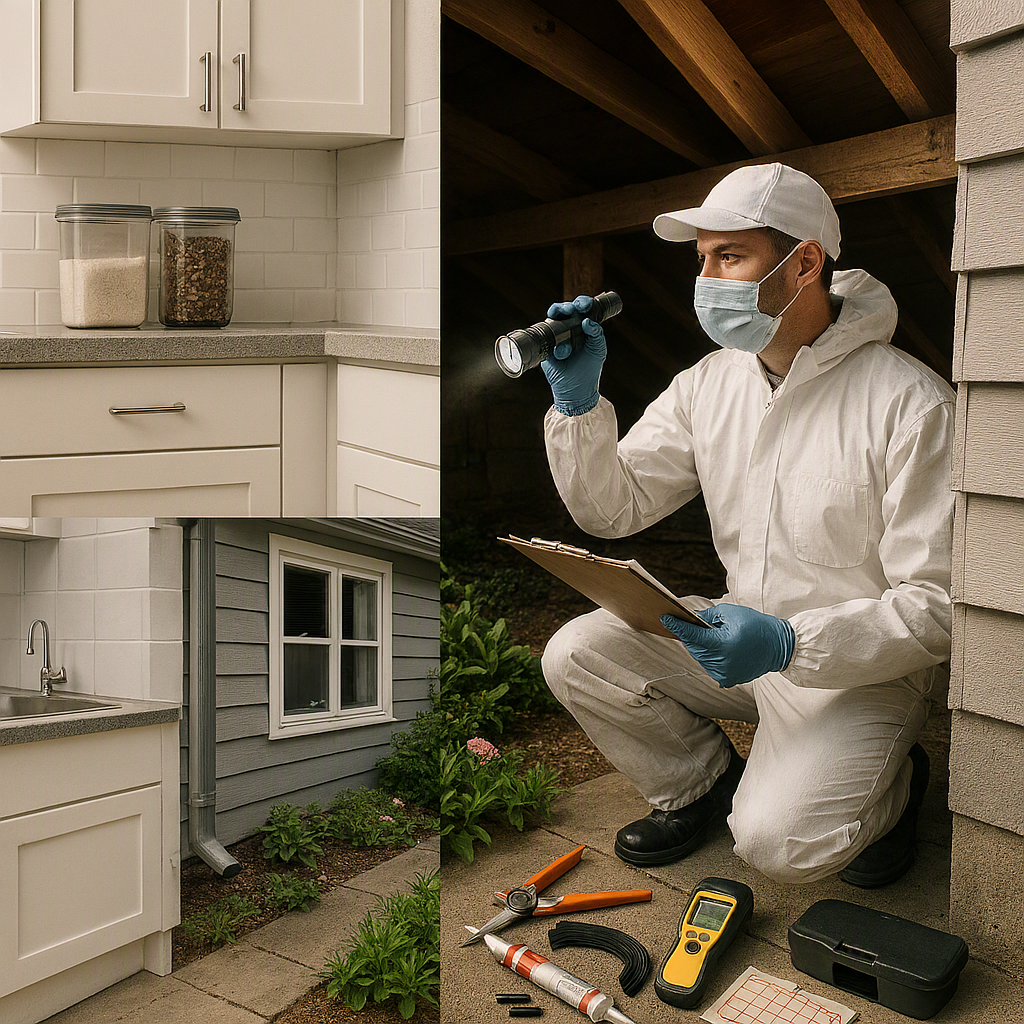
Cleaning and food storage: wipe counters, sweep crumbs, and wash dishes immediately after meals. Store dry goods in airtight containers instead of thin cardboard. Never leave pet food out overnight.
Moisture control: repair dripping plumbing right away. Use a dehumidifier to keep basements below 50% humidity. Clear drains and gutters twice a year so water flows away from your foundation.
Home and yard maintenance: seal foundation cracks and gaps with silicone caulk and steel wool. Fit exterior doors with proper door sweeps. Trim branches back at least 12 inches from your roofline, and store firewood 20 feet from the structure.
How to Get Rid of Household Pests
When pests bypass your preventative barriers, a systematic response is needed.
Integrated Pest Management (IPM): rather than spraying broad-spectrum chemicals blindly, combine accurate identification, strict sanitation, mechanical exclusion, and targeted baiting to eliminate infestations at the source.
DIY strategies:
- Traps: snap traps for rodents, sticky glue boards for crawling bugs
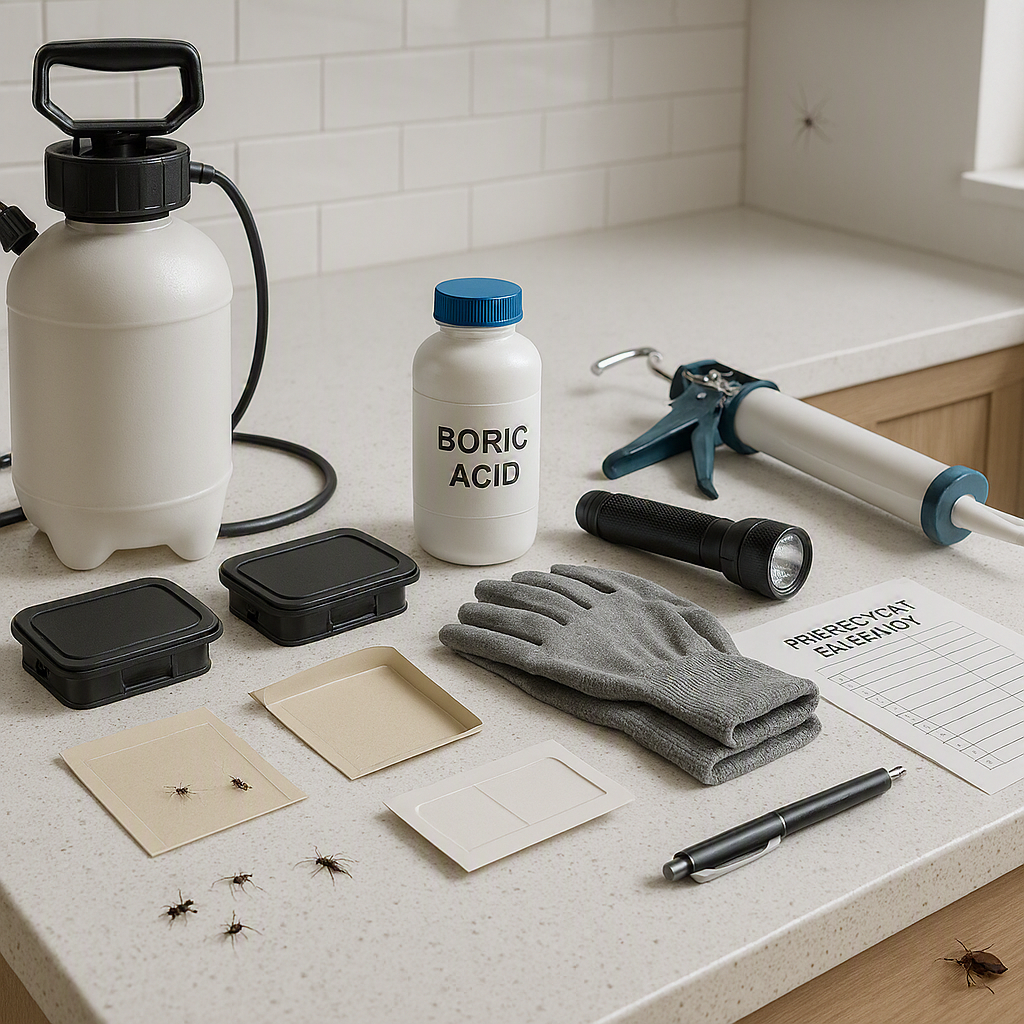
- Baits: slow-acting gel baits for ants and cockroaches, which carry the active ingredient back to the nest
- Residual sprays: non-repellent liquid barriers along foundation lines and doorways
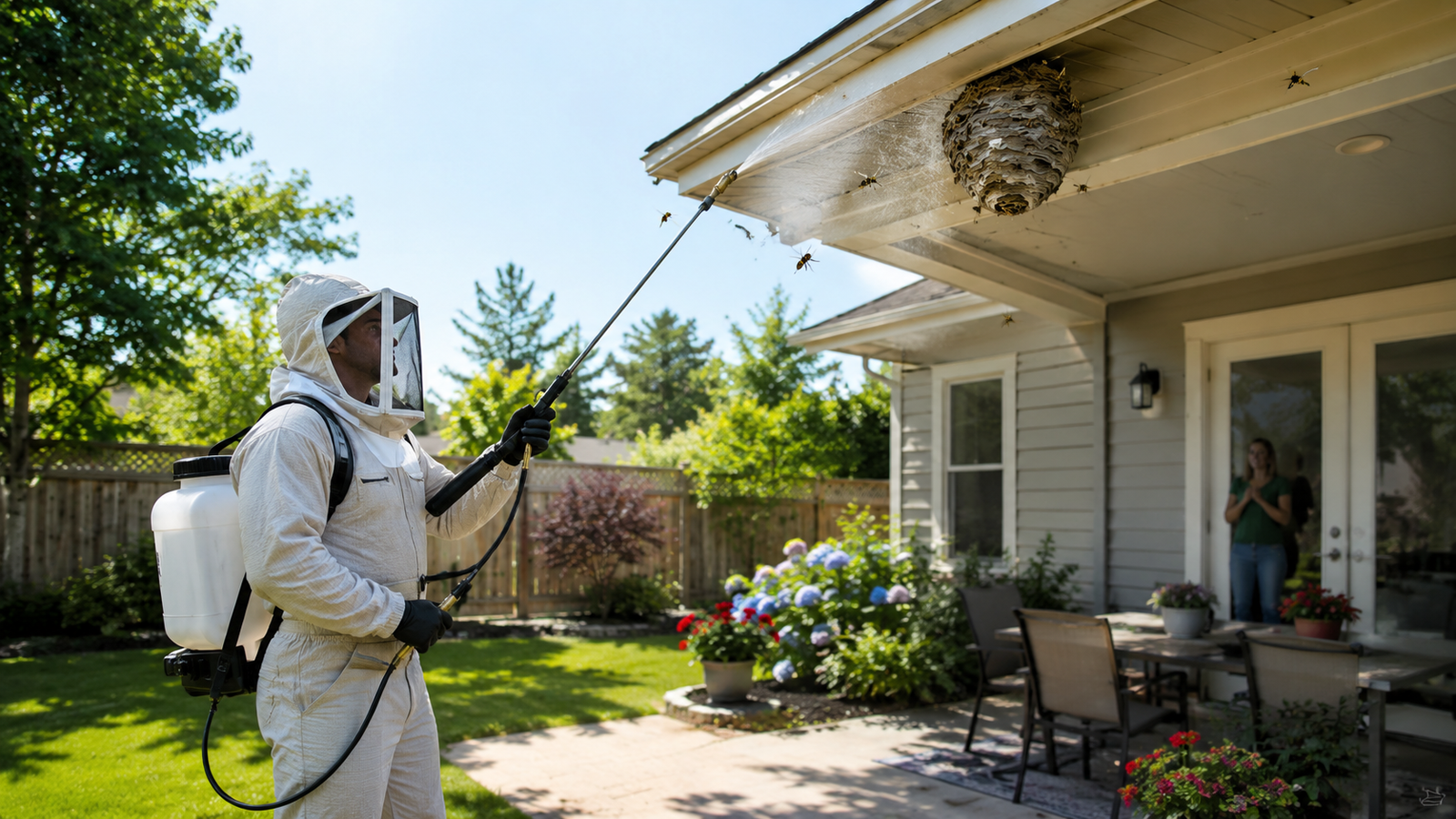
When to call a professional: if traps still catch pests after three weeks of consistent DIY effort, or you find structural wood damage, termite swarms, or an embedded bed bug infestation, bring in a licensed exterminator. Professionals have access to restricted IGRs, thermal treatment equipment, and specialized tools.
Recommended Pest Control Products
Match the product category to your target pest’s biology:
- Sprays: best for exterior perimeter barriers and knocking down flying insects; choose non-repellent formulas for social insects
- Gel baits: the gold standard for indoor ants and roaches, applied precisely inside cracks and hinges
- Tamper-resistant bait stations: safest option for homes with pets or young children
- Mechanical and sticky traps: essential for pesticide-free monitoring
- Insecticide dusts: best for dry wall voids and electrical boxes; effective for years if kept dry
- Natural repellents: essential oil sprays like peppermint or rosemary work well along windowsills and doors
Frequently Asked Questions
What attracts pests into a clean house? Even a spotless home can attract pests seeking water, warmth, or shelter during extreme weather, or pests can hitchhike in through delivery boxes and grocery bags.
How do I identify a termite vs. a flying ant? Termites have a uniform, thick waist and straight antennae, with four equal-length wings. Ants have a pinched waist, elbowed antennae, and shorter hind wings.
What’s the most effective way to eliminate an ant colony? Slow-acting liquid or gel baits work best. Foraging ants carry the bait back to the queen, collapsing the colony from within.
Can cockroaches climb up drain pipes? Yes. American and Oriental cockroaches can crawl up drains if the pipe’s water trap dries out or has a buildup of organic slime.
Is boric acid safe around pets? It has low mammalian toxicity but isn’t harmless. Apply it only as a thin, barely visible dust deep inside wall voids or behind appliances.
Why am I seeing more bugs after applying bait? This is normal — bait is designed to draw pests out of hiding to eat the active ingredient.
Do ultrasonic pest repellers work? No. University and federal testing has consistently shown these plug-in devices don’t provide effective long-term control.
How long do residual sprays last? Indoor residual sprays typically last 60–90 days; exterior sprays usually break down within 30–60 days.
Can bed bugs travel from room to room? Yes, through wall voids, electrical conduits, and baseboard gaps between adjacent rooms or units.
What naturally repels mice? Concentrated peppermint oil, crushed garlic, and clove oil work as temporary deterrents, though physical exclusion is needed for permanent control.
Key Takeaways
- Identify first — accurate identification determines the right control product
- Deny food and water — secure pantry goods, pick up pet bowls at night, fix leaks
- Seal entry paths — caulk, door sweeps, and steel wool fortify your home’s perimeter
- Target the nest — slow-acting baits eliminate whole colonies more effectively than contact sprays
Managing household pests long-term comes down to identification, prevention, and choosing the right product for the job. For species-specific guidance, check our Cockroach Prevention Guide, Termite Prevention Guide, or browse our Pest Control Products Buyer’s Guide.
Sources:
EPA: Integrated Pest Management Principles ·
CDC: Rodent Control and Prevention ·
NPIC: Understanding and Identifying Pests ·
UC IPM: Home and Landscape Pests ·
Purdue University Extension: Household Pest Resources