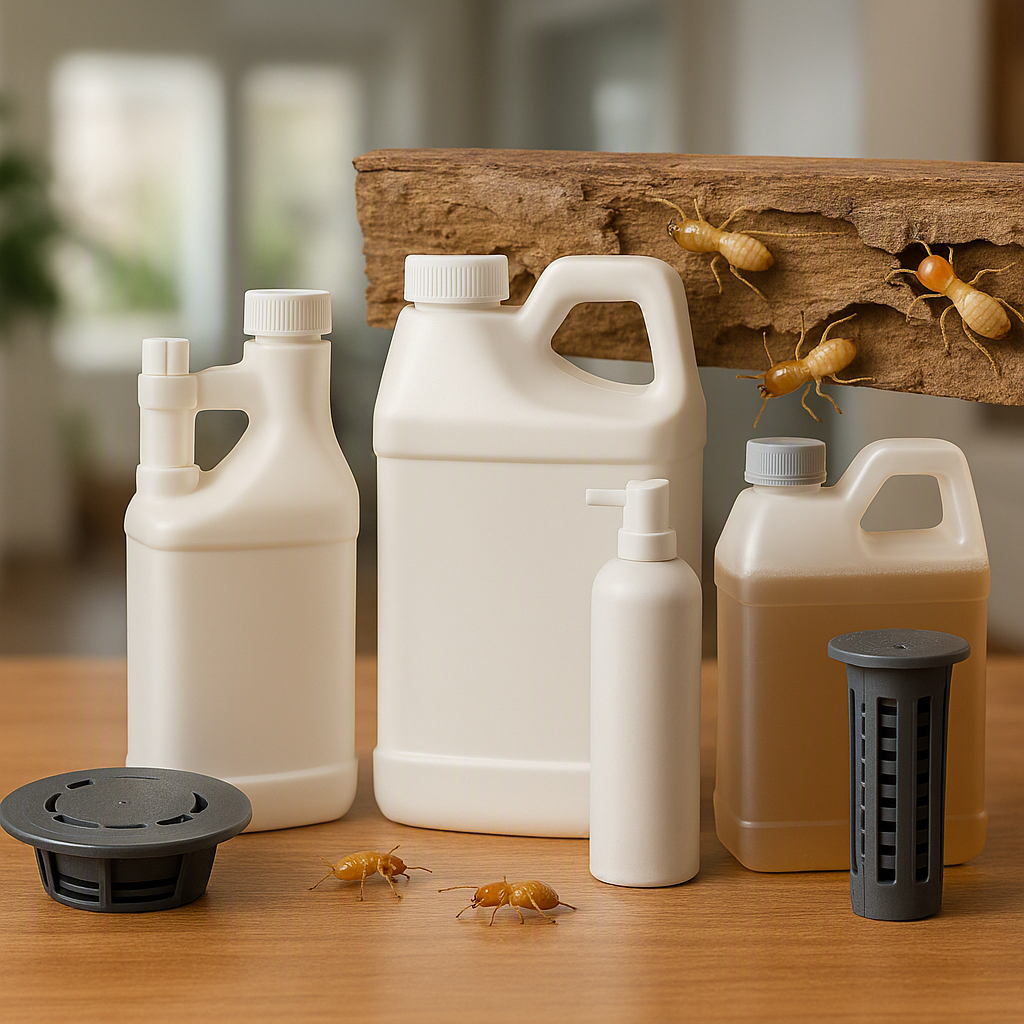
Finding the best termite treatment before damage sets in can save you thousands of dollars in structural repairs. Termites work silently, often chewing through wood, flooring, and support beams for months before any visible sign appears.
Most homeowners don’t realize they have a problem until they spot hollow-sounding wood or discarded wings near a windowsill. By then, the colony is usually well established. This guide breaks down the best termite treatment options for 2026, so you can act early and protect your home the right way.
Table of Contents
Understanding the Best Termite Treatment Options
Termite control isn’t a one-and-done job. A single product rarely handles an entire colony, since termites nest deep underground or inside wall voids you can’t see.
A subterranean termite colony can contain hundreds of thousands of workers. That’s why the best termite treatment strategy usually combines more than one method, targeting both the visible activity and the hidden nest.
Liquid Termiticides vs Bait Systems
Liquid termiticides are applied around the foundation, creating a treated barrier termites can’t cross without contact. Modern non-repellent formulas are especially effective, since termites can’t detect them and unknowingly carry the chemical back to the colony.
Bait systems work differently. Stations placed around the yard contain a slow-acting substance that foraging termites carry back to share with the colony, similar to how cockroach gel baits work. This makes bait systems one of the best termite treatment choices for eliminating an entire nest rather than just the termites you can see.
Identifying Your Termite Species
Different species call for different approaches:
- Subterranean termites — build mud tubes, need soil contact, most common and destructive
- Drywood termites — live inside dry wood, no soil contact needed, harder to detect
- Dampwood termites — prefer moisture-damaged wood, often linked to leaks
Subterranean termites usually respond best to liquid barriers or bait stations. Drywood termites often require localized foam or fumigation since they live inside the wood itself.
Signs You Have a Termite Infestation
Watch for these warning signs around your home:
- Mud tubes running along foundation walls
- Hollow-sounding or blistered wood
- Discarded wings near windows and doors
- Small piles of frass (termite droppings) resembling sawdust
- Doors or windows that suddenly stick
If you notice several of these together, the infestation is likely established enough to need a full best termite treatment plan rather than a single spot fix.
Choosing the Best Termite Treatment for Your Home
| Treatment Type | Best For | Pros | Cons |
|---|---|---|---|
| Liquid Termiticide | Perimeter barriers | Long-lasting, kills on contact | Requires drilling/trenching |
| Bait Stations | Whole-colony elimination | Targets the nest | Slower results |
| Foam Treatments | Wall voids, localized spots | Precise application | Doesn’t cover large areas |
| Wood Treatments | Drywood termites | Direct, targeted | Limited to treated area |
| Fumigation | Severe drywood infestations | Whole-structure coverage | Requires vacating home |
Step-by-Step Treatment Plan
- Inspect the foundation, crawl space, and attic for mud tubes or damage.
- Confirm the termite species before choosing a product.
- Apply a liquid termiticide barrier around the foundation if subterranean termites are active.
- Add bait stations around the yard for long-term colony control.
- Treat any localized drywood activity with foam or direct wood treatment.
- Monitor bait stations and inspection points every few months.
- Reapply or refresh treatments according to product label instructions.
Natural and Non-Toxic Alternatives
For homeowners wanting to limit chemical exposure:
- Beneficial nematodes — microscopic organisms that target termite larvae in soil
- Orange oil — effective for localized drywood termite spots
- Borate wood treatments — applied during construction or renovation for prevention
- Moisture control — fixing leaks and improving drainage removes conditions termites need
These options work best for prevention or very light activity, and are usually paired with monitoring rather than used as a standalone cure for an established colony.
DIY vs Professional Treatment
Bait stations and basic monitoring are reasonable DIY projects. However, liquid termiticide barriers require precise drilling and trenching around the entire foundation, which is difficult to do correctly without professional equipment.
If you’re dealing with an active, established colony or drywood termites deep inside structural wood, a licensed professional can access areas and use application methods a homeowner typically can’t.
Common Mistakes to Avoid
- Treating only visible activity while ignoring the underground colony
- Skipping species identification, which leads to the wrong product choice
- Ignoring moisture issues that keep attracting new termites
- Stopping treatment too early — bait systems can take several months to eliminate a colony fully
Frequently Asked Questions
What is the single best termite treatment? There’s no single product that fits every situation, but non-repellent liquid termiticides and in-ground bait systems are considered the most reliable for subterranean termites, which are the most common species.
How long does termite treatment last? Liquid termiticide barriers typically last 5–10 years, while bait stations require ongoing monitoring and periodic bait replacement.
Can I treat termites myself? Light, localized activity can sometimes be managed with DIY bait stations or foam, but established colonies usually need professional-grade equipment and licensed application.
Does termite treatment kill the whole colony? Bait systems are designed to eliminate the full colony over time. Liquid barriers mainly prevent termites from entering rather than eliminating an existing nest.
When should I call a professional? If you find mud tubes, structural damage, or an active swarm, it’s time to bring in a licensed pest control professional for a full inspection.
Conclusion
The best termite treatment plan combines species identification, the right product for your termite type, and consistent monitoring over time. Acting early is what protects your home’s structure and your budget. Check our Pest Identification Guide to confirm your termite species, or browse our Home Pest Control resources for a full prevention plan.
Sources:
EPA: Termite Control and Safety ·
CDC: Pests and Pesticides ·
UC IPM: Termite Management ·
University of Florida Extension