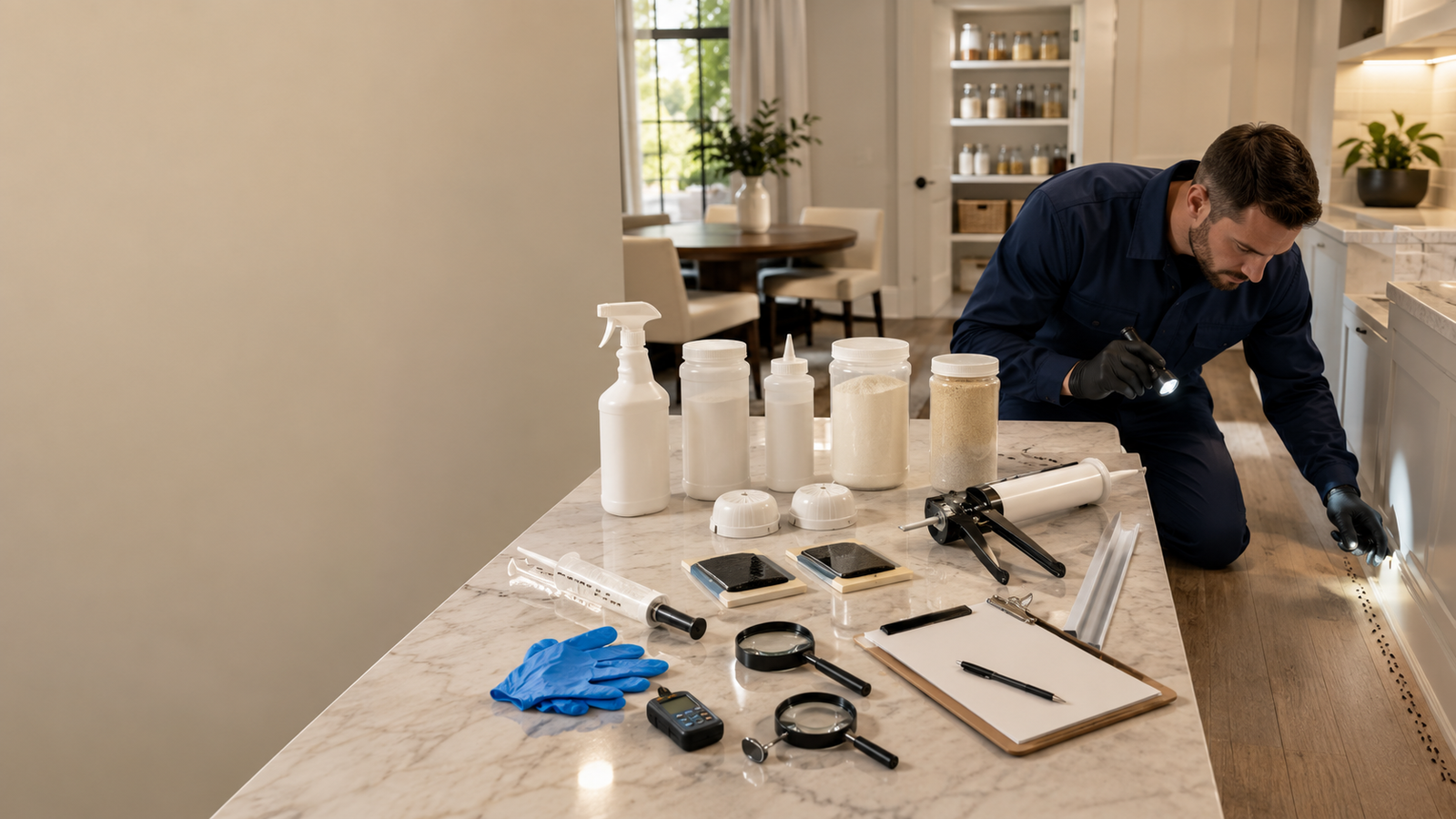
Finding the best ant killers is often the first step in reclaiming your home from a persistent trail of unwanted invaders. Whether you are dealing with a few scouts in the kitchen or a massive colony under your foundation, an effective strategy requires more than just a quick spray. Ant colonies are highly organized, social structures; if you only eliminate the workers you see, the queen remains safe, and the infestation continues to thrive.
To truly stop an invasion, you need a professional-grade approach to DIY ant control. This guide breaks down the most effective ant killer products available in 2026, helping you select the right ant control products for your specific situation. By understanding the biology of these pests and utilizing targeted treatments, you can achieve long-term success.
Table of Contents
Why You Need the Best Ant Killers
Ants are some of the most resilient pests on the planet. They communicate through complex pheromone trails, allowing the colony to mobilize quickly toward food sources and away from danger. When homeowners use the wrong ant treatment, they often trigger a reaction called “budding,” where a stressed colony splits into several smaller, satellite colonies. This makes a manageable problem exponentially worse.
Using the best ant killers ensures that the insecticide is carried deep into the nest, neutralizing the queen and the brood. Whether you need an indoor ant killer to handle a sudden kitchen breach or an outdoor ant killer to create a perimeter defense, choosing the right formulation is essential for effective home pest control.
Types of Best Ant Killers
The market is flooded with options, but not all solutions work for every species. Understanding the mechanism of action is key.
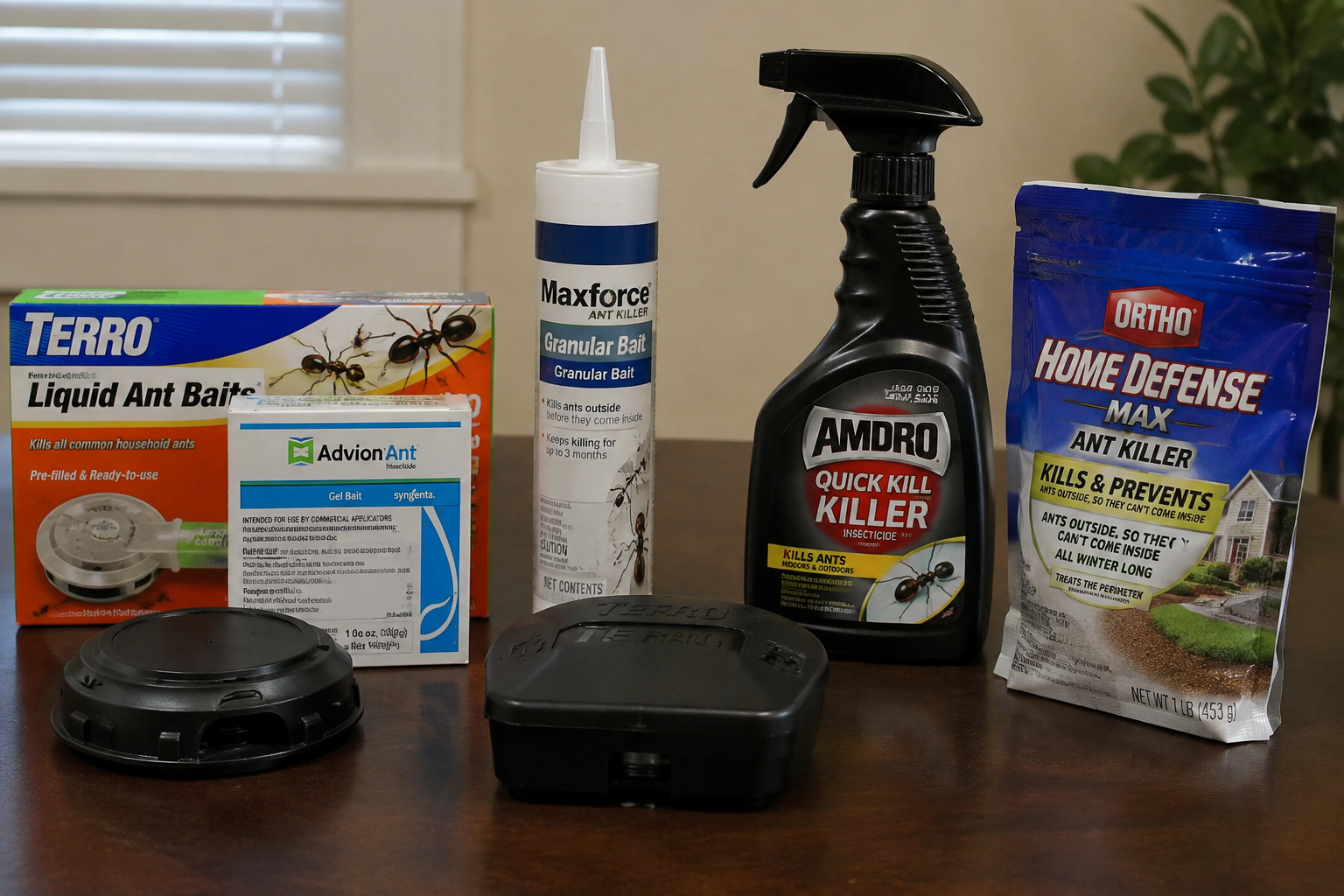
Ant Gel Baits
Ant gel bait is arguably the most effective tool in any arsenal. It is designed to be slow-acting, allowing worker ants to consume the poison and return to the nest to share it. This “trophallaxis” ensures that the colony is destroyed from the inside out.
Ant Bait Stations
For households with children or pets, ant bait stations offer a secure, contained delivery system. These units prevent accidental contact with the insecticide while keeping the bait fresh and protected from dust or cleaners.
Liquid Ant Killers
Liquid formulations are excellent for creating a chemical barrier around the perimeter of your home. However, they should be used carefully; if you spray a repellent liquid over an active ant trail, you may inadvertently trap them inside your walls.
Granules
Granular insecticides are primarily used outdoors. When spread across a lawn or garden, they target the foraging ants before they ever reach your home’s foundation.
Residual Sprays
These sprays leave behind a film of insecticide that remains active for weeks. They are effective at preventing new scouts from entering, but they rarely eliminate a deep-seated nest on their own.
Dust Insecticides
Dusts are the professional ant killer choice for treating wall voids, electrical outlets, and deep cracks where liquids cannot reach. They provide long-lasting control in areas that stay dry.
Natural Ant Killers
For those seeking an eco-friendly approach, options like diatomaceous earth or essential oil-based sprays can work. While they lack the potency of professional-grade chemicals, they are useful for light, localized infestations.
Best Ant Killers Comparison Table
| Product Type | Best For | Advantages | Disadvantages | Indoor/Outdoor | Safety |
| Gel Baits | Colony control | Total nest destruction | Requires patience | Indoor | High (if kept away) |
| Bait Stations | Kitchen/high traffic | Secure, clean | Limited placement | Indoor | Very High |
| Liquid/Spray | Barrier defense | Fast contact | Repellent risk | Outdoor | Moderate |
| Granules | Nesting areas | Covers large space | Weather dependent | Outdoor | Moderate |
| Dusts | Wall voids | Long-lasting | Requires precision | Both | High (hidden) |
How to Choose the Best Ant Killers
Choosing the best ant killer requires identifying the species. If you are unsure what you are looking at, our [Pest Identification Guide] is an essential resource to help you differentiate between common household invaders.
- Indoor Infestations: If you have sugar ants raiding your pantry, ant gel bait is your go-to solution.
- Outdoor Infestations: For persistent fire ant mounds or perimeter defense, granular ant control products are necessary.
- Fire Ants: These require specialized mound treatments to ensure the queen is neutralized.
- Carpenter Ants: Because they nest in wood, you need baits that specifically target carpenter ant biology, combined with a deep inspection of structural moisture.
- Sugar Ants/Pavement Ants: These respond well to sweet-based baits and consistent sanitation.
- Argentine Ants: These colonies are massive and require a multi-pronged baiting approach to avoid colony splitting.
For more information on keeping your property safe, refer to our [Household Pests Guide].
Step-by-Step Guide
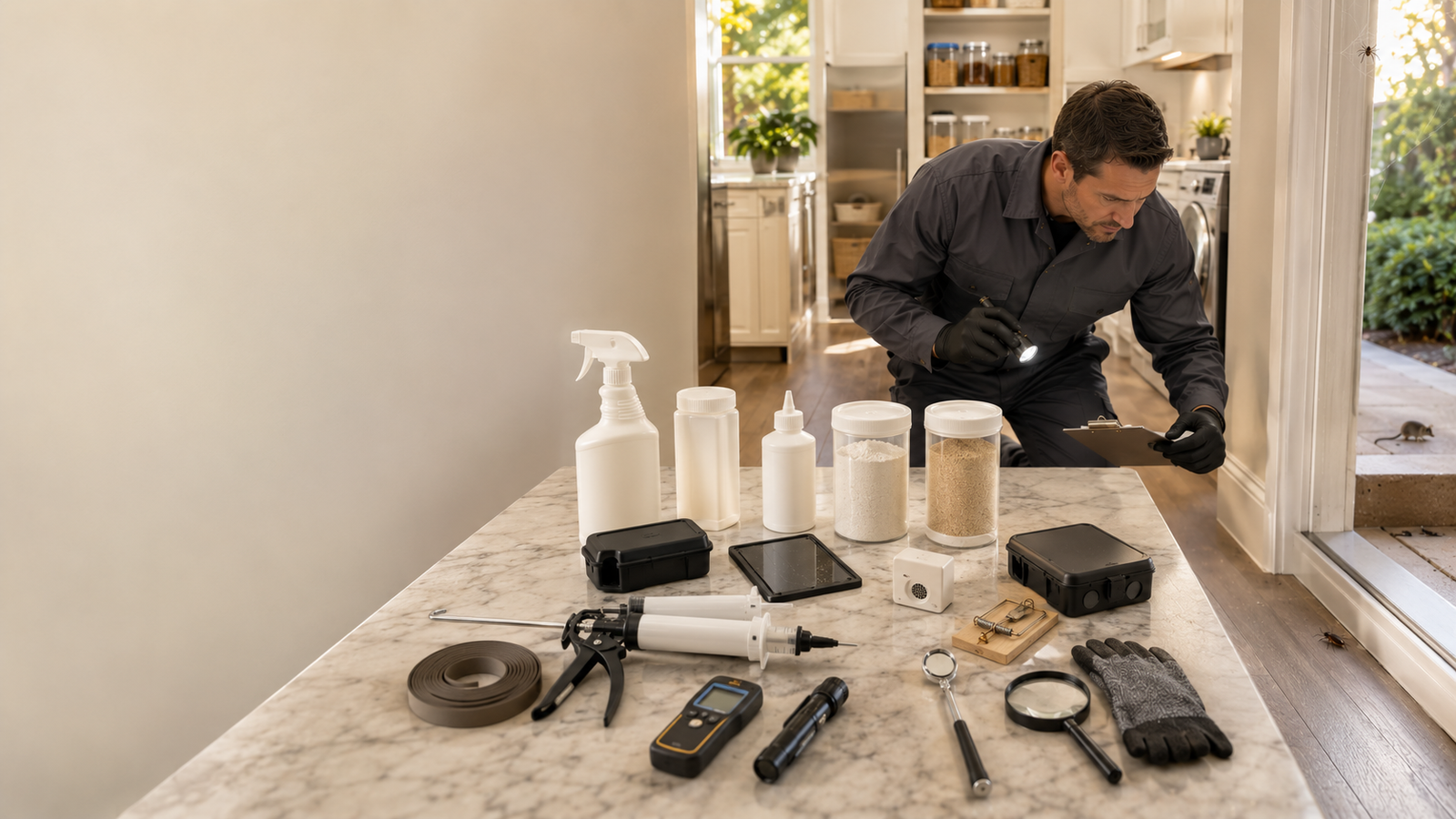
- Inspect: Use a flashlight to trace the ant trails. Look for cracks near sinks, windows, and baseboards.
- Identify Trails: Do not spray the ants you see; watch them to determine where they are entering and where the nest might be located.
- Apply Bait: Place dots of ant gel bait along the trails. The ants will find them and carry the poison back to the queen.
- Apply Barriers: Use a perimeter spray or granular treatment outside your foundation to prevent new invaders.
- Monitor Activity: Check the bait stations every few days. If they are empty, replenish them.
- Prevent Reinfestation: Seal all cracks and ensure your [Pest Prevention Tips] are being followed to remove attractants.
Common Mistakes
Even the best ant killers fail if the application is poor. Here is what to avoid:
- Spraying directly on bait: If you spray an aerosol over your bait, you make the bait repulsive to the ants, and the colony will survive.
- Using too much bait: Small, frequent applications are better than one massive glob.
- Using outdoor chemicals indoors: Always follow the EPA label instructions; never use products labeled for outdoor use inside your living space.
- Ignoring the colony: Focusing only on the surface ants is a waste of time. You must kill the queen.
- Poor sanitation: If you leave crumbs and spills, your bait will compete with natural food, and the ants will ignore it.
- Not sealing entry points: If you don’t seal the hole, they will keep coming back. Check out our [Home Pest Control] resource for sealing techniques.
Safety Tips
Pest control requires responsibility. Always read the EPA label before use.
- Children/Pets: Always place baits and traps where they cannot be accessed.
- Food Safety: Never apply insecticides directly on food-prep counters.
- Storage: Keep all chemicals in original containers and locked away.
- PPE: Wear gloves and ensure proper ventilation when applying sprays or dusts.
Natural vs Chemical Ant Killers
Natural treatments, like vinegar or peppermint oil, can serve as effective repellents but rarely destroy a nest. Chemical baits are the gold standard because they turn the ants’ social behavior against them. According to the UC IPM and various university extension services, Integrated Pest Management (IPM) is the most effective way to handle infestations. Using the best ant killers as part of an IPM strategy means using chemicals only when necessary and in the most targeted way possible. For more insights, visit our [Best Pest Control Products for Home] page.
Professional Tips
Pest control pros know that ants are constantly looking for water. If you have a leaky pipe, you will likely have ants. Always address the moisture source first. Additionally, the NPMA and CDC emphasize that sanitation is the foundation of any control plan. If you are struggling with recurring issues, it may be time to consult our [How to Prevent Household Pests] guide.
Frequently Asked Questions
- What is the single best ant killer for indoors? Professional-grade gel baits are the most effective for indoor colony elimination.
- Can I use the same product for all ants? No, different species respond to different bait matrices (sugar vs. protein).
- How long does it take for ant bait to work? It typically takes 1–2 weeks to wipe out a colony.
- Are bait stations safe for cats? Yes, provided you purchase tamper-resistant stations and place them in areas the cat cannot reach.
- Why do I see more ants after baiting? This is often a sign the bait is working, as it draws foragers out of the nest.
- Does boiling water kill ant mounds? It can, but it rarely reaches the queen deep in the nest.
- What are professional ant killers? Pros use non-repellent liquid insecticides and specific bait rotations that aren’t always available at retail stores.
- Can ants eat through walls? Yes, carpenter ants can damage structural wood.
- Should I use foggers? No, foggers generally cause ants to scatter and worsen the infestation.
- How do I stop ants from coming back? Consistent sanitation, sealing entry points, and periodic perimeter baiting.
- Do I need to see the nest? Not always; if you see consistent trails, you can bait the trail.
- Are all ant killers poisonous? Most are, which is why following label instructions is non-negotiable.
Conclusion
Finding the best ant killers is about patience and precision. By utilizing slow-acting baits that destroy the nest, rather than quick-fix sprays, you ensure a long-term solution to your pest problems. Remember that DIY ant control is most successful when combined with strict sanitation and structural sealing. For further assistance in keeping your living space clean, our [How to Prevent Cockroaches] guide and [Ant Identification Guide] provide excellent starting points for a pest-free home. With the right ant killer products, you can successfully defend your home against these persistent invaders.
Key Takeaways
- Identify before you buy — never buy a generic product without confirming the target species
- Baits clear nests, sprays create barriers — use each for its strength, not interchangeably
- The label is law — follow dilution, application, and safety instructions exactly
- Keep it dry — dusts and powders need dry cavities to stay effective for years
Choosing the right pest control products from the start saves money and avoids scattering an infestation deeper into your home. For related reading, see our Prevent Household Pests guide, our Prevent Cockroaches guide, our Termite Identification guide, or our Bed Bug Identification guide.
Sources: EPA: Citizen’s Guide to Pest Control and Pesticide Safety · NPIC: Choosing a Pest Control Product · UC IPM: Home and Landscape Pest Solutions · Clemson University Extension: Understanding Pesticide Labels · Colorado State University Extension: Insect Control Oils