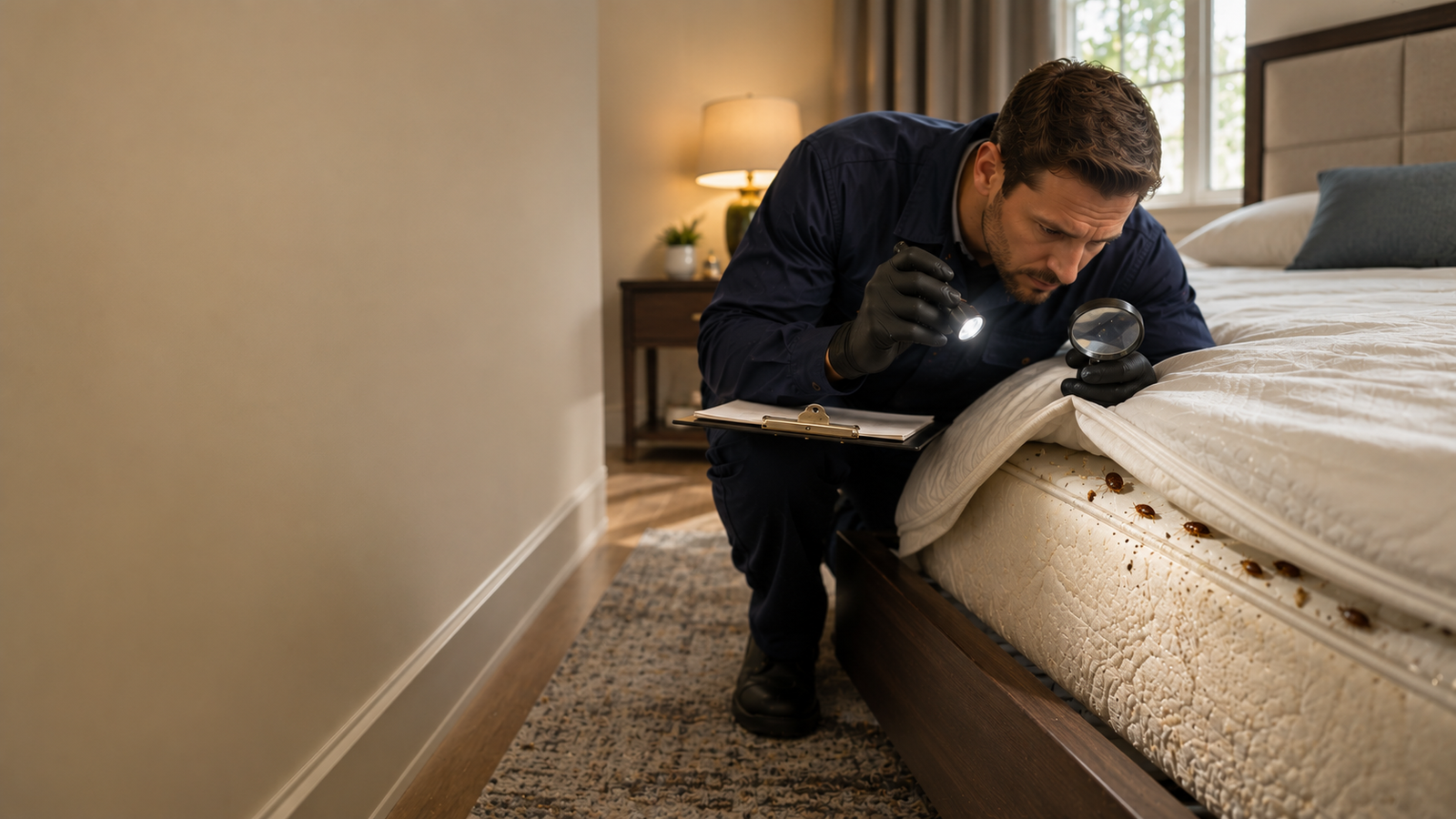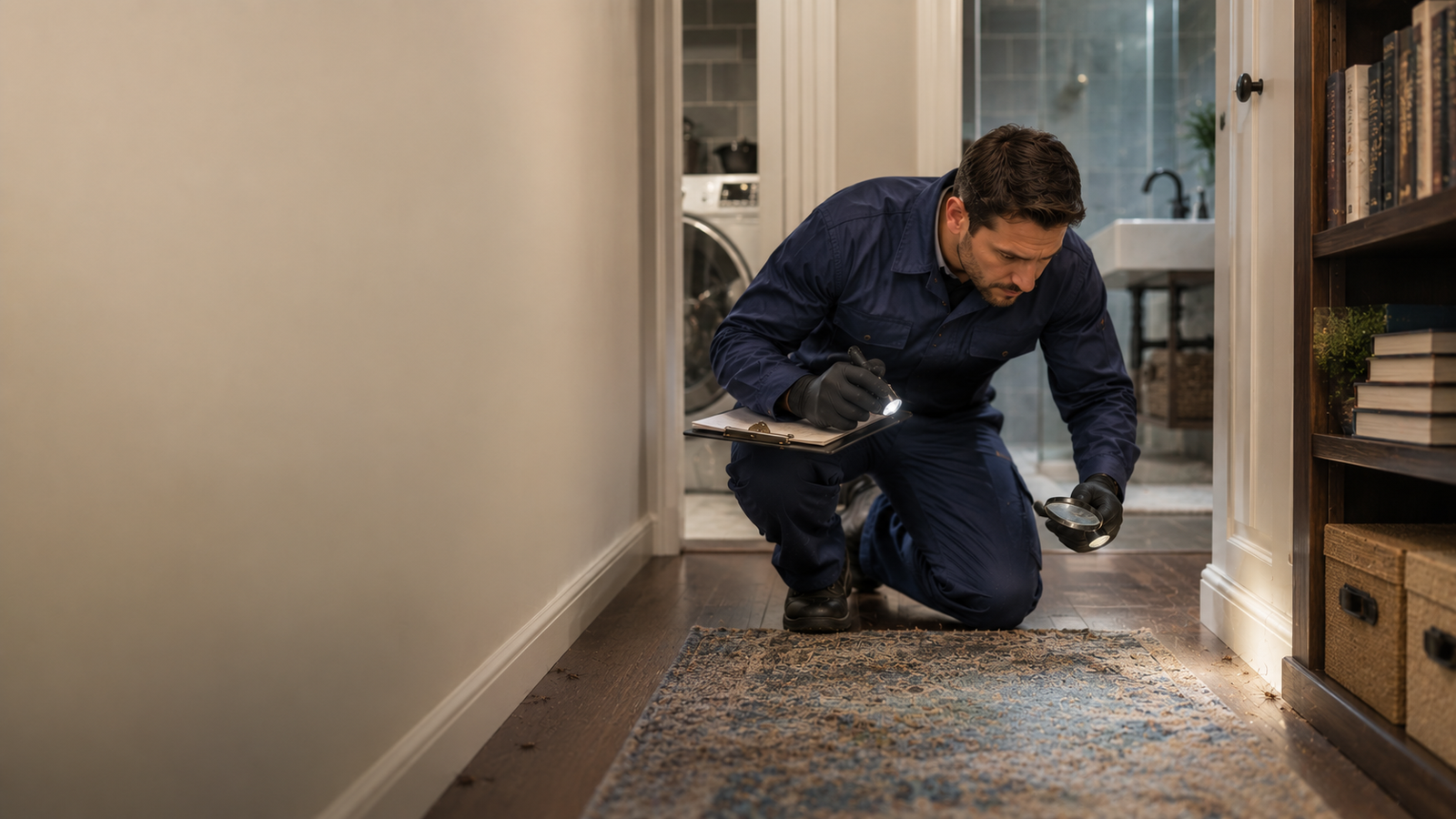
Discovering a line of strange insects or mysterious wood damage can be unsettling for any property owner. Termites are among the most destructive pests in the world, causing billions of dollars in structural damage globally each year.
Accurate termite identification is the critical first step in protecting your home. Misidentifying a termite can delay treatment, letting these silent destroyers compromise your property’s structural integrity. This guide will help you confidently confirm what termites look like, recognize early signs, and determine your next steps.
Table of Contents
What Are Termites?
Termites are social insects belonging to the order Blattodea, which also includes cockroaches. They live in highly organized colonies with a strict caste system.
- Scientific overview — historically classified as their own order (Isoptera), genetic testing now groups termites as specialized social cockroaches, with common North American species in families like Rhinotermitidae and Kalotermitidae
- Common names — termites, “silent destroyers,” white ants (a misleading name, since they aren’t ants)
- Basic characteristics — detritivores that feed on dead plant material and cellulose, with gut microbes that let them digest wood, paper, and cotton
Types of Termites
Before you can nail down termite identification, it helps to know which type you’re dealing with:
- Subterranean termites — the most widespread and destructive type, living in underground colonies and building mud tubes to travel safely to wood
- Drywood termites — don’t need soil contact, infesting dry wood like framing, hardwood floors, and furniture above ground
- Dampwood termites — larger than other types, targeting high-moisture wood in rotting logs, stumps, or homes with plumbing leaks
How to Identify Termites
For accurate termite identification, look for these specific physical traits:
- Size — workers measure 1/8 to 3/8 inch; queens can exceed 1 inch when laying eggs
- Shape — soft, pill- or cigar-shaped bodies, uniform in width
- Color — workers are translucent, creamy-white, or pale yellow; flying reproductives are dark brown to black
- Wings — two pairs of equal-length, translucent wings extending past the abdomen
- Antennae — straight, resembling a string of tiny beads, with no elbows or bends
- Waist — broad and thick, with no constriction between thorax and abdomen
- Legs — six short, sturdy legs built for tunnels rather than open running
- Distinctive features — soldiers have large, darkened heads with scissor-like mandibles
(When publishing, add images at these points: a worker termite close-up, a soldier termite’s head and mandibles, a flying alate with its wings, a macro shot of the straight antennae and thick waist, mud tubes on a foundation, a cross-section of damaged wood, discarded wings on a windowsill, and an exposed colony.)
Signs of a Termite Infestation
Since termites live deep inside walls or underground, termite identification often relies on these indirect clues:
- Mud tubes — pencil-thick tunnels of mud and saliva along foundations or crawl spaces
- Hollow wood — a hollow or papery sound when tapped with a screwdriver
- Frass — pellets like coarse sand pushed out of drywood termite kick-out holes
- Discarded wings — piles of identical translucent wings after a swarm
- Damaged furniture — blistering or sagging veneer indicating active feeding underneath
- Swarming termites — hundreds of dark, winged insects near light sources signal a mature colony
Where Are Termites Commonly Found?
Indoors: walls, baseboards, window frames, door jambs, wooden flooring, and damp utility closets or bathroom drywall near slow leaks.
Outdoors: old tree stumps, dead roots, firewood piles, fence posts, and mulch sitting against the house.
Foundations and crawl spaces: the primary entry point for subterranean termites — check expansion joints, mudsills, and floor joists for mud tubes.
Swarms typically happen in spring and early summer, often on warm, humid days after heavy rain. Termites are found in nearly every US state except Alaska, concentrated most heavily in the warm, humid South, Southeast, and West Coast.
Common Look-Alikes
The most frequent mistake in termite identification is confusing a flying termite with a flying ant:
| Pest | Similarities | Differences | How to Identify Correctly |
|---|---|---|---|
| Flying Termite | Dark body, wings, spring swarms | Straight antennae, thick waist, 4 equal wings | Wings twice as long as body and identical |
| Flying Ant | Dark body, wings, spring/summer swarms | Elbowed antennae, pinched waist, 2 long + 2 short wings | Distinct narrow pinch at the waist |
| Carpenter Ant | Chews into wood, leaves piles | Doesn’t eat wood, clean galleries, coarse frass | Elbowed antennae, pinched waist, active in daytime |
| Powderpost Beetle | Attacks wood, leaves holes | Small beetle, larvae leave flour-like powder | Tiny, round exit holes rather than galleries |
Life Cycle
Termites undergo incomplete metamorphosis: Egg → Nymph → Caste Differentiation (Worker, Soldier, or Alate)
- Egg — tiny, white, kidney-shaped, tended by workers deep in the nest
- Nymph — hatches pale, with pheromones from the king and queen determining its future caste
- Worker — blind, wingless, forages for food and maintains the nest
- Soldier — wingless with large mandibles, relies on workers for food
- Reproductive (alate) — develops wings and dark pigment, waiting to swarm and start new colonies
- Queen and king — colony founders; the queen’s body expands to produce thousands of eggs daily
- Lifespan — workers and soldiers live 1 to 2 years; queens can live for decades
Are Termites Dangerous?
- Property damage — the real threat, since compromised framing and subfloors can lead to catastrophic structural failure
- Human health — termites don’t bite, sting, or spread disease, though moisture from infestations can encourage mold that aggravates allergies
- Pets — no direct threat to dogs, cats, or other household pets
- Structural risks — damage can make a home uninsurable and reduce resale value, since most policies don’t cover termite damage
What Attracts Termites?
- Wood-to-soil contact — door frames, deck posts, or siding touching the ground
- Excess moisture — standing water, leaking gutters, and poor crawl space ventilation
- Landscaping mulch — thick wood mulch holds moisture and food next to the foundation
- Firewood stacks — stored directly against the house offers an easy staging ground
How to Confirm Identification
- The flashlight and screwdriver test — press a screwdriver tip into sill plates and joists; if it sinks in easily, check for mud or insects inside.
- Examine windowsills — look for dropped wings or sand-like pellets.
- Inspect the foundation — check the concrete just above the soil line for mud tubes.
- Collect a specimen — trap a dead or live insect to verify with a magnifying glass or show a professional.
What to Do Next
When DIY is appropriate — if your inspection shows no active termites, install physical barriers, fix moisture issues, replace mulch with gravel, and apply over-the-counter liquid barriers or bait stations as prevention.
When to call a professional — if you find active mud tubes, hollow wood, or a live swarm indoors, contact a licensed professional immediately. Colonies can number in the hundreds of thousands, and professionals have thermal imaging cameras, soil injection rods, and industrial-grade treatments needed to eliminate them completely.
Frequently Asked Questions
Can you see termites with the naked eye? Yes. Breaking open infested wood reveals workers, and flying termites or soldiers are clearly visible without magnification.
What do termites look like to the human eye? Workers look like small, slow-moving, creamy-white insects without a pinched waist. Flying termites look like black ants with long, overlapping wings.
Do termites fly into houses? Yes, during swarming season, through open windows, doors, or foundation cracks — usually meaning a mature colony is already nesting nearby.
How do I know if I have ants or termites? Check the waist and antennae. Ants have a pinched waist and elbowed antennae; termites have a thick, straight waist and straight antennae.
Do termites make a sound? Yes, very quietly. Soldiers bang their heads against tunnels to warn the colony, sometimes audible as faint clicking against an infested wall.
Can termites eat through concrete? No, but they can squeeze through hairline cracks as thin as 1/32 of an inch.
How fast can termites destroy a home? It takes time — a mature colony can eat through a 2×4 in a few months, with severe structural damage possible within 1 to 2 years if unnoticed.
What color are termites? Workers are translucent or creamy-white, soldiers have yellowish-brown heads, and reproductive swarmers are dark brown or black.
Key Takeaways
- Check the shape — a thick, uniform waist and straight, bead-like antennae, unlike an ant’s pinch and elbow
- Watch for wings — four equal-length wings twice as long as the body
- Look for the tubes — mud tubes on foundation walls confirm subterranean termites
- Inspect the wood — hollow sounds or easy screwdriver penetration need professional evaluation
Getting termite identification right early is what protects your home from years of hidden damage. For related reading, see our Get Rid of Termites guide, our Termite Damage guide, our Pest Control overview, or our Signs of Pest Damage guide.
Sources: EPA: Termites — How to Identify and Control Them · UC IPM: Termites Management Guidelines · University of Florida Extension: Termite Alates · Texas A&M AgriLife Extension: Subterranean Termite Identification · Iowa State University Extension: Termite Identification