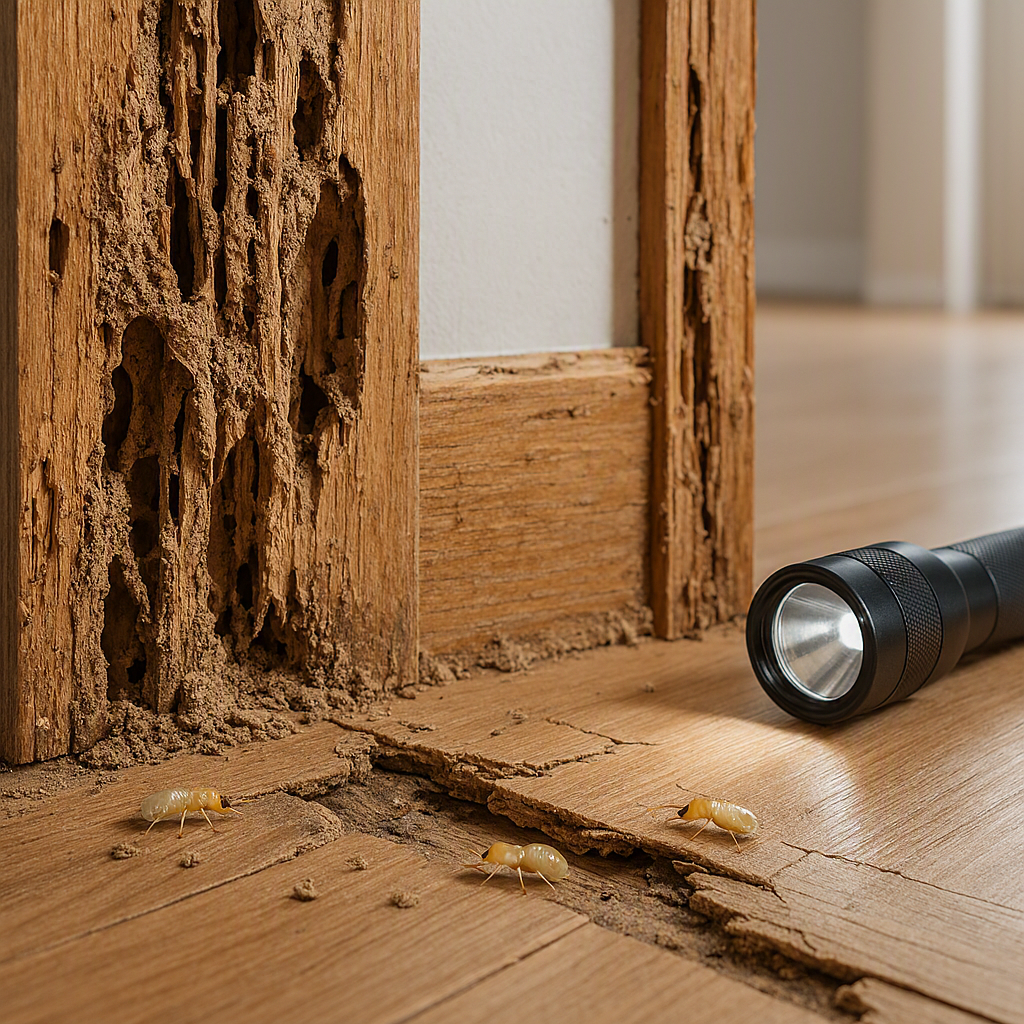
Termites are the most destructive wood-boring organisms in the world, causing billions of dollars in structural property damage every year. Unlike other structural issues, termite damage accumulates silently behind walls and beneath floorboards.
By the time an untrained eye spots an active problem, the structural integrity of the home may already be severely compromised. Because standard homeowners insurance policies exclude wood-boring insect destruction, knowing how to identify termite damage early is your best financial defense.
Table of Contents
What Is Termite Damage?
Definition: termite damage is the physical destruction and hollow carving of wood and other cellulose-based materials caused by the feeding, tunneling, and nesting behavior of termite colonies.
How termites damage wood: termites harbor symbiotic protozoa and bacteria that produce cellulase, an enzyme that breaks cellulose into digestible sugars. They chew through timber, structural panels, drywall paper, and even cardboard to feed their colonies.
Why it often goes unnoticed: subterranean termites need high humidity and avoid open air and light. They leave the exterior of wooden framing intact while hollowing out the interior core, so a beam can look sound on the surface while being destroyed inside.
Common Signs of Termite Damage
Termite damage leaves behind several distinct physical footprints:
- Hollow-sounding wood — a sound beam produces a sharp thud; termite-damaged wood emits a dull, hollow echo
- Mud tubes — pencil-thin tunnels of soil, saliva, and fecal matter running along foundation walls and sill plates
- Buckling floors — subfloor damage causes flooring to sag, warp, or buckle, often resembling water damage
- Blistering or bubbling paint — tunneling introduces moisture beneath drywall, cracking or blistering the surface
- Discarded wings — swarming termites shed wings in piles on window sills during mating flights
- Frass — drywood termites push sand-like pellets out of tiny kick-out holes in the wood
- Sticking doors and windows — moisture from tunneling causes wood to warp and frames to shift
- Visible wood tunnels — broken-open wood reveals ragged galleries packed with mud or debris
Areas Most at Risk
- Foundations — the primary path subterranean termites use to migrate from soil into structural wood
- Crawl spaces — dark, poorly ventilated areas with high humidity and easy access to floor joists
- Basements — wooden posts and framing on concrete floors pull moisture from slabs
- Roof structures — leaking valleys or damaged flashing attract drywood and Formosan swarms
- Wooden decks — posts sitting directly on soil provide an immediate food source
- Window and door frames — moisture runoff and expansion joints allow easy pest transit
- Furniture — antique wood items can harbor isolated drywood colonies for years
- Fences — wooden posts in soil act as bridges toward your home’s structure
Types of Termites and Their Damage
| Termite Type | Typical Damage | Common Locations | Severity |
|---|---|---|---|
| Subterranean | Ragged galleries packed with mud, follows wood grain | Foundations, sill plates, subfloors | Critical |
| Drywood | Smooth galleries cut across grain, no mud, frass piles | Attic framing, roof rafters, furniture | High |
| Formosan | Rapid wood consumption, large internal “carton” nests | Whole-structure penetration, wall voids | Extreme |
| Dampwood | Soft, hollowed-out rot, requires high wood moisture | Log structures, damp decks, leaky roofs | Moderate |
How to Inspect for Termite Damage
- Audit the exterior foundation — trace the perimeter for mud tubes on brickwork or concrete; clear mulch and firewood away from siding.
- Probe internal wood framing — use a flashlight and flathead screwdriver on sill plates and rim joists, tapping for hollow spots.
- Check activity hotspots — examine window sills, door frames, and attic joists for discarded wings, frass, or bubbling drywall.
Can Termite Damage Be Repaired?
Yes, but you must fully eradicate the active infestation before starting any structural carpentry. Replacing wood while termites are still active means they’ll simply consume the new lumber.
For minor, non-structural issues — surface tunnels on baseboards or trim — scrape away the soft wood, treat with a borate preservative, and fill with wood filler.
For structural framing, joists, or load-bearing beams, the wood must be replaced or reinforced (“sistered”) with pressure-treated lumber, ideally with structural engineering support.
How to Prevent Future Termite Damage
- Maintain a 6-inch clearance — keep soil or mulch below your exterior siding to expose incoming mud tubes
- Fix water runoff — clean gutters, extend downspouts at least 3 feet from the foundation, repair leaks promptly
- Use treated wood — pressure-treated lumber or composite materials for new decks and fences
- Apply liquid barriers or bait stations — a non-repellent soil treatment or monitoring stations every 10 feet
When to Contact a Professional
DIY works well for preventative maintenance and minor repairs, but call a certified professional at the first sign of active structural termite damage, extensive mud tube networks, or indoor swarming.
Colonies can include hundreds of thousands of insects hidden deep within inaccessible areas. Licensed operators have soil-injection equipment and commercial-grade termiticides needed to eliminate an entire colony.
Frequently Asked Questions
How long does it take for termites to cause structural damage? A mature subterranean colony can cause noticeable damage within 3 to 5 years, depending on colony size, moisture levels, and wood type.
Does homeowners insurance cover termite repair bills? No. Standard policies treat termite prevention as regular maintenance and almost never cover treatment or repair costs.
What’s the difference between swarming termites and flying ants? Termites have straight antennae, uniform waists, and four equal-length wings. Flying ants have elbowed antennae, pinched waists, and shorter hind wings.
What happens if I spray a mud tube with over-the-counter bug spray? It only kills the workers in that tube. The colony simply abandons that path and finds a new entry point.
Are termite bait stations better than liquid soil barriers? Both work well but differently. Liquid barriers create a continuous chemical block, while bait stations use foraging workers to carry bait back to the colony.
What is a termite “carton” nest? Formosan termites build nests inside wall voids from chewed wood, soil, saliva, and waste, allowing the colony to hold water without returning to the ground.
Can termites eat through concrete foundations? No, but they can squeeze through hairline cracks or gaps around utility pipes as thin as a credit card.
Does firewood stacked against a house attract termites? Yes. It creates a direct bridge and food source for subterranean termites to reach your home’s structure.
What does drywood termite frass look like? Small, hard, elongated pellets with six concave sides, resembling sand or ground pepper collected beneath infested wood.
Should I get a termite inspection before buying a home? Yes. A professional Wood-Destroying Organism (WDO) inspection protects buyers from hidden structural damage or active infestations.
Key Takeaways
- Catch it early — check your home twice a year for hollow wood, mud tubes, and shed wings
- Manage soil contact — keep mulch, firewood, and soil away from your siding
- Control moisture — clean gutters and fix leaks to remove the damp conditions termites need
- Eliminate the nest first — confirm the colony is fully gone before replacing damaged wood
For related reading, check our Signs of Pest Damage guide for general inspection tips, our DIY Pest Control guide for hands-on treatment steps, or our Best Cockroach Killers guide for other common household pests.
Sources:
·EPA: Termites — How to Identify and Control Them
· USDA: Subterranean Termites — Identification and Biology
· NPIC: Understanding Termite Control Options
· University of Florida IFAS Extension: Termite Prevention
· UC IPM: Drywood Termites Management

One thought on “Termite Damage: Signs, Risks, Repair, and Prevention Guide”