Discovering an active infestation is stressful, but discovering the structural havoc left behind is a different kind of nightmare. Many pests thrive silently inside walls, foundations, or floorboards for months before you ever glimpse a live insect or rodent.
Learning the signs of pest damage early is a fundamental skill for home protection. Recognizing the warnings can lower repair bills, reduce health hazards, and stop a small problem from becoming a structural emergency. This guide details the exact indicators to watch for.
Table of Contents
What Is Pest Damage?
Definition: pest damage is any physical deterioration, destruction, or contamination of building materials, mechanical systems, belongings, or landscaping caused by the nesting, feeding, or tunneling of destructive organisms.
Common causes: pests destroy materials to feed on cellulose (termites), gather nesting bedding (mice), or grind down continuously growing teeth (rats).
Why early detection matters: structural wood, plumbing, and electrical conduits are expensive to replace once compromised. Catching a problem early lets you use affordable DIY tools instead of paying for full structural remediation.
Common Types of Pest Damage
Property destruction usually falls into distinct categories, and learning to tell them apart is one of the clearest signs of pest damage worth tracking early:
- Structural damage — degraded load-bearing joists, beams, framing studs, and drywall
- Wood damage — internal hollows, tunneling, or surface boring in trim, floorboards, and timber
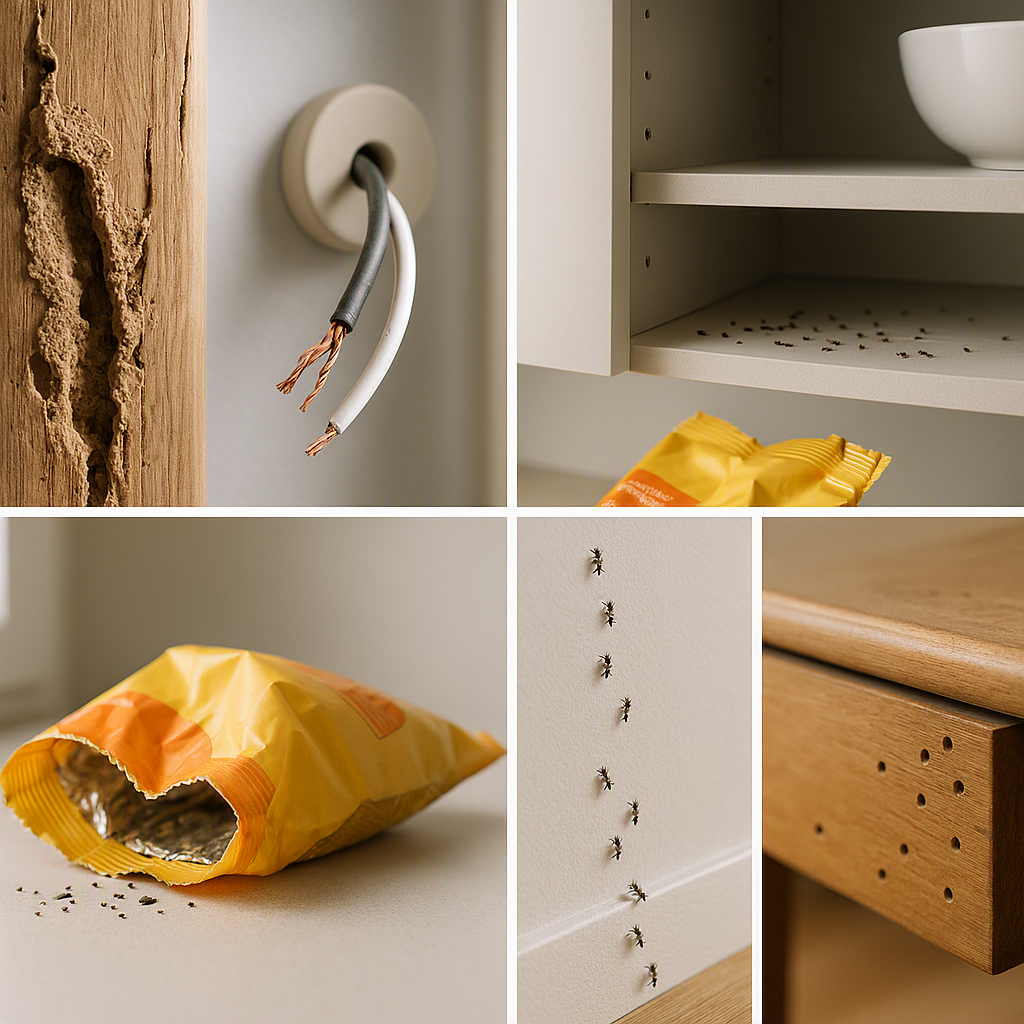
- Electrical wiring damage — chewed insulation exposing bare copper, creating fire hazards
- Food contamination — ruined pantry items and chewed packaging marked with droppings and hair
- Fabric damage — irregular holes chewed into clothes, blankets, and upholstery
- Plant and garden damage — chewed leaf tissue, tunneled roots, and sap depletion
- Health-related damage — poor indoor air quality from droppings, shed skins, and allergens
Pests That Commonly Cause Damage
Different invaders target different materials based on their biology, and the signs of pest damage each one leaves behind are usually distinct enough to identify the culprit.
| Pest | Type of Damage | Severity | Common Locations |
|---|---|---|---|
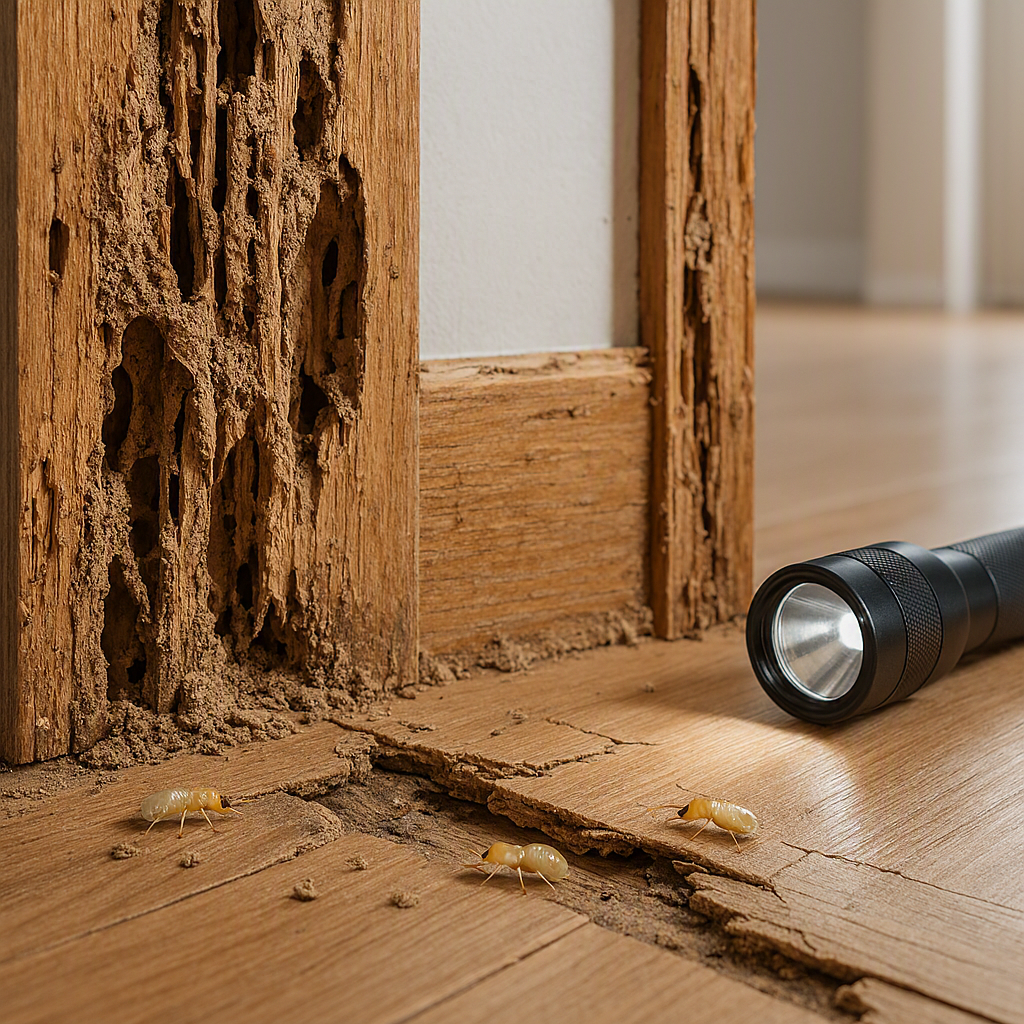
| Termites | Consumed cellulose, hollowed wood with mud | Critical | Sill plates, subfloors, foundations |
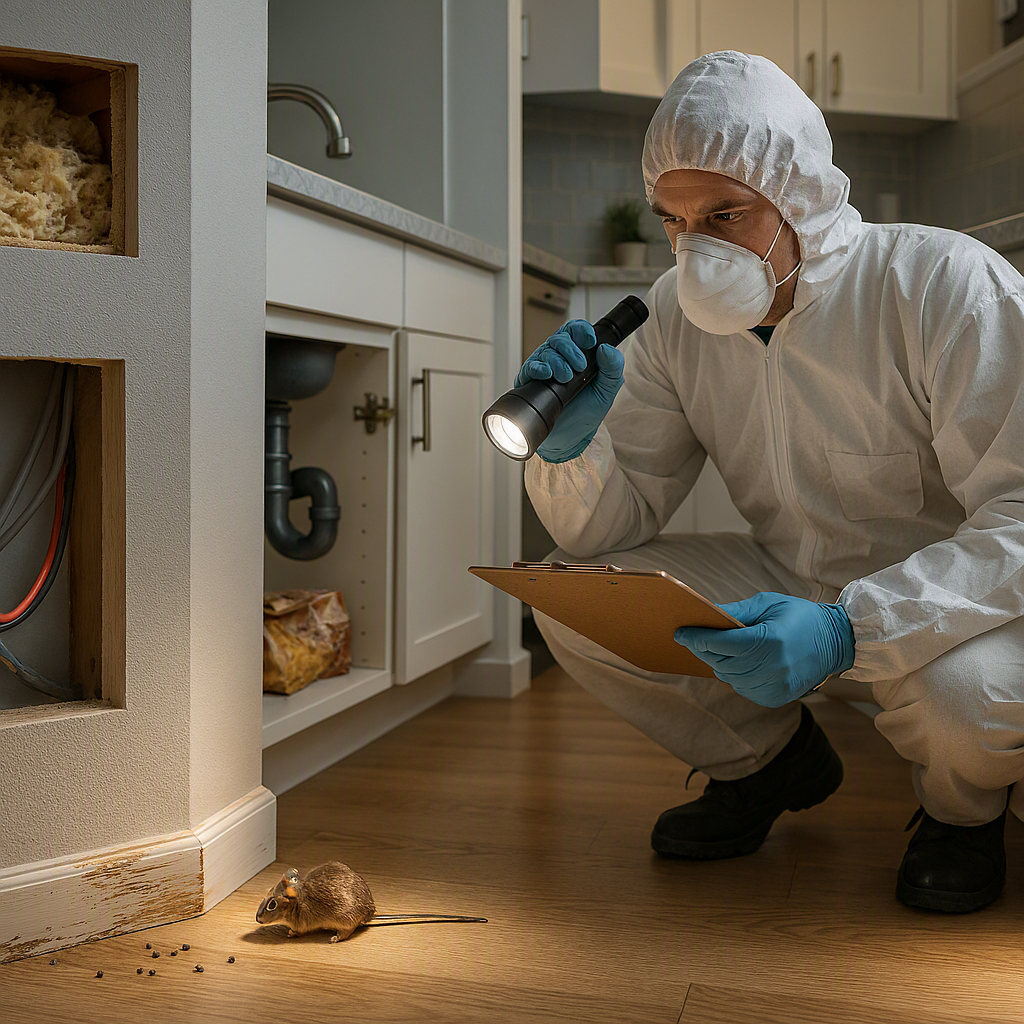
| Rodents | Gnawed wiring, shredded insulation, drywall holes | High | Attics, basements, wall voids, pantries |
| Cockroaches | Stained surfaces, chewed paper, ruined food | Moderate | Behind appliances, cupboards, under sinks |
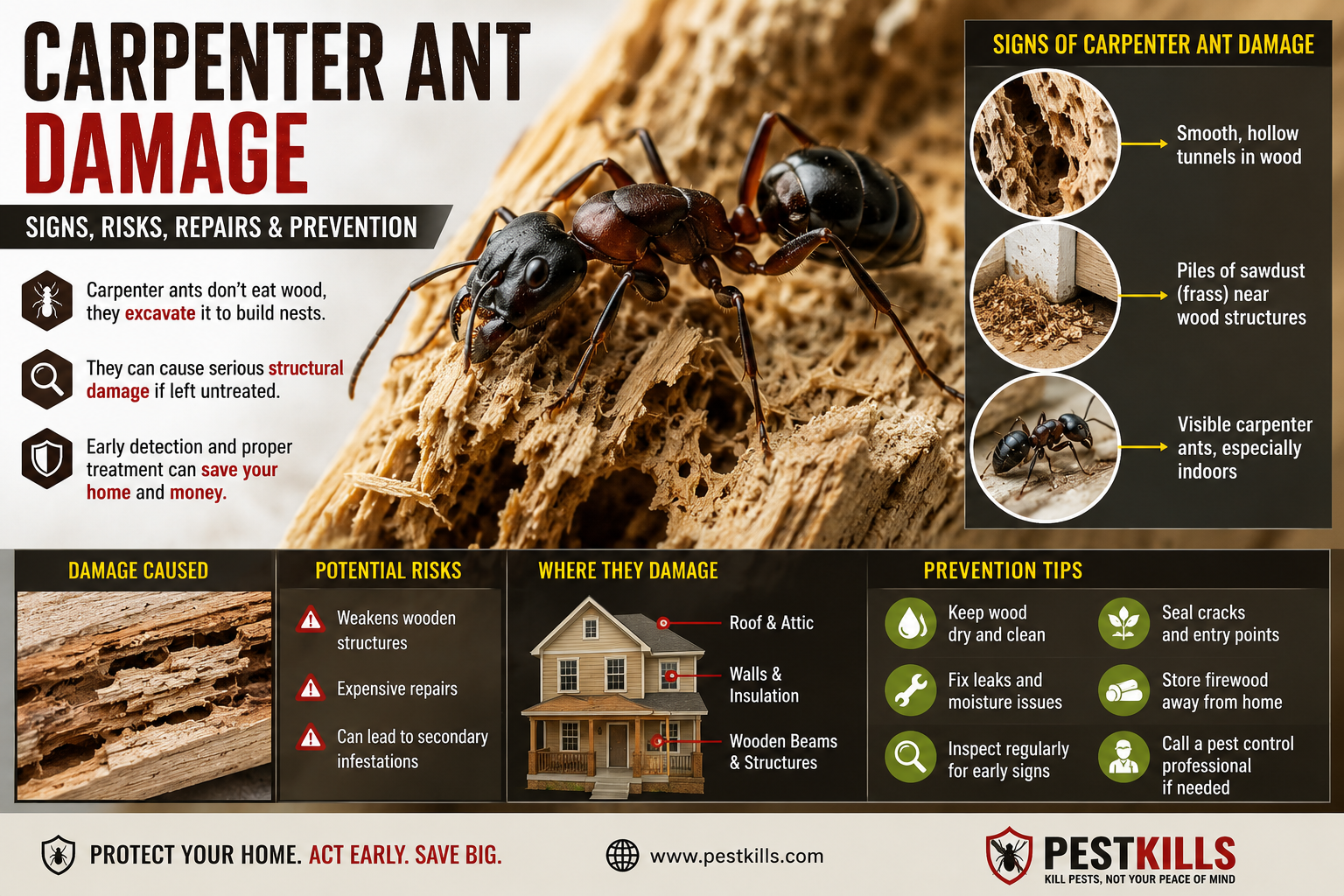
| Carpenter Ants | Clean, smooth galleries in wood | High | Window casings, door frames, damp wood |
| Bed Bugs | Blood spots, biological staining on fabrics | Moderate | Mattress seams, headboards, baseboards |
| Silverfish | Scraped paper, ruined books, glue damage | Low | Bookcases, cardboard boxes, closets |
| Beetles | Pin-sized exit holes, fine wood powder | High | Antique furniture, subfloors, crawl spaces |
Warning Signs of Pest Damage
These are the most common signs of pest damage to watch for during routine home checks:
- Holes and chew marks — clean teeth grooves suggest mice or rats; round exit holes suggest powderpost beetles
- Mud tubes — thin mud pipes on foundation walls indicate subterranean termites
- Hollow wood — tap framing with a screwdriver; hollow sound signals advanced termite or carpenter ant damage
- Droppings — rodent feces resemble rice grains; cockroach droppings look like ground black pepper
- Grease marks — oily smear bands along baseboards come from traveling mice or rats
- Shed skins — amber hulls point to cockroach nymphs; tiny translucent shells point to bed bugs
- Nests — shredded paper and insulation tucked into attic joists signal rodent breeding zones
- Strange odors — musky smell suggests roaches; ammonia smell suggests hidden rodent urine
- Dead insects — clusters in window tracks or fixtures help confirm which species is active
- Damaged plants — notched leaves and dying turf point to beetle, weevil, or grub activity
How to Inspect Your Home for Pest Damage
Perform a full inspection twice a year using this process to catch signs of pest damage before repairs become expensive:
- Examine the exterior perimeter — trace the foundation line for cracks, gaps, mud tubes, or mulch piled too close to siding.
- Check under sinks and crawl spaces — look for chewed gaps, wood rot, or moisture drips near pipe entries.
- Inspect attics and joists — check exposed framing for sawdust piles (frass), shredded insulation, or chewed wiring.
Preventing Pest Damage
The best way to deal with signs of pest damage is to stop them from appearing in the first place:
- Eliminate wood-to-ground contact — keep siding and structural wood at least 6 inches above soil
- Manage moisture — clean gutters every autumn, fix roof leaks, keep crawl space humidity below 50%
- Seal entry paths — pack gaps with steel wool or copper mesh, then seal with silicone caulk
- Store belongings safely — move paper and linens out of cardboard into airtight plastic bins
When to Repair Damage Yourself
Minor signs of pest damage are safe to manage yourself — small drywall holes that don’t affect framing, surface scratches on baseboards, or a couple of chewed pantry boxes.
Dispose of ruined food, seal small gaps with caulk or joint compound, and keep up a consistent sanitation plan. Always confirm the active infestation is fully cleared before closing up any holes.
When to Contact a Professional
Stop and call a licensed professional if you find these more serious signs of pest damage: soft structural joists, active scratching behind walls, indoor swarms of winged insects, or chewed insulation on main electrical cables.
Widespread structural damage needs specialized remediation equipment and thermal mapping tools. Working around compromised wiring or hidden wildlife nests also carries safety risks that require certified expertise.
Frequently Asked Questions
Can you smell pest damage in a house? Yes. Large cockroach colonies create a musty smell, bed bugs produce a sweet, coriander-like scent, and rodents create a sharp ammonia smell.
What does early termite wood damage look like? Wavy, bubbling paint or blistered wood. Pressing a screwdriver in easily reveals internal galleries packed with soil or mud.
Why do rodents chew on electrical wiring? Their incisors grow continuously, so they chew on hard surfaces like wiring insulation to grind their teeth down.
How do I distinguish carpenter ant damage from termite damage? Carpenter ants excavate clean, smooth channels since they don’t eat wood. Termites leave rough channels packed with mud since they consume the cellulose.
Does homeowners insurance cover structural pest damage? Usually not. Most policies treat pest management as regular maintenance, which is why early detection matters so much.
What is frass? Fine, powdery sawdust mixed with insect waste, pushed out of tunnels by boring beetles or carpenter ants — a key sign of active boring activity.
How can I tell if a mouse hole is actively being used? Active holes have smooth edges from fur oils, freshly chewed fibers, and nearby fresh droppings. Old holes look dusty and faded.
Can pests damage plumbing pipes? Yes. Mice and rats can chew through plastic PEX and PVC lines, causing hidden leaks inside walls.
What kind of damage do silverfish cause? They feed on starches, damaging book bindings, wallpaper glue, cardboard, and delicate fabrics like silk or cotton.
How often should a pest inspection be performed? At least twice a year, ideally spring and autumn, when pest activity shifts with the seasons.
Key Takeaways
- Act at the first sign — ignoring early signs of pest damage lets minor issues escalate into expensive repairs
- Check the framing — tap beams for hollow wood and inspect for sawdust or mud tubes
- Address moisture flaws — fix leaks and clear gutters to remove conditions pests need
- Seal entry vectors — steel wool and silicone caulk block pests before damage starts
Spotting the signs of pest damage early is what keeps a manageable problem from turning into a costly one. For treatment options once you’ve confirmed an infestation, see our Best Cockroach Killers guide, Best Termite Treatments guide, or our Integrated Pest Management guide for a full prevention framework.
Sources:
· EPA: Protecting Your Home from Wood-Destroying Organisms
· USDA Forest Service: Recognizing Insect Damage in Structural Timbers
· NPIC: Signs of Structural Pest Infestations
· University of Maryland Extension: Structural Pest Diagnostics
· Iowa State University Extension: Wood-Boring Insect Damage