A rodent infestation is much more than a nuisance. Mice and rats are biological destruction machines that can rapidly compromise the safety, structure, and health profile of any property they occupy. Because they reproduce exponentially, a minor issue can explode into severe structural chaos within weeks.
Unchecked rodent damage can mean expensive electrical repairs, ruined insulation, and exposure to dangerous pathogens. Recognizing the signs early is crucial for protecting your family and your home’s value. This guide covers the key indicators, health risks, and how to secure your property.
Table of Contents
What Is Rodent Damage?
Definition: rodent damage is the physical degradation of structural elements, electrical systems, plumbing, and belongings caused by the nesting, foraging, and gnawing behavior of invasive rodents.
Common rodents: the three primary offenders are the house mouse, the large Norway rat, and the agile, climbing roof rat.
Why rodents chew constantly: their incisors grow continuously in both jaws. To keep them from growing into their own skulls, rodents chew on hard surfaces like wood, plastic, concrete, and metal to grind them down.
Common Signs of Rodent Damage
Mice and rats leave behind unmistakable signatures:
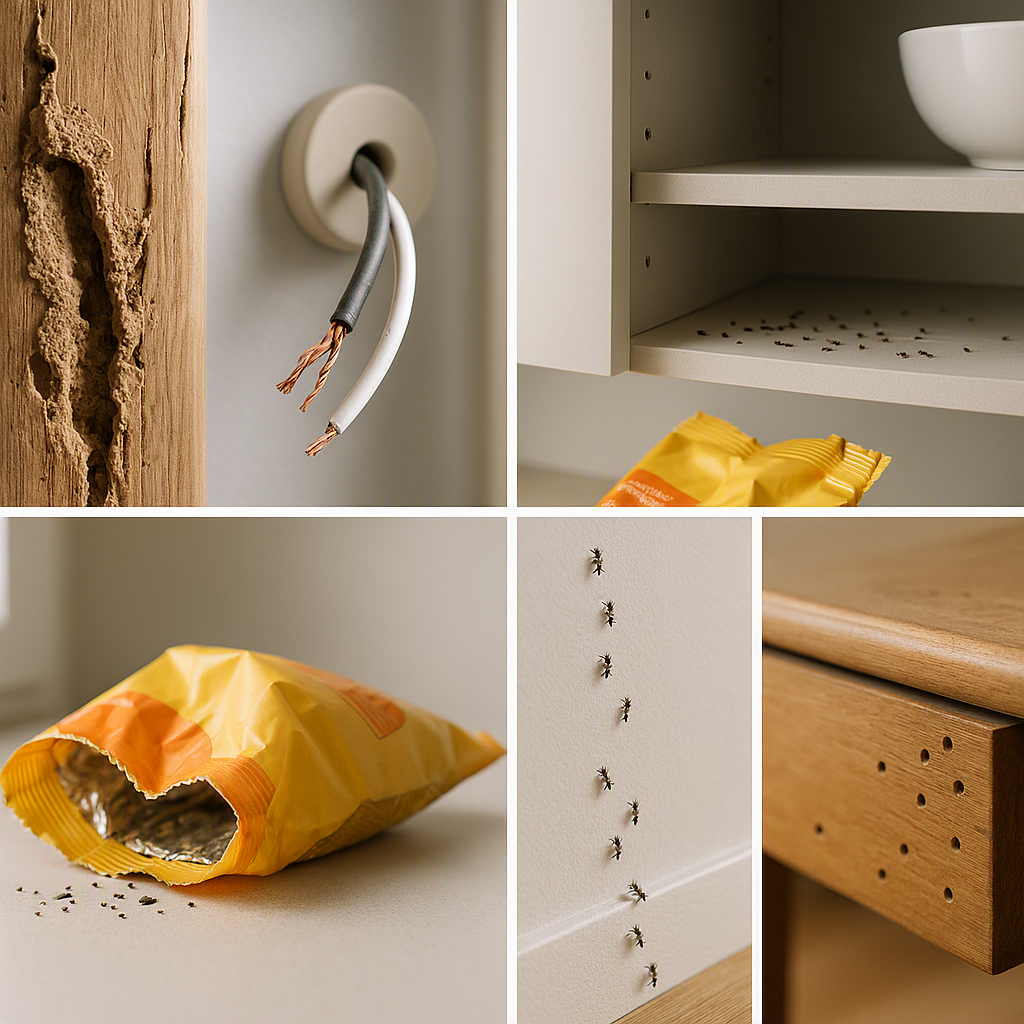
- Chewed electrical wires — bare, exposed wiring inside wall voids creates a fire hazard
- Gnaw marks on wood and plastic — fresh marks are light-colored; older damage looks dark and weathered
- Droppings — mouse droppings are small, dark, and pointed (about 1/4 inch); rat droppings are larger and capsule-shaped
- Grease marks — oily fur leaves dark smear bands along baseboards and entry holes
- Nesting materials — shredded insulation, paper, clothing, and cardboard formed into soft, round nests
- Damaged insulation — tunneling crushes fiberglass or cellulose insulation and fouls it with waste
- Food packaging damage — chewed cardboard boxes, plastic liners, or pet food bags
- Scratching noises — nocturnal scratching or scurrying behind walls or ceilings after dark
Areas Most at Risk
- Attics — warmth and thick insulation attract roof rats and mice
- Basements — Norway rats favor damp, low-level environments near slabs
- Kitchens — the top food destination, targeting cabinets and appliance gaps
- Garages — poorly sealed doors and stored boxes offer easy entry
- Crawl spaces — dark, damp access to floor joists and utility lines
- Wall cavities — plumbing gaps let rodents travel between floors
- Storage rooms — old fabrics and boxes provide nesting conditions
- Roof spaces — overhanging branches offer a bridge for roof rats
Types of Rodents and the Damage They Cause
| Rodent | Typical Damage | Common Hiding Places | Risk Level |
|---|---|---|---|
| House Mice | Shredded insulation, chewed food boxes, small gnaw marks | Wall voids, behind appliances, pantries | High |
| Norway Rats | Large entry holes, chewed PVC lines, structural undermining | Basements, crawl spaces, floor voids | Severe |
| Roof Rats | Chewed attic beams, destroyed insulation, gnawed wiring | Attics, drop ceilings, soffits | Severe |
Health Risks Associated with Rodent Damage
Food contamination: rodents spread bacteria like Salmonella across countertops and pantry shelves through hair, urine, and droppings.
Disease transmission: inhaling particles from dried urine or feces can cause Hantavirus Pulmonary Syndrome. Rodents also transmit Leptospirosis, Rat-Bite Fever, and LCMV.
Allergens: proteins in saliva, dander, and urine become airborne through HVAC systems, triggering asthma and allergic reactions, especially in children.
Fire hazards: stripped wire insulation can spark against wood framing or dry insulation, creating a serious fire risk.
How to Inspect Your Home for Rodent Damage
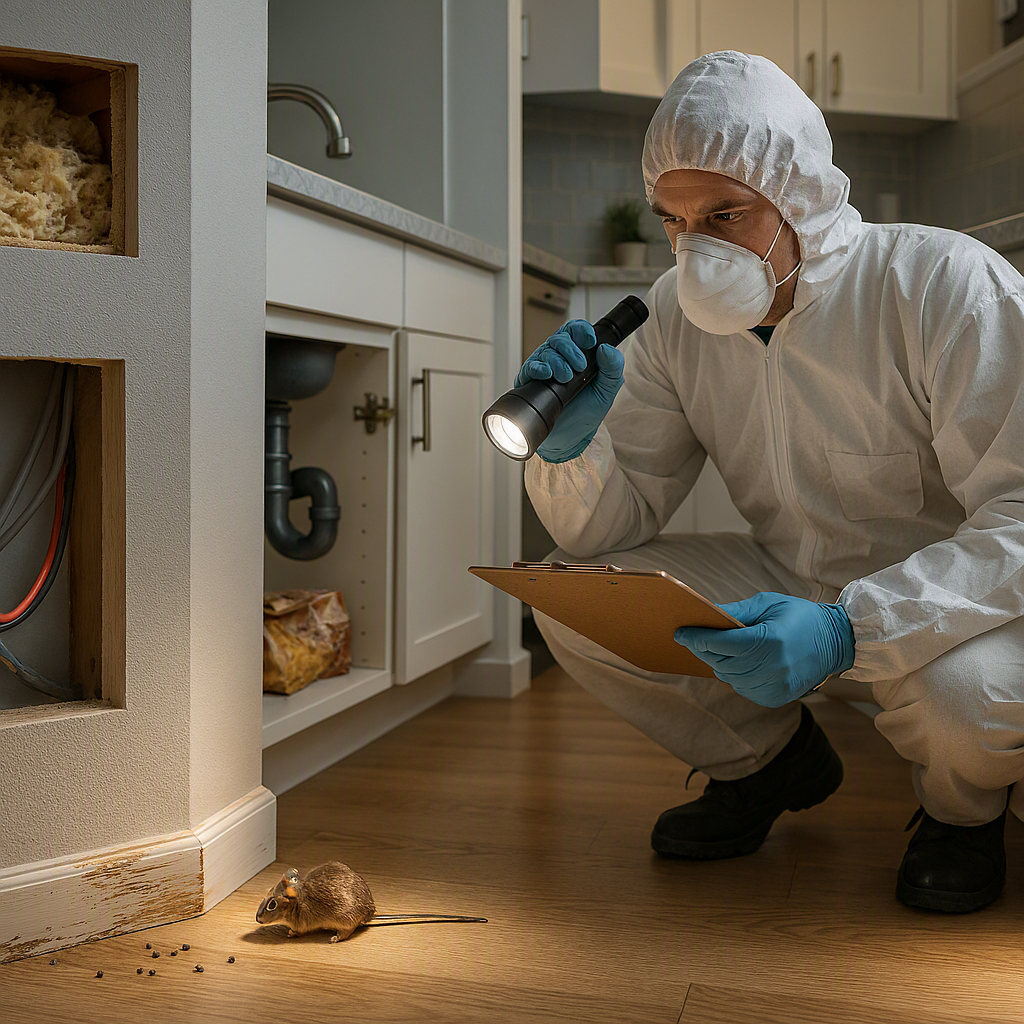
- Check the lower foundation — walk the perimeter checking utility entries and vents; flag gaps larger than a pencil tip.
- Examine the attic and insulation — look for flattened tunnels, shredded nests, droppings, and chewed beams.
- Inspect beneath major appliances — check behind the stove and under sinks for gnaw holes, grease marks, or droppings.
How to Repair Rodent Damage
Eliminate the active population with targeted traps before repairing anything — closing holes while rodents are still inside forces them to chew new escape paths.
For insulation damage, wear an N95 respirator and gloves. Spray contaminated insulation with disinfectant before removing it; never vacuum dry droppings, since this spreads pathogens into the air. Replace with clean insulation.
For structural entries, pack holes tightly with stainless steel wool or copper mesh before sealing with polymer caulk or joint compound — standard caulk and foam alone won’t stop rodents from chewing through.
How to Prevent Future Rodent Damage
- Install heavy-duty door sweeps — metal-backed sweeps with a gap under 1/4 inch
- Trim vegetation — keep branches and bushes 3 feet from the roofline and foundation
- Eliminate exterior food sources — secure trash cans, move bird feeders, don’t leave pet food outside
- Maintain interior sanitation — store dry goods and pet food in airtight containers
When to Contact a Professional
If you hear constant scratching across multiple rooms, find heavy droppings accumulation, or discover burrow networks outside, seek professional help. Established infestations need advanced tracking tools and comprehensive exclusion strategies that a certified pest control professional can provide safely.
Frequently Asked Questions
Can mice chew through standard home concrete? Not solid concrete, but they can widen existing cracks or crumbly sections until they can squeeze through.
What’s the difference between mouse damage and rat damage? Mouse damage is localized with small marks and tiny droppings. Rat damage is more aggressive, with large entry holes and bigger droppings.
How quickly can a pair of mice cause a major infestation? Very quickly — a single female can produce up to 10 litters a year, and pups reach breeding maturity in just 6 weeks.
Does homeowners insurance cover rodent repair costs? No. Insurers treat rodent prevention as standard maintenance and rarely cover repair costs.
Why do rats chew on plastic PEX water lines? The soft texture helps trim their teeth, and they’re drawn to the sound of water running inside.
Is it safe to sweep up dry mouse droppings with a broom? No. Sweeping or vacuuming stirs viral particles into the air. Spray with disinfectant first, then wipe with a damp towel.
Can rodents damage a parked car inside a garage? Yes. They climb into engine bays for warmth and can chew wiring harnesses, insulation, and cabin air filters.
Do ultrasonic rodent repellers actually work? Studies show little to no long-term effect — rodents adapt to the sound quickly when food or shelter is nearby.
What smell indicates a hidden rodent issue? A sharp ammonia smell from urine, or a heavy, sour odor if a rodent has died inside a wall cavity.
How do I stop rats from traveling along my garden fence? Trim ground cover and keep grass short — removing protective cover discourages rats from using the path.
Key Takeaways
- Act early — inspect attics, basements, and storage areas regularly for gnaw marks or droppings
- Protect the wiring — check utility chases and appliances for chewed wires
- Clean up safely — wet down contaminated zones before wiping to avoid airborne pathogens
- Build them out — steel wool, metal mesh, and premium caulk seal entry points permanently
For related reading, see our Signs of Pest Damage guide, our DIY Pest Control guide, our Termite Damage guide, or our Integrated Pest Management guide.
Sources:
· CDC: Rodent Control and Disease Prevention
· EPA: Identify and Control Rodent Pests Safely
· NPIC: Safe Rodent Control Strategies
· UC IPM: Managing Rats and Mice in the Home
· Indiana University Environmental Health Sciences