If you’ve been dive-bombed while grilling burgers in your own backyard, you already know how fast a yellow jacket problem can take over. These aggressive stinging insects build colonies that can hold thousands of workers by late summer, and unlike bees, they don’t lose their stinger — meaning one yellow jacket can sting you over and over.
Knowing how to get rid of yellow jackets around your home safely is about more than swatting the ones you see. It means finding the nest, choosing the right treatment method, and taking steps so they don’t come back next season. In this guide, we’ll walk through all 9 proven steps for getting rid of yellow jackets around your home — from natural remedies to when it’s time to schedule a professional wasp inspection.
Table of Contents
What Are Yellow Jackets?
Yellow jackets are a type of social wasp in the genus Vespula and Dolichovespula, common throughout the United States, Canada, the United Kingdom, and Australia. They’re often mistaken for bees because of their black-and-yellow banding, but they’re actually smoother, thinner, and far more aggressive when disturbed.
A single colony starts each spring with one queen who survived winter. She builds a small starter nest and raises the first batch of workers herself. From there, the colony grows quickly — by August or September, a mature nest can house 1,500 to 15,000 workers, depending on the species and climate.
Yellow jackets are technically predators and scavengers. Early in the season they hunt caterpillars, flies, and other insects to feed their larvae. By late summer, though, their diet shifts toward sugars, which is exactly why they start showing up at picnics, soda cans, and trash bins. Understanding this behavior is the foundation for any yellow jacket control plan.
Image suggestion: Close-up of a yellow jacket on a flower ALT text: “Yellow jacket wasp close-up showing black and yellow banding”
Why Are Yellow Jackets Around My House?
If you’re noticing yellow jackets around your house more than usual, it usually comes down to one of these draws:
- Food sources. Open garbage cans, pet food left outside, fallen fruit, and sugary drinks all attract foragers.
- Water access. Birdbaths, leaky hoses, and pool areas give them a nearby water supply.
- Shelter opportunities. Wall voids, attic spaces, woodpiles, and abandoned rodent burrows make ideal nesting spots.
- Landscaping. Dense shrubs, mulch beds, and ground cover create cover for underground nests.
Understanding why yellow jackets are drawn to your property is the first step toward removing yellow jackets around your home for good, rather than just chasing a temporary fix.
How to Identify a Yellow Jacket Nest
Before you can remove a nest, you need to confirm what you’re actually dealing with. Yellow jacket nests have a distinct look:
- Paper-like exterior — made from chewed wood fibers mixed with saliva, giving it a gray, papery texture.
- Enclosed shape — unlike open honeycomb, yellow jacket nests are usually fully enclosed with a single entry hole.
- Constant traffic — you’ll see workers flying in and out in a steady stream, especially in the afternoon.
Correctly identifying the nest is a key part of any yellow jacket nest removal plan, since underground, aerial, and wall-void nests each require a different approach.
Where Yellow Jackets Build Nests
Yellow jackets aren’t picky, and different species prefer different spots:
| Nest Location | Common Species | Difficulty to Remove |
|---|---|---|
| Underground burrows | Western yellow jacket, German yellow jacket | Moderate to High |
| Wall voids / attics | German yellow jacket | High |
| Tree hollows | Bald-faced hornet (close relative) | Moderate |
| Under decks or sheds | Various | Moderate |
| Aerial nests in shrubs | Aerial yellow jacket | Low to Moderate |
Image suggestion: Underground yellow jacket nest entrance in a lawn ALT text: “Underground yellow jacket nest hole in grass lawn”
Signs You Have a Yellow Jacket Infestation
Watch for these warning signs around your property:
- Frequent yellow jacket sightings near the same spot, especially in the morning or late afternoon
- A small hole in the ground with visible wasp traffic
- Buzzing sounds coming from a wall, chimney, or eave
- Increased activity near trash cans, compost bins, or outdoor eating areas
- Multiple stings reported by family members or pets in the same general area
If you’re seeing several of these signs together, you likely have a real yellow jacket infestation rather than just a few strays passing through, and it’s worth acting before the colony grows any larger.
How Dangerous Are Yellow Jackets?
Yellow jackets are more than a nuisance — they can pose a real health risk, particularly for people with insect sting allergies.
According to the CDC, stinging insects send tens of thousands of people to emergency rooms every year, and severe allergic reactions (anaphylaxis) can be life-threatening without prompt treatment. Because yellow jackets can sting multiple times and often attack in groups when their nest is disturbed, a single encounter can result in dozens of stings.
Seek immediate medical attention if someone experiences:
- Difficulty breathing or swallowing
- Swelling of the face, lips, or throat
- Dizziness or a rapid drop in blood pressure
- Hives or widespread swelling away from the sting site
For most people, a yellow jacket sting causes localized pain, redness, and swelling that fades within a day or two. Cold compresses and over-the-counter antihistamines usually help.
How to Get Rid of Yellow Jackets Around Your Home
Now for the part you’re really here for — the 9 steps for how to get rid of yellow jackets around your home. There are several ways to approach yellow jacket control, ranging from gentle natural deterrents to serious commercial treatments. The right combination depends on the nest location, colony size, and how comfortable you are handling stinging insects yourself.
Step 1–3: Natural Methods
If the infestation is small or you’re trying to reduce activity before it becomes a full nest problem, these natural approaches can help you get rid of yellow jackets without harsh chemicals:
- Peppermint oil spray. Mix water with peppermint essential oil and spray around entry points, patios, and trash areas. Yellow jackets dislike the strong scent.
- Clove, geranium, and lemongrass oil blend. Some university extension programs note these scents can act as mild repellents, though they won’t eliminate an established nest.
- Vinegar traps. A mix of sugar water and apple cider vinegar in a trap can lure and drown foraging workers.
- Soapy water spray. A strong mixture of dish soap and water can suffocate wasps on contact and is often used as a lower-toxicity option for small, visible nests.
Natural methods work best for prevention and light activity — they generally aren’t strong enough to fully eliminate an established colony of several thousand workers. For that, you’ll need a more direct DIY or professional treatment.
Step 4–6: DIY Treatments
For an active nest you plan to treat yourself, timing and safety come first when learning how to kill yellow jackets safely.
Best time to treat a nest: Early morning or late evening, when temperatures are cooler and most workers are inside the nest and less active.
Basic DIY steps for safe yellow jacket removal:
- Identify the entry point clearly during daylight, but don’t treat it yet.
- Gather protective gear — thick clothing, gloves, and eye protection at minimum.
- Return at dusk or before dawn with your chosen treatment.
- Apply treatment directly into the entrance, then retreat immediately.
- Avoid using a flashlight directly on the nest opening — yellow jackets are drawn to light and movement.
- Check activity 24–48 hours later before sealing or removing the nest.
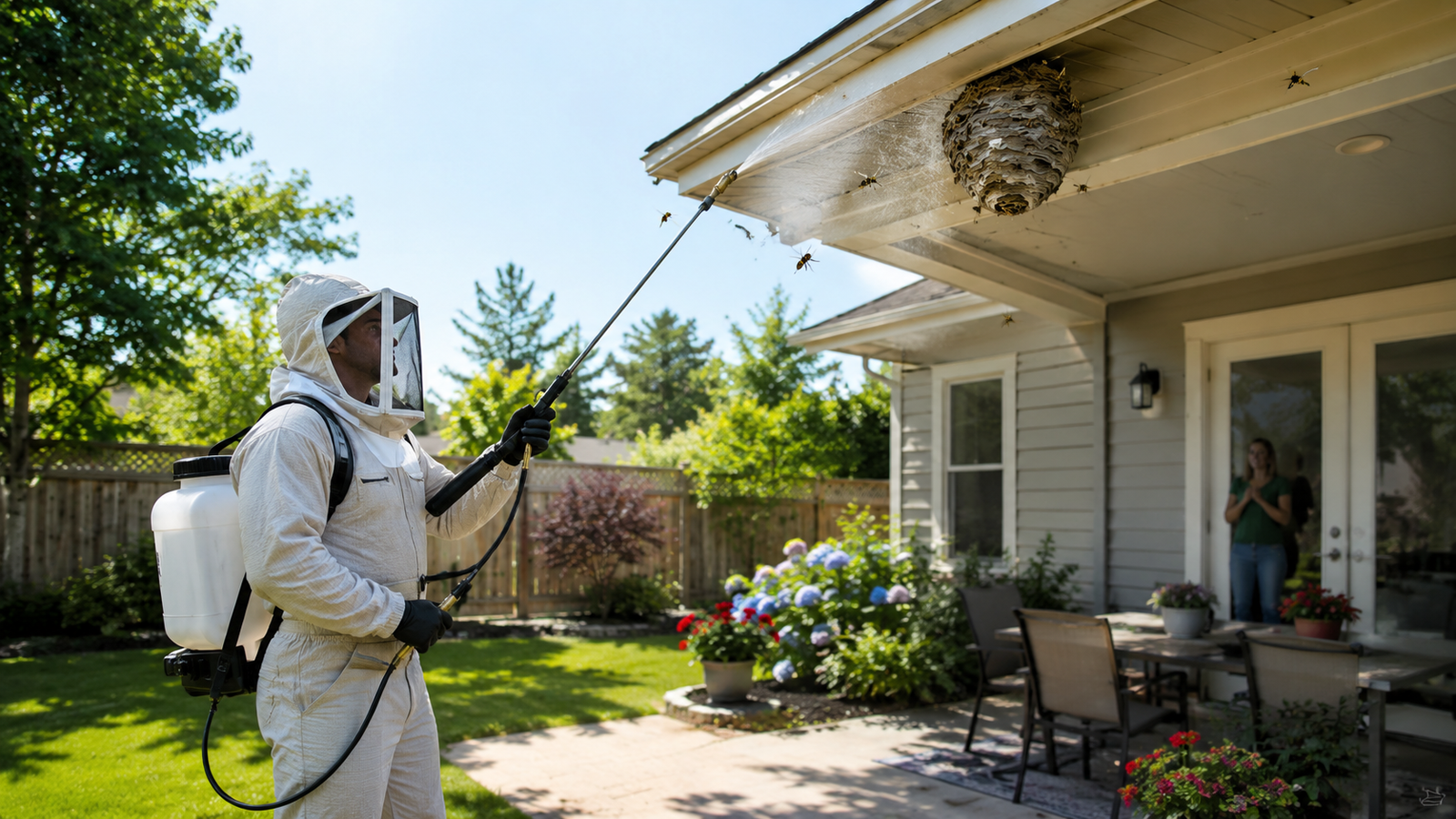
Image suggestion: Person in protective gear treating a nest at dusk ALT text: “Homeowner wearing protective gloves treating yellow jacket nest at dusk”
Step 7: Best Commercial Sprays
When choosing the best spray for yellow jackets, look for products specifically labeled for wasps and yellow jackets, with a jet-spray nozzle that lets you treat from a safe distance — ideally 15 feet or more.
| Product Type | Best For | Range | Notes |
|---|---|---|---|
| Aerosol jet sprays | Visible aerial nests | 15–20 ft | Fast knockdown, EPA-registered active ingredients |
| Dust formulations | Underground and wall void nests | Direct application | Long-lasting, ideal for voids |
| Foam sprays | Wall voids, hard-to-reach gaps | Direct application | Expands to fill cavities |
| Traps/baits | Prevention and reducing foragers | N/A | Best used before nest establishes |
Always read and follow the label instructions exactly — the EPA regulates pesticide labeling specifically so products are used safely and effectively. The label is the law, not just a suggestion.
Step 8: When to Call a Professional
DIY yellow jacket removal works fine for small, accessible nests. But you should schedule a professional wasp inspection if:
- The nest is inside a wall void, attic, or chimney
- The colony appears large (heavy, constant traffic)
- Anyone in the household has a known insect sting allergy
- The nest is in a location that’s hard to reach safely
- Previous DIY attempts haven’t worked
Pest professionals have access to commercial-grade products, protective suits, and specialized equipment that make nest removal far safer — especially for underground or structural nests where digging or drilling could provoke the entire colony at once. If you’re dealing with a large or fast-growing yellow jacket infestation, our team can walk your property and recommend the right course of action.
Step 9: How to Remove an Underground Yellow Jacket Nest
Underground nests are some of the trickiest to handle because the true size of the colony is hidden beneath the surface. Here’s a safer approach to underground yellow jacket nest removal:
- Locate the entrance during the day, but wait until dusk or before dawn to treat it.
- Apply an appropriately labeled dust or aerosol product directly into the opening, following label directions for underground use.
- Do not seal the hole immediately. Give it 24–48 hours so returning workers contact the treatment and carry it into the nest.
- Watch for reduced activity over the following days before assuming the nest is inactive.
- Fill the hole with soil once activity has fully stopped, and consider reseeding the area with grass to prevent new nests forming in the same soft spot.
Never pour water into an underground nest or try to flood it out — this often just angers the colony without eliminating it, and it can send agitated wasps swarming toward the surface, including toward you.
Mistakes to Avoid When Removing Yellow Jackets
Even well-meaning homeowners make these common errors when trying to get rid of yellow jackets around their home:
- Standing too close during treatment. Always use products rated for long-range spraying.
- Treating during the day. Daytime treatment means more active workers ready to defend the nest.
- Sealing an entrance too soon. This traps agitated wasps, who may find another way out — sometimes into your home.
- Using a flashlight pointed at the nest. Light attracts yellow jackets at night; use a red-filtered light or work by moonlight if possible.
- Ignoring protective clothing. Loose, light-colored, thick clothing offers better protection than shorts and a t-shirt.
- Ignoring multiple nests. Large properties can have more than one nest active at the same time.
How to Prevent Yellow Jackets from Coming Back
Yellow jacket prevention is an ongoing habit, not a one-time task. These steps help keep new colonies from establishing on your property, and pair well with our full seasonal wasp prevention checklist:
- Seal outdoor trash cans with tight-fitting lids and rinse recyclables before storing them outside.
- Clean up fallen fruit from trees promptly, since fermenting fruit is a major late-summer attractant.
- Cover sweet drinks and food at outdoor gatherings, especially in early fall.
- Inspect and seal gaps in siding, eaves, and foundation vents each spring before nest-building season starts — our guide to sealing common pest entry points covers this in detail.
- Fill in old rodent burrows in the yard, since abandoned burrows are prime real estate for underground nests.
- Set up early-season traps in April or May to catch queens before they establish a colony.
- Trim shrubs and ground cover away from the house to reduce hidden nesting spots.
Many university extension programs, including those affiliated with USDA-supported research, recommend early-season monitoring as one of the most effective long-term yellow jacket prevention strategies, since a single queen caught in spring can prevent an entire colony later in the year.
Yellow Jackets vs Wasps
“Wasp” is actually a broad category that includes yellow jackets, but there are some key differences worth knowing before you decide how to treat a nest.
| Feature | Yellow Jackets | Other Wasps (e.g., Paper Wasps) |
|---|---|---|
| Body shape | Thicker, shorter | Slimmer, longer legs dangling in flight |
| Nest type | Enclosed, papery | Open, umbrella-shaped comb |
| Aggression level | High, especially near nest | Moderate |
| Typical nest location | Underground, wall voids | Eaves, branches |
| Diet | Insects early, sugar later | Similar, less trash/food-seeking |
Image suggestion: Side-by-side comparison of yellow jacket and paper wasp ALT text: “Comparison of yellow jacket and paper wasp side by side”
Yellow Jackets vs Bees
This comparison matters most for safety and treatment decisions, since bees — especially honeybees — are important pollinators and shouldn’t be treated the same way as yellow jackets. For a closer look, see our guide on telling bees and wasps apart.
| Feature | Yellow Jackets | Honeybees |
|---|---|---|
| Body | Smooth, shiny, thin waist | Fuzzy, rounder body |
| Stinging behavior | Can sting repeatedly | Sting once, then die |
| Nest | Paper nest, hidden | Wax comb, often visible |
| Aggression | High | Generally low unless provoked |
| Ecological role | Minor pollination, mostly predator/scavenger | Major pollinator |
If you’re not sure whether you’re dealing with bees or yellow jackets, it’s worth pausing before treating anything. Honeybee colonies are increasingly protected in many states, and some regions have guidelines around relocating rather than exterminating them. When in doubt, a professional inspection can confirm what you’re dealing with before any treatment begins.
Image suggestion: Honeybee on a flower for comparison ALT text: “Honeybee on flower compared to yellow jacket appearance”
Frequently Asked Questions
1. What is the fastest way to get rid of yellow jackets? For a small, accessible nest, a labeled aerosol jet spray applied at dusk directly into the entrance is typically the fastest DIY option. For larger or hidden nests, a professional treatment works faster and more safely.
2. Can I pour boiling water into a yellow jacket nest? This method is sometimes suggested online, but it’s inconsistent and risky. It often fails to reach the full colony and can agitate wasps enough to send them swarming toward you.
3. How do I know if a nest is underground or in my wall? Underground nests show a visible hole in the soil with steady wasp traffic. Wall nests usually show wasps entering and exiting through a small gap in siding, brick, or trim, often with a faint buzzing sound audible from inside.
4. Is it safe to remove a yellow jacket nest myself? Small, low, easily accessible nests can often be treated safely by homeowners using labeled products and protective clothing. Nests in walls, attics, or larger colonies are safer left to a licensed professional.
5. What smells keep yellow jackets away? Peppermint, clove, geranium, and lemongrass scents are commonly used as natural deterrents. They work best for prevention rather than eliminating an existing nest.
6. Why are there so many yellow jackets in late summer? Colonies reach peak population in late summer, and their diet shifts from insects to sugars, making them more likely to show up around food, drinks, and trash.
7. Do yellow jackets return to the same nest each year? No. Yellow jacket nests are typically abandoned each winter, and only new queens survive to start fresh colonies elsewhere the following spring. However, the same environmental conditions (food, shelter, soil type) can attract new nests to the same general area.
8. How many times can a yellow jacket sting? Unlike honeybees, yellow jackets don’t lose their stinger after use, so a single wasp can sting multiple times in one encounter.
9. What should I do if I’m stung multiple times? Move away from the area immediately, wash the sting sites, and apply a cold compress. Seek medical attention if you experience difficulty breathing, swelling of the face or throat, dizziness, or widespread hives.
10. When is the best time of year to prevent yellow jacket nests? Early spring, typically April through May, is the best window. Trapping queens before they establish a nest is one of the most effective prevention strategies available.
11. Are yellow jackets attracted to certain colors? Yes. Bright florals and dark colors can draw more attention from foraging wasps, which is one reason experts often recommend light, plain-colored clothing during outdoor activities in late summer.
12. Can pets get stung by yellow jackets? Yes, and multiple stings can be dangerous for pets, particularly around the face or mouth. Contact a veterinarian promptly if a pet is stung multiple times or shows signs of swelling or distress.
Conclusion
Dealing with yellow jackets around your home doesn’t have to mean living with stings all summer. Once you know how to identify the nest, choose the right treatment, and follow up with solid prevention habits, you can take back your yard with confidence. Small, accessible nests are often manageable with the DIY steps above — but when a colony is large, hidden, or in a hard-to-reach spot, it’s smarter and safer to bring in a professional.
If you’re dealing with an active infestation or just aren’t sure what you’re up against, contact PestKills.com today to schedule a professional yellow jacket inspection and get a treatment plan built around your specific property. You can also check out our emergency pest control services if you need same-day help.