As winter fades and ground temperatures warm up, the natural world undergoes a massive awakening. Blooming flowers and greener lawns are welcome sights, but this seasonal transition also triggers the return of spring pests.
Implementing spring pest prevention early in the season is the most effective way to protect your property before insect populations explode. This guide breaks down which species are waking up, why your home is vulnerable, and how to stop them in their tracks.
Table of Contents
Why Pests Become More Active in Spring
Spring marks the end of overwintering dormancy for millions of insects. As daylight lengthens and temperatures climb above 50°F, insect metabolisms kick into high gear — queens wake to establish new colonies, and underground colonies send out swarms to find new nesting sites.
Combined with heavy spring rains driving insects out of saturated soil, spring pests aggressively seek indoor structures for food, warmth, and dry shelter.
Most Common Spring Pests
A specific group of foraging and reproductive spring pests becomes highly active as temperatures rise:
| Pest | Why It’s Active in Spring | Main Risks | Best Prevention Method |
|---|---|---|---|
| Ants | Colonies wake up hungry, scouts forage widely | Food contamination, structural damage | Wipe counters, gel bait along trails |
| Termites | Mature colonies launch flying swarms | Hidden structural wood damage | 6-inch gap between soil and siding |
| Mosquitoes | Overwintering eggs hatch in spring puddles | West Nile virus, heartworms | Empty standing water weekly |
| Flies | Rising heat speeds egg hatching | E. coli, Salmonella | Seal garbage bins tightly |
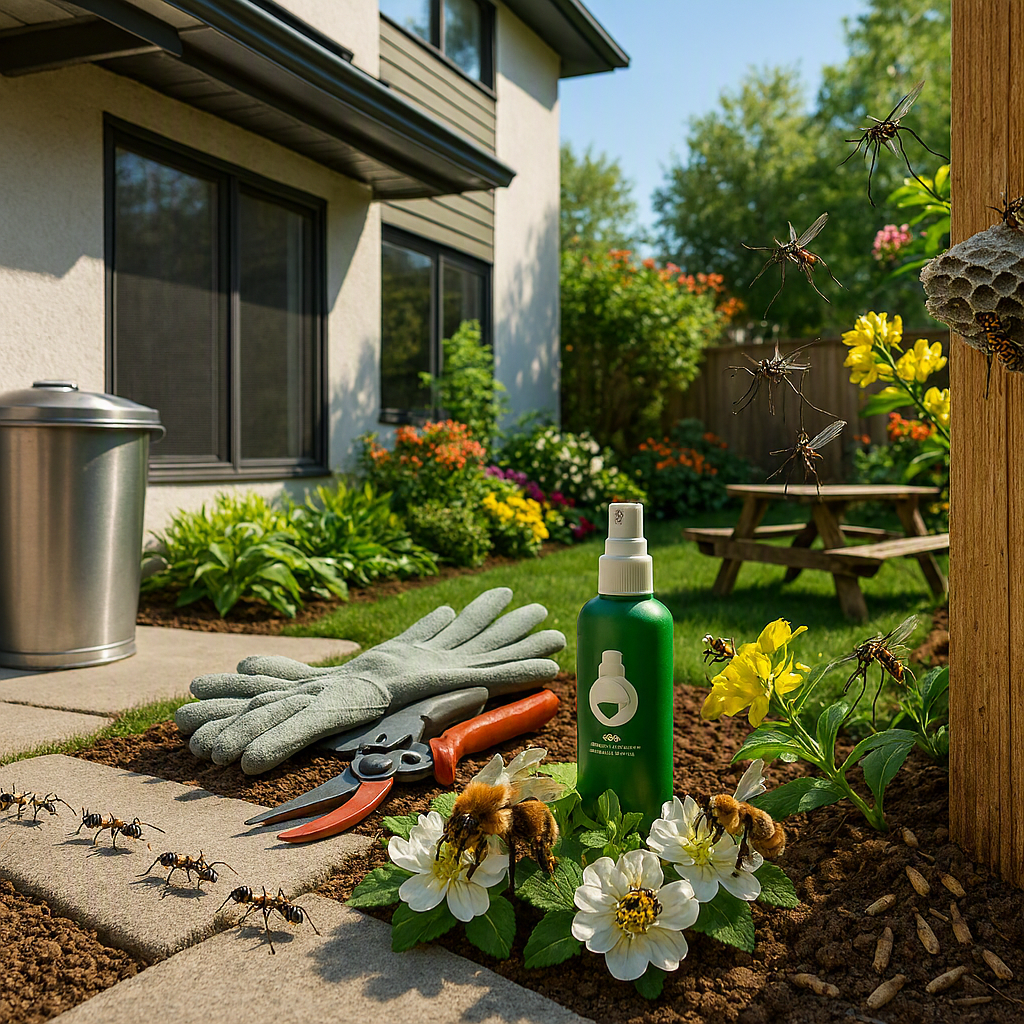
| Wasps | Fertilized queens emerge to build nests | Painful, dangerous stings | Seal gaps in roof eaves and fascia |
| Bees | Spring pollen prompts swarming | Stings if disturbed | Leave outdoor nests alone, call a keeper |
| Ticks | Nymphs emerge from leaf litter | Lyme disease, Anaplasmosis | Clear leaves, mow lawn short |
| Fleas | Warming soil breaks pupal dormancy | Skin irritation, tapeworms | Year-round flea prevention for pets |
| Spiders | Egg sacs hatch, adults hunt active bugs | Cobwebs, rare bites | Sweep webs, clear cardboard storage |
Signs of Spring Pest Activity
Catching early warning signs makes spring pest control much simpler:
- Discarded swarmer wings — translucent, equal-length wings on window sills signal a termite swarm
- Fine dirt mounds in pavement — small, volcano-shaped mounds indicate active ant tunneling
- Paper-like umbrella nests — grey paper nests on porches or deck railings mean a new wasp colony
- Scurrying along baseboards — single scouts in daylight mean a larger colony is hunting nearby
How to Prevent Spring Pests
A proactive approach to home maintenance is the best way to stop spring pests before they establish a foothold:
- Conduct spring home inspections — check crawl spaces, rim joists, and attic rafters for mud tubes or chewing damage
- Seal cracks and entry points — concrete sealant on foundation cracks, caulk around window frames and door trims
- Remove standing water — turn over containers, change birdbath water twice a week
- Clean out roof gutters — clogged gutters breed mosquitoes and attract wood-boring pests
- Trim vegetation — branches and shrubs at least 2 feet from siding and roof
- Store food properly — airtight containers instead of open boxes or bags
- Reduce structural moisture — a dehumidifier below 50% humidity, fixed leaks and spigots
- Maintain lawns and gardens — rake leaves and mow short to deny ticks and fleas moisture
Best Pest Control Methods for Spring
- Apply a non-repellent chemical barrier — around the foundation so foraging ants carry it back to the colony.
- Deploy indoor gel and bait stations — near active trails instead of aerosol sprays.
- Apply beneficial nematodes to soil — destroys flea pupae, lawn grubs, and subterranean larvae in late spring.
Natural Ways to Keep Spring Pests Away
- Create an essential oil spray — peppermint, clove, or eucalyptus mixed with water around sills and doorways
- Spread diatomaceous earth — along baseboards and inside wall voids to dehydrate crawling insects
- Use white vinegar cleansers — strips away ant scent trails on countertops and cabinets
Common Spring Pest Control Mistakes
- Using repellent sprays on active ant trails — can trigger “budding,” splitting the colony into multiple nests
- Leaving wasp traps right next to patios — draws more stinging insects toward seating areas
- Ignoring leaf litter under decks — wet leaves create an attractive home for ticks, fleas, and spiders
When to Contact a Professional
Call a professional if your inspection reveals active mud tubes, flying swarms emerging from baseboards, or a large wasp nest in an attic vent. Termites and carpenter ants work quickly and need specialized tools or foaming treatments to protect your home’s structure.
Frequently Asked Questions
Why do I see flying ants inside my house during the spring? It usually means a mature colony is nesting in your walls or subfloor, with winged ants looking to mate and start new colonies.
How do I tell the difference between a flying ant and a termite? Termites have straight antennae, thick waists, and equal-length wings. Flying ants have bent antennae, pinched waists, and longer front wings.
Does a cold winter mean there will be fewer spring pests? No. Most pests survive by burrowing deep in soil or hiding in insulation, and snow cover can actually help them survive.
What’s the fastest way to stop an early spring ant invasion? Clean up food spills and use non-repellent gel baits along their path — spraying only scatters the colony into new nests.
Why are mosquitoes already biting in early spring? Some overwinter as adult females and start biting as soon as temperatures stay above 50°F.
How do ticks get into a clean backyard during the spring? Wildlife like deer, mice, and birds carry them in while traveling through your landscaping.
Should I kill the spiders I find inside my home in the spring? No — they’re beneficial predators that hunt other spring insects. Leave non-dangerous species alone or move them outside.
Will heavy spring rains make pest problems worse? Yes. Saturated soil forces underground colonies of ants and roaches to move indoors to stay dry.
Is mulch around the foundation safe from spring termites? Standard wood mulch traps moisture and feeds termites — keep it at least 12 inches from the foundation, or use gravel instead.
How often should I wash out my outdoor trash cans in spring? At least once a month, since spring heat speeds up decomposition and attracts flies and wasps.
Key Takeaways
- Seal foundation vulnerabilities — fill gaps and cracks early in the season with silicone caulk
- Ditch standing water sources — clean gutters and empty puddles weekly to disrupt mosquito breeding
- Use bait systems over aerosols — non-repellent baits let pests carry treatment back to the queen
- Maintain a clean perimeter — trim trees and bushes back at least 2 feet from the home
Staying ahead of spring pests is far easier than fighting an established infestation later in the season. For related reading, see our Pest Control overview, our Signs of Pest Damage guide, our DIY Pest Control guide, or our Get Rid of Termites guide.
Sources: EPA: Spring Pest Control Advice · CDC: Preventing Tick and Mosquito Growth · USDA: Spring Insect Migration Data · UC IPM: Early Season Household Pest Management · Texas A&M AgriLife Extension: Spring Insect Swarmers