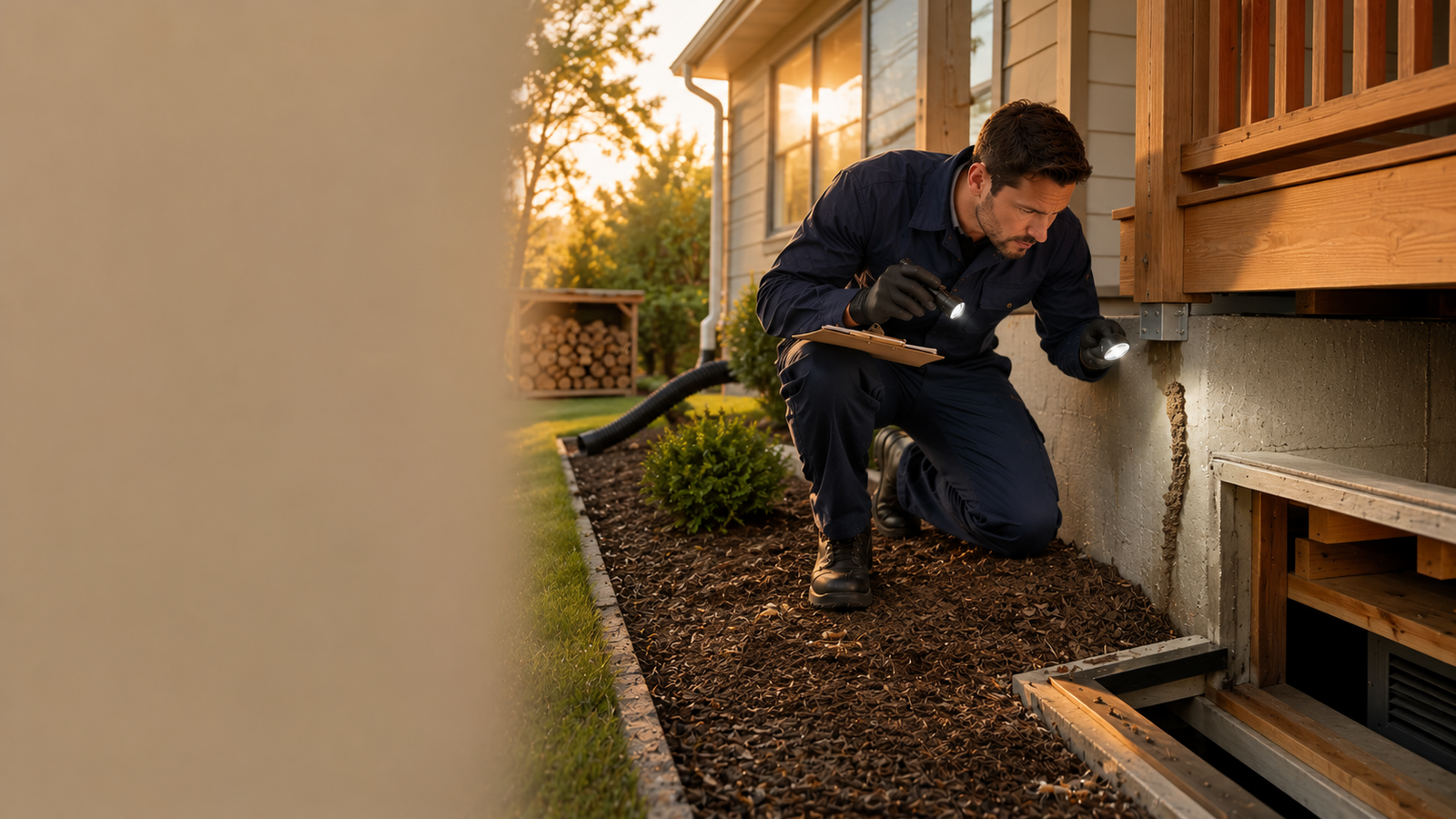
Discovering a termite problem is a homeowner’s worst nightmare. These tiny, wood-destroying insects work around the clock, chewing through structural timbers, flooring, and drywall for years before any obvious warning appears.
Implementing a proactive strategy to prevent termites is arguably the smartest investment you can make in your property. Taking defensive measures today is far less expensive than repairing thousands of dollars in structural damage later.
Table of Contents
Why Termite Prevention Matters
Termites cause billions of dollars in property damage annually, and standard homeowners insurance rarely covers remediation. Proactive steps to prevent termites matter because of:
- Severe structural damage — mudsills, floor joists, and roof supports are prime targets
- Extremely expensive repairs — rebuilding hidden structural components requires invasive contractor labor
- The reality of silent infestations — subterranean termites eat wood from the inside out, leaving the exterior intact
- Long-term property protection — consistent maintenance preserves resale value and keeps a home insurable
What Attracts Termites?
Knowing what draws them in is the first step to prevent termites effectively. They seek two critical resources: cellulose and moisture. Risk factors include:
- Persistent moisture — saturated soil around the foundation
- Direct wood-to-soil contact — siding, door frames, or deck posts touching the dirt
- Firewood piles near the home — an immediate food source and nesting site
- Thick landscaping mulch — holds moisture against foundation walls
- Leaking pipes and outdoor spigots — creates local wet zones that sustain colonies
- Poor landscape drainage — clogged gutters or flat grading that pools water
- Cracks in concrete foundations — hairline fractures give entry points
- Untreated softwoods — unsealed, non-pressure-treated wood in decks and fences
Indoor Termite Prevention
Managing moisture and keeping structural framing dry is key to preventing termites indoors:
- Keep crawl spaces and basements ventilated — vapor barriers and unobstructed foundation vents
- Repair internal plumbing leaks immediately — check under sinks, behind machines, and around water heaters
- Inspect wooden structures regularly — check floor joists and sill plates for changes in texture
- Seal interior foundation cracks — hydraulic cement or polyurethane sealants on basement gaps
Outdoor Termite Prevention
Creating a dry buffer zone around your exterior perimeter is your primary defense:
- Eliminate wood-to-soil contact — keep siding and trim at least 6 inches above the soil grade
- Store firewood safely away from the house — elevated racks at least 20 feet from the structure
- Improve drainage and keep gutters clean — direct downspouts 3 to 5 feet from foundation walls
- Reduce and manage excessive mulch — a 12–18 inch gravel border instead of mulch against the foundation
- Remove dead trees, roots, and stumps — eliminates nesting sites near your home
- Trim plants and shrubs from exterior walls — allows airflow and keeps walls visible for inspection
Seasonal Termite Prevention Tips
Termite activity shifts with the seasons, so adjust your approach to prevent termites throughout the year:
Spring and summer — peak swarming season; check windowsills and walls for discarded wings after warm rains, and make sure drainage systems handle heavy downpours.
Autumn and winter — subterranean termites dig deeper toward heated foundations; prioritize exclusion work, checking crawl space vents and sealing utility pipe gaps.
Common Mistakes That Increase Termite Risk
- Allowing soil or mulch to build up against siding — slowly covers the foundation and gives termites direct access
- Storing cardboard boxes in damp crawl spaces — a concentrated cellulose food source
- Neglecting leaky exterior spigots — saturates soil, creating ideal colony conditions
- Constructing untreated wood decks directly on dirt — invites wood-boring pests directly to your property
Natural Termite Prevention Methods
If you’d rather prevent termites without relying entirely on synthetic soil treatments, these non-toxic techniques work well:
- Nematodes — beneficial roundworms sprayed into soil naturally eliminate subterranean termites
- Borate wood treatments — sodium borate solutions penetrate exposed timber, stopping termites from digesting cellulose
- Orange oil (D-limonene) — injected into wood galleries to eliminate drywood termites on contact
Early Warning Signs of Termites
- Mud tubes on foundations — pencil-thick tunnels climbing concrete walls or piers
- Discarded wings — small piles of identical, translucent wings on sills or webs
- Hollow-sounding wood — a dull, papery sound when tapped
- Frass — small mounds of hexagonal pellets beneath furniture or baseboards
When to Contact a Professional
DIY moisture control and exclusion are highly effective, but an active infestation needs a professional response, since colonies can number in the hundreds of thousands.
Schedule annual inspections — licensed inspectors use thermal imaging, acoustic sensors, and moisture meters to catch hidden infestations.
Professional treatment options — baiting stations like Sentricon or liquid soil barriers eradicate the entire underground network.
Frequently Asked Questions
Can termites eat through concrete foundations? No, but they can squeeze through hairline cracks as thin as 1/32 of an inch.
What’s the difference between an ant and a termite? Ants have a pinched waist and elbowed antennae. Termites have a thick, straight waist and straight, bead-like antennae.
Does pressure-treated wood prevent termites completely? It’s highly resistant but not bulletproof — as wood cracks or weathers, termites can still tunnel through the untreated core.
How long does a professional termite preventative treatment last? Liquid soil barriers typically protect a home for 5 to 10 years, while bait stations need annual maintenance checks.
Do termites die out on their own? No. Colonies persist as long as food and moisture are available — a queen can live for decades.
Can you prevent termites using cedar mulch? Heartwood cedar has natural repellent resins, but they fade as the mulch weathers and can still harbor pests over time.
Can I do my own termite soil treatment? Over-the-counter products exist, but a complete, unbroken barrier requires trenching and specialized injection equipment — gaps in DIY barriers are easily bypassed.
Why do termites swarm inside a house? It means a mature colony is already nesting inside the walls or under the foundation, requiring immediate professional help.
Key Takeaways
- Eliminate moisture — fix leaks, keep gutters functional, and maintain humidity below 50%
- Cut off ground contact — keep a clear 6-inch gap between soil and wood siding
- Keep wood far away — store firewood and mulch away from the foundation
- Perform regular inspections — watch for mud tubes, wings, and hollow wood, and schedule annual professional checks
Consistent moisture control and exclusion work are what actually prevent termites long-term, not a single treatment. For related reading, see our Termite Identification guide, our Get Rid of Termites guide, our Termite Damage guide, or our Prevent Household Pests guide.
Sources: EPA: Termites — How to Identify and Control Them · USDA Forest Service: Subterranean Termites Prevention · UC IPM: Termite Management Guidelines · Clemson University Extension: Subterranean Termite Control · NC State University Extension: Wood-Destroying Insects