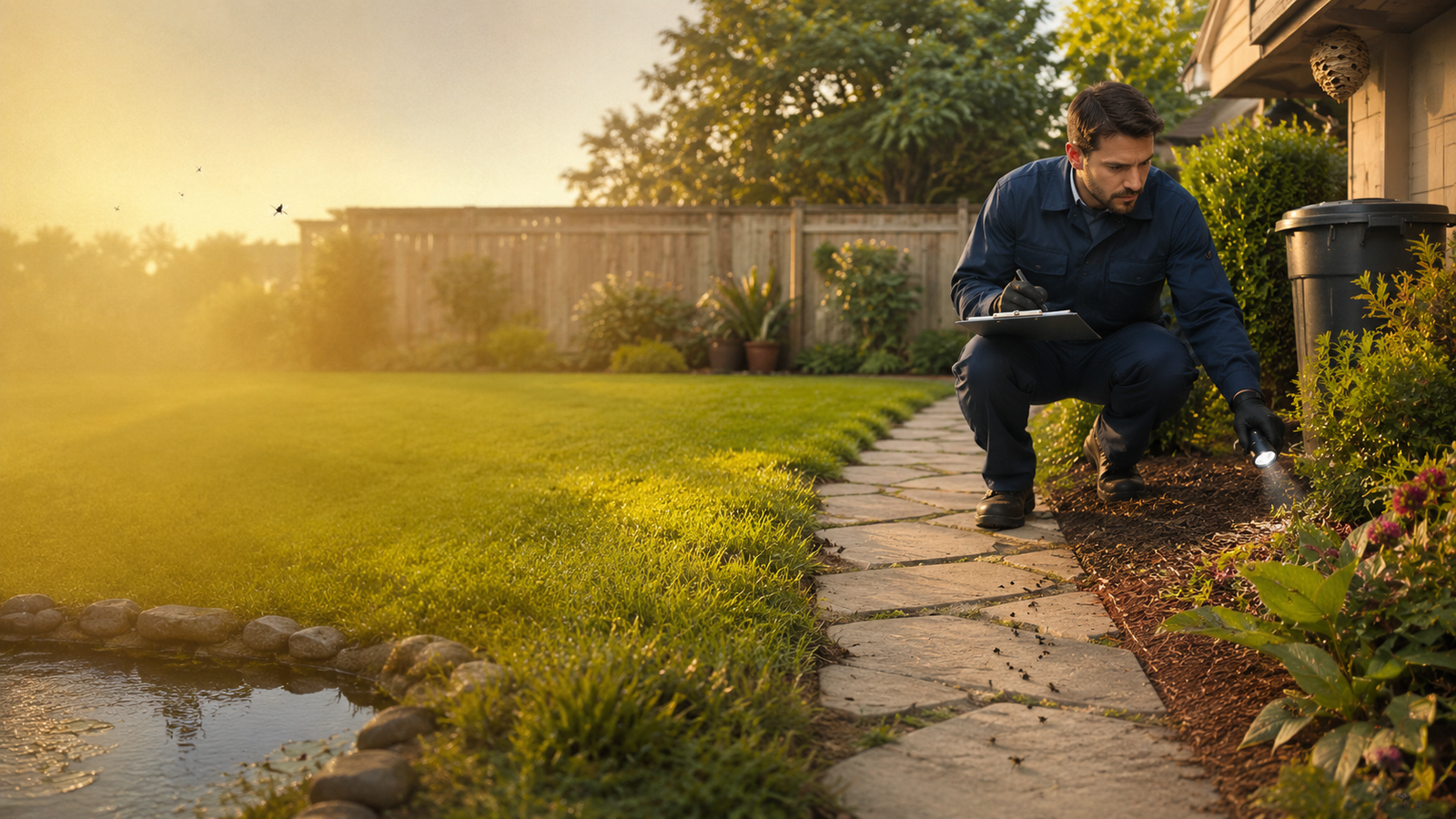
A vibrant backyard is an extension of our living space, offering a place to relax, garden, and gather. But these same open spaces serve as natural habitats for a wide range of destructive and biting outdoor pests.
Allowing outdoor pests to breed unchecked in your yard ruins outdoor activities and invites structural trouble — most indoor pest issues start right in the soil, grass, or trees surrounding your foundation. Proactive prevention stops these intruders where they live.
Table of Contents
Why Outdoor Areas Attract Pests
Your yard is an open ecosystem filled with the core resources all animals need: food, water, and shelter. Overgrown turf holds humidity, leaf litter offers hiding spaces, nectar draws stinging insects, and standing water creates breeding sites. When these environments become overcrowded, outdoor pests naturally look to expand their territory right through your doors and windows.
Most Common Outdoor Pests
Backyards support many different insect and rodent populations:
| Pest | Where It’s Commonly Found | Main Risks | Best Control Method |
|---|---|---|---|
| Mosquitoes | Birdbaths, blocked gutters, puddles | West Nile virus, itchy bites | Microbial larvicide rings in standing water |
| Ants | Beneath patios, driveway seams, lawns | Invade kitchens, undermine pavement | Non-repellent granular baits on mounds |
| Wasps | Deck railings, tree branches, eaves | Aggressive stings, allergic risk | Knock down early nests at night |
| Bees | Hollow trunks, flowering beds | Stings (though vital pollinators) | Leave foragers alone, relocate nests |
| Ticks | Perimeter grass, damp leaf litter | Lyme disease, spotted fever | Liquid treatment on yard-to-woods border |
| Fleas | Shaded soil, pet resting sites | Skin irritation, tapeworms | Treat pets year-round, spray shaded turf |
| Rodents | Woodpiles, brush, compost | Chewed siding, disease | Enclose food scraps, secured snap traps |
| Termites | Dead stumps, buried wood, mulch | Hidden structural damage | Clear soil lines, perimeter bait traps |
| Snails | Damp vegetable beds, mulch | Devoured leaves and seedlings | Copper flashing tape barriers |
| Slugs | Dark, moist soil under leaves | Stripped hostas and greens | Beer traps, iron phosphate bait |
Signs of an Outdoor Pest Problem
Since outdoor environments are wide open, watch for these subtle signs:
- Symmetrical holes in plant leaves — chewed or skeletonized foliage from caterpillars, slugs, or beetles
- Raised dirt ridges across the lawn — spongy soil lines mean moles or grubs tunneling below the surface
- Piles of translucent wing castings — discarded wings on decks signal a recent termite swarm
- Active ground trails through grass — worn paths indicate regular rodent travel
How to Identify Outdoor Pests
- Conduct an early morning audit — slugs and earwigs are still out feeding at sunrise
- Examine the undersides of foliage — pests hide under leaves to avoid sun and predators
- Use the white sock test for fleas — walk through shaded grass in white socks to spot jumpers
- Monitor flight patterns — wasps and yellowjackets fly a straight line back to their hidden nest
How to Prevent Outdoor Pests
A solid yard maintenance routine is the most effective way to manage outdoor pests long-term:
- Eliminate standing water — empty pots, wheelbarrows, and toys; refresh birdbaths every three days
- Mow the lawn regularly — 2.5 to 3 inches dries out damp micro-climates ticks and fleas need
- Trim bushes and trees from siding — at least 2 feet away removes bridges for crawling bugs
- Remove organic yard debris — rake leaves and clear rotting logs that shelter pests
- Store firewood safely — 20 feet from the foundation, raised off the soil
- Seal vulnerable outdoor structures — hardware cloth around shed and deck crawl spaces
- Maintain drainage systems — clear gutters and extend downspouts away from the foundation
- Keep trash bins closed — secure latches and regular washing to deter raccoons and rodents
Best Outdoor Pest Control Methods
- Apply a liquid residual foundation barrier — a 3-foot band around the base and up the wall.
- Spread granular pesticides across the lawn — targets grubs, ticks, and foraging ant colonies.
- Deploy weatherized snail and rodent baits — iron phosphate pellets and tamper-resistant stations along exterior walls.
Natural and Eco-Friendly Outdoor Pest Control
- Apply beneficial nematodes — hunt down flea pupae, beetle grubs, and cutworms in lawn soil
- Broadcast diatomaceous earth — dries out crawling bugs along garden edges and patio cracks
- Encourage native predators — bat boxes and toad shelters naturally control mosquitoes and slugs
Common Backyard Maintenance Mistakes That Attract Pests
- Overwatering lawns and gardens — soggy soil attracts mosquitoes, gnats, and wood-boring insects
- Using raw food scraps in open gardens — an easy meal for rats, mice, and flies
- Letting ripe fruit rot on the ground — draws yellowjackets, fruit flies, and rodents
When to Contact a Professional
Call a professional if you find a massive underground yellowjacket nest, extensive termite mud tubes, or a severe tick problem across your lawn. Licensed specialists have the equipment to safely treat large properties and eliminate dangerous stinging colonies.
Frequently Asked Questions
Why are mosquitoes so bad in my yard when I have no standing water? They can fly in from neighboring properties and rest in shaded bushes and tall weeds during the day.
Will regular lawn mowing actually reduce the number of ticks? Yes. Mowing exposes soil to sun and wind, drying out the humid environment ticks need to survive.
What’s the safest way to control ants on a brick patio? Use non-repellent granular baits in the cracks instead of contact sprays, so workers carry it back to the nest.
How do I stop slugs from eating my garden hostas without harsh chemicals? Bury a shallow container of beer flush with the soil — slugs are drawn to the yeast smell and drown safely.
Can termites spread into my home from a dead tree stump in the yard? Yes. They use stumps as a base before expanding through the soil toward your foundation.
Why do yellowjackets become so aggressive in the late summer? Colonies peak in size as natural food sources drop, forcing wider foraging near barbecues.
Is it safe to apply broad-spectrum bug sprays to my flowering plants? No. It kills pollinators like bees and butterflies — keep treatments on foundation lines and non-flowering shrubs.
How do I keep fleas out of my backyard if I don’t own pets? Wildlife like raccoons and deer bring them in. Secure trash, seal deck crawl spaces, and trim low bushes.
Does cedar mulch really keep wood-boring pests out of garden beds? It has some repelling effect from natural oils, but this fades within months, so don’t rely on it alone.
What attracts rats and mice to suburban backyards? Fallen birdseed, open compost, unharvested gardens, and pet food left out overnight.
Key Takeaways
- Target standing water first — empty containers weekly to stop mosquito larvae
- Keep a clean yard border — trim trees and bushes back at least 2 feet from siding
- Mow the lawn consistently — short grass dries out habitats ticks and fleas need
- Manage wood storage properly — firewood 20 feet from the home and raised off the dirt
Consistent yard maintenance is the most reliable way to keep outdoor pests from becoming an indoor problem. For related reading, see our Pest Control overview, our Signs of Pest Damage guide, our DIY Pest Control guide, or our Get Rid of Termites guide.
Sources: EPA: Outdoor Pest Management Principles · USDA: Backyard and Invasive Insect Research · CDC: Preventing Ticks and Mosquitoes in the Yard · UC IPM: Lawn and Landscape Pest Guidelines · Ohio State University Extension: Stinging Insects