Ecosystems across the globe are facing an unprecedented challenge from the rapid expansion of non-native organisms. Among these, invasive pest species present some of the most severe threats to global agriculture, native biodiversity, and residential property infrastructure.
As trade routes expand and environmental conditions shift, destructive insects are breaching natural geographic barriers at an accelerating rate. Managing these emerging pest threats requires international coordination, rapid scientific analysis, and proactive public awareness.
Table of Contents
What Is an Invasive Pest?
An invasive pest species is an insect, rodent, or pathogen introduced to an ecosystem outside its native evolutionary range that causes economic, environmental, or human health harm. In their native habitats, these organisms are kept in check by specialized predators, parasites, and competing species.
When introduced to a new environment, those natural checks are absent. Free from their evolutionary predators, invasive insects can multiply exponentially, outcompeting native wildlife and devastating local plant life.
Why Are Invasive Pests Increasing?
The surge in invasive pest species worldwide is directly linked to human activity and changing environmental systems:
- Global trade — cargo ships carrying containers and goods inadvertently transport hidden pests across oceans in days
- International travel — frequent flights let travelers accidentally carry insect eggs, larvae, or adults on luggage and clothing
- Climate change — warmer average temperatures let tropical and subtropical pests overwinter in regions once too cold to sustain them
- Rapid urbanization — cities expanding into forests and farmland create fragmented ecosystems vulnerable to aggressive newcomers
- Movement of plants and wood — nursery plant trade and untreated firewood transport remain a primary driver of forest pest expansion
Most Concerning Invasive Pests Worldwide
Several key invasive pest species have established destructive footholds across multiple continents:
| Pest | Native Region | Countries Affected | Main Damage | Current Status |
|---|---|---|---|---|
| Spotted Lanternfly | East Asia | US, parts of Europe | Feeds on sap, ruins vineyards and orchards | Spreading through US Northeast and Mid-Atlantic |
| Emerald Ash Borer | East Asia | North America, Eastern Europe | Larvae kill ash trees | Killed hundreds of millions of trees |
| Red Imported Fire Ant | South America | US, Australia, China, Europe | Stinging swarms, displaces wildlife | Established across US South, spreading to Europe |
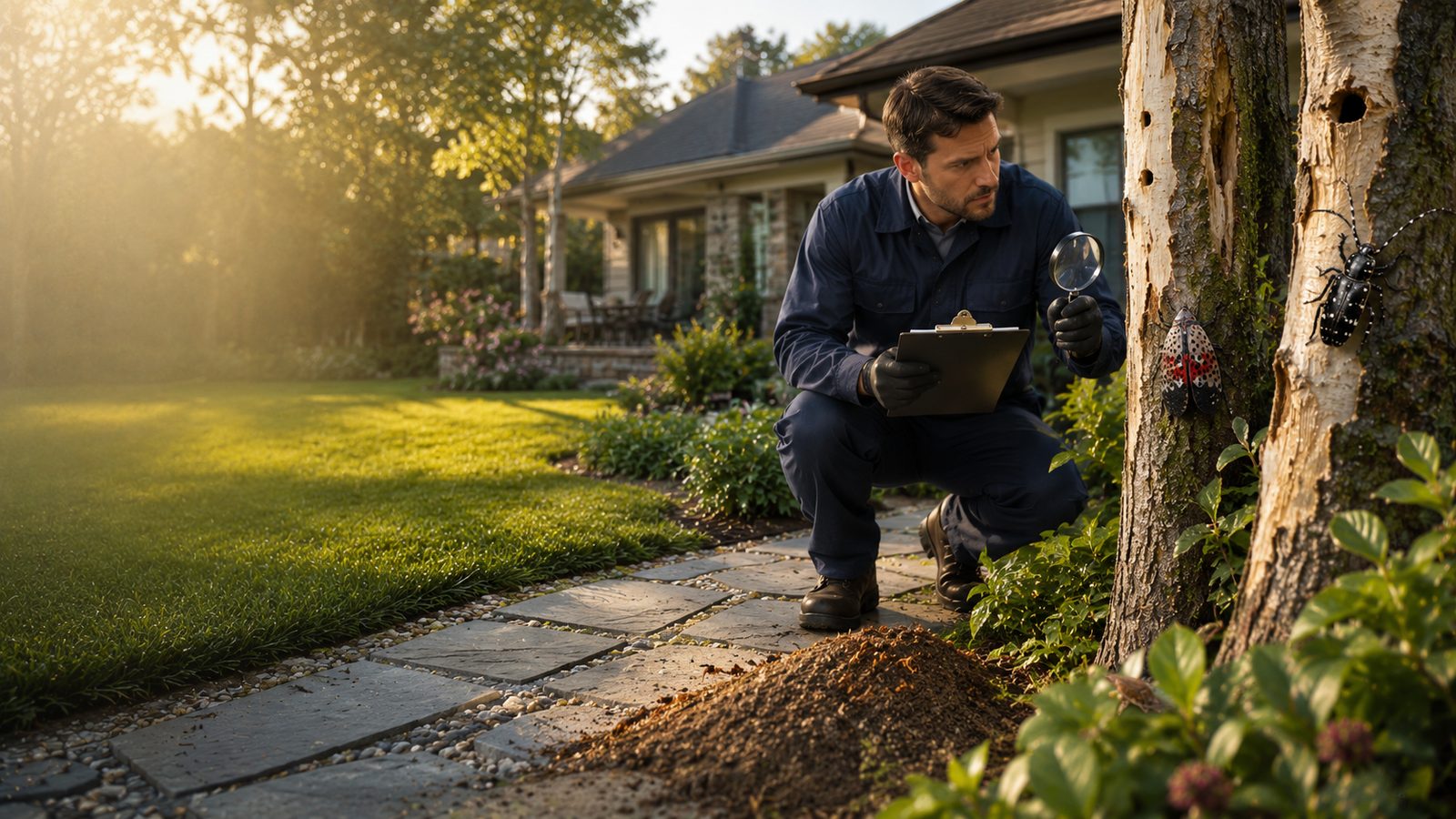
| Asian Longhorned Beetle | East Asia | North America, multiple European nations | Bores into hardwood trees | Under strict quarantine and eradication |
| Formosan Subterranean Termite | East Asia | US, South Africa, Pacific Islands | Consumes wood and live trees rapidly | Dominant in US Gulf Coast, expanding north |
| Brown Marmorated Stink Bug | East Asia | North America, Europe, South America | Ruins fruit crops, invades homes | Widespread agricultural and household pest |
Economic and Environmental Impact
Managing invasive insects costs tens of billions of dollars annually worldwide. In agriculture, these pests ruin crops, drive up production costs, and trigger trade bans on exported goods.
The environmental damage is just as severe. Forest invaders like the Emerald Ash Borer can wipe out entire tree species, destroying wildlife habitats, accelerating soil erosion, and reducing the planet’s capacity to absorb carbon dioxide.
Risks to Homeowners
These invasive pest species bring direct financial and structural challenges to residential properties:
- Severe structural damage — Formosan termites build colonies that compromise a home’s structure faster than native species
- Loss of tree canopy — wood-boring beetles kill mature yard trees within a few seasons, lowering property values
- Property overrun — overwintering stink bugs gather on exteriors and squeeze into wall voids by the thousands
- Outdoor health hazards — fire ant stings pose risks to children, pets, and people with severe allergies
How Governments Respond
Agricultural ministries and environmental agencies use structured Integrated Pest Management frameworks:
- Enforce border inspection and quarantine — customs officials use sensor tech and trained K9 units at ports to check pallets and plants for hidden pests.
- Deploy public reporting and trapping networks — regional pheromone traps and awareness campaigns map new infestations early.
- Research and introduce targeted biological controls — scientists test specific natural predators, like non-stinging parasitic wasps, from a pest’s native region.
How Homeowners Can Help Prevent the Spread
Public vigilance is one of the most effective tools for slowing the spread of invasive pest species:
- Buy firewood where you burn it — never transport raw firewood across state or county lines
- Inspect outdoor gear and vehicles — wash campers and gear after traveling through known infestation zones
- Report suspicious insects immediately — photograph and report unfamiliar bugs to your local extension office
- Plant native species — native trees and shrubs support local predators and resist pest pressure better
- Scrape away egg masses — remove and destroy spotted lanternfly egg masses from trees, cars, and furniture
Recent Global Trends in Invasive Pests
Data from global biosecurity networks shows the rate of new introductions is rising, driven by faster shipping and expanding trade routes that let insects move between continents alive and healthy.
Milder winters are also allowing established invasive pest species to expand further north and south into zones once protected by freezing temperatures, pushing biosecurity efforts from reactive eradication toward predictive modeling and stricter border controls.
Frequently Asked Questions
What makes an insect species become “invasive”? It’s introduced to a new region where it lacks natural predators, letting it multiply rapidly and cause documented economic, environmental, or health harm.
How do invasive insects manage to travel between continents? Most travel as hidden hitchhikers inside shipping pallets, cargo holds, nursery plants, or as undetected egg masses on vehicles.
Why shouldn’t I transport firewood when I go camping? Untreated wood often harbors hidden beetle larvae or fungal spores that spread devastating forest pests to new areas.
Can biological control methods backfire and cause new environmental problems? Modern programs require years of quarantined testing to ensure the introduced predator is host-specific and won’t harm native wildlife.
What should I do if I spot a spotted lanternfly or an unusual beetle? Capture it or take a clear photo, note your location, and report it to your local extension service or agricultural department.
Are invasive pests more destructive than native pest species? Generally yes — native pests evolved alongside local predators that keep numbers in check, while invasive species lack those controls.
How does climate change affect the spread of invasive insects? Warmer temperatures let them survive winters in regions once too cold, leading to faster reproduction and larger territories.
Can a homeowner permanently eliminate an invasive species from their yard? Localized damage can be managed through trapping and exclusion, but permanent regional eradication usually needs coordinated government programs.
Key Takeaways
- Understand the threat — invasive pest species thrive because they lack natural predators in new environments
- Buy firewood locally — prevents spreading devastating forest pests
- Report strange sightings — photos of unfamiliar bugs help agricultural offices track new threats
- Inspect after traveling — wash vehicles and gear after visiting known infestation zones
Staying alert to invasive pest species is one of the most effective ways ordinary homeowners can help slow their spread. For related reading, see our Pest Control overview, our Signs of Pest Damage guide, our DIY Pest Control guide, or our Get Rid of Termites guide.
Sources: USDA: Hungry Pests Invasive Species Program · FAO: International Plant Protection Convention · EPA: Invasive Species Resources · CABI Invasive Species Compendium · Center for Invasive Species and Ecosystem Health