Cockroaches are among the most resilient structural pests on the planet. They can survive weeks without food, resist common over-the-counter sprays, and multiply rapidly inside hidden wall voids. Spraying a bug when you see it on the kitchen floor does nothing to solve the broader issue.
To get rid of cockroaches permanently and eliminate a deeply embedded infestation, you need a systematic approach. Relying only on aerosols or bug bombs just scatters the insects deeper into your walls. This guide gives you a clear blueprint using professional-grade techniques.
Table of Contents
Why Cockroaches Invade Homes
Before you can get rid of cockroaches for good, it helps to understand why they entered in the first place. They’re looking for specific survival elements:
- Food sources — grease splatters, crumbs, dirty dishes, pet food, even cardboard and wallpaper glue
- Water sources — leaking pipes, refrigerator condensation, standing water in drains, pet bowls
- Shelter — tight spaces where surfaces touch both sides of their bodies, like cracks behind baseboards
- Warm environments — heat from refrigerator compressors, dishwashers, and water heaters
- Entry points — torn window screens, unsealed pipe penetrations, weep holes, gaps under doors
Signs of a Cockroach Infestation
Since roaches are nocturnal, you’ll need these clues to confirm you actually need to get rid of cockroaches rather than deal with a one-off sighting:
- Live cockroaches — active roaches at night signal a growing population
- Droppings — small roaches leave pepper-like specks; larger species leave ridged, cylindrical droppings
- Egg cases (oothecae) — dark brown, purse-shaped capsules glued under drawers or behind cabinets
- Musty odor — a heavy, oily smell from aggregation pheromones in large populations
- Smear marks — dark liquid streaks along walls and baseboards in damp environments
- Shed skins — hollow, light-brown casings left behind as nymphs molt into adults
Step-by-Step Cockroach Control Process
Follow this five-stage process to get rid of cockroaches from the ground up:
- Identify the species — German cockroaches have two dark stripes behind the head and prefer kitchens; American cockroaches are larger, reddish-brown, and prefer damp basements.
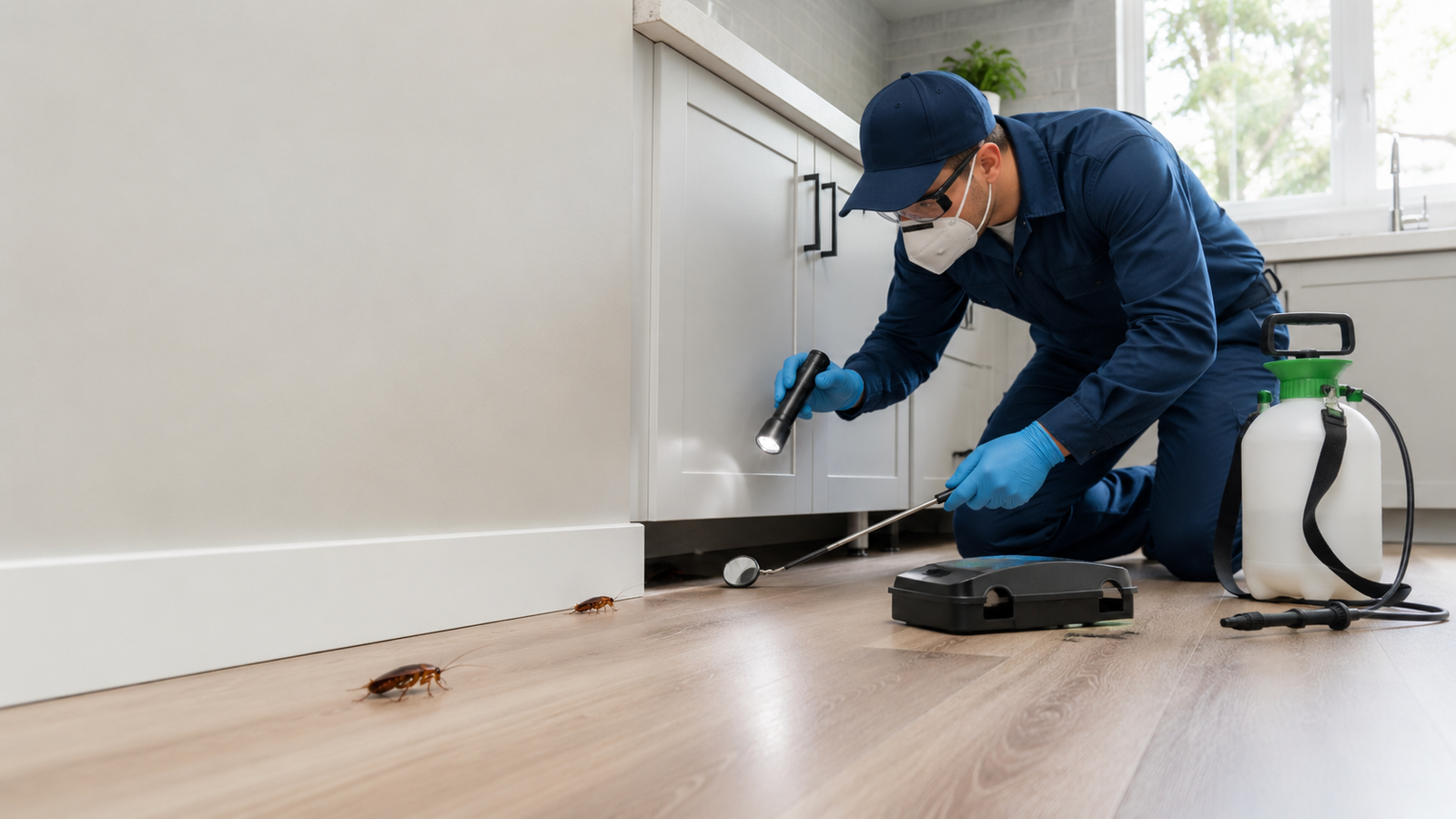
- Inspect active areas — pull out appliances and use a flashlight to check hinges, drawers, and pipe penetrations under sinks.
- Remove food and seal entry points — clean grease, store pantry items in airtight containers, and seal gaps with caulk and steel wool.
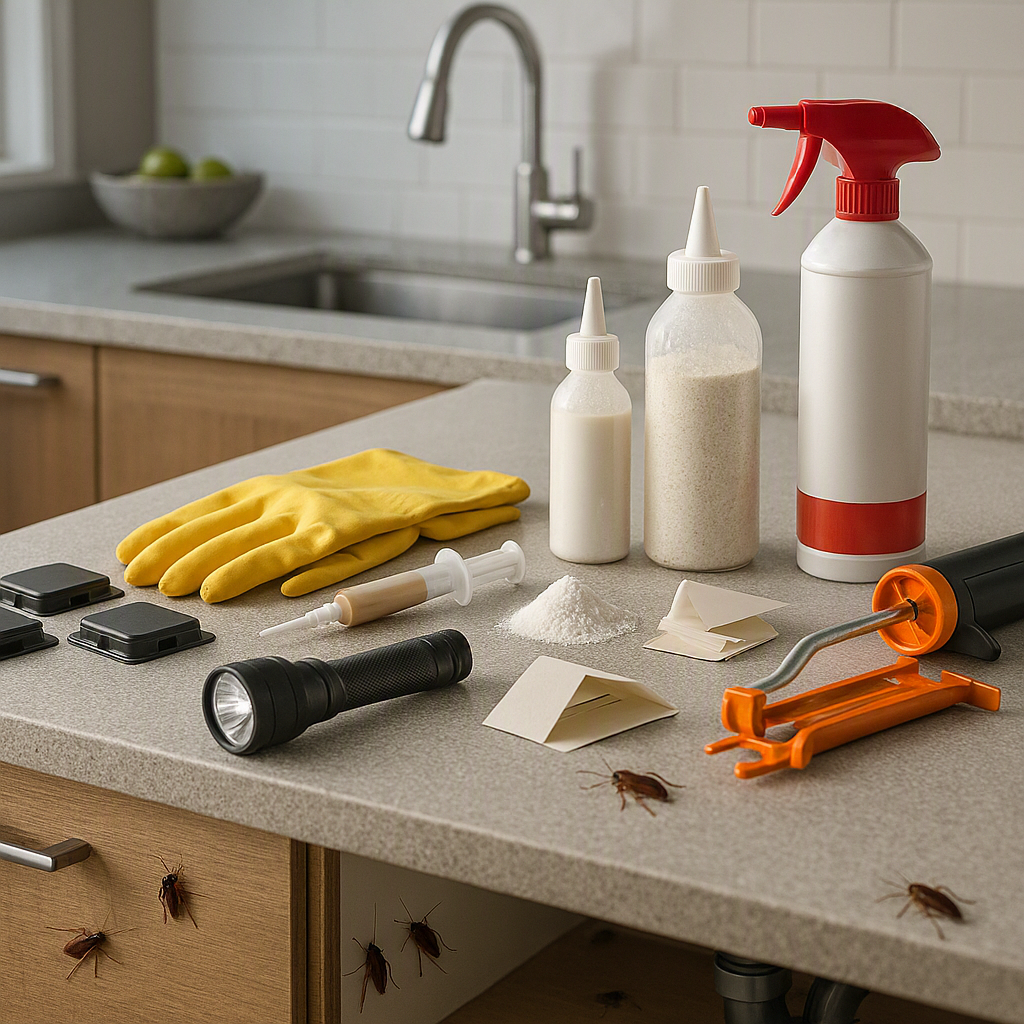
- Apply gel baits and stations — place pea-sized dots in cabinet corners and hinge lines so roaches carry the bait back to the nest.
- Monitor and follow up — place sticky traps to track activity, checking weekly and replacing bait every two weeks.
Best Cockroach Control Methods
Achieving a permanent way to get rid of cockroaches means choosing the right tool for the job:
| Method | Best For | Advantages | Disadvantages |
|---|---|---|---|
| Gel Baits | Kitchens, cabinets, electronic motors | Wipes out the deep nest, fits tight cracks | Dries out, needs food competitors removed |
| Bait Stations | Under sinks, bathrooms, pantries | Protects bait from dust, safer for kids/pets | Fixed placement, less appealing than fresh gel |
| Contact Sprays | Fast knockdown of single bugs | Immediate kill on contact | Scatters the nest, leaves toxic residue |
| Dust Insecticides | Wall voids, outlets, baseboard hollows | Effective for years if kept dry | Messy, unsafe if airborne |
| Boric Acid | Under appliances, dry utility voids | Cheap, long-lasting | Slow-acting, ineffective if damp |
| Sticky Traps | Tracking populations | Pesticide-free, shows travel lines | Can’t stop a large breeding nest |
| IPM Framework | Complete, long-term protection | Systemic prevention, low chemical use | Requires ongoing maintenance |
Natural Cockroach Control Methods
Diatomaceous earth (DE) cuts through a cockroach’s protective exoskeleton, causing dehydration within days. Apply it as a thin, nearly invisible layer inside dry wall voids and beneath appliances.
Essential oils like peppermint, rosemary, and lemongrass act as natural deterrents when mixed with water and sprayed, disrupting scent-tracking trails. These options work best as repellents or minor additions — if you’re trying to get rid of cockroaches from a large, embedded colony, natural methods alone won’t be enough.
Common Mistakes That Make Infestations Worse
Trying to get rid of cockroaches quickly often backfires. Watch out for these common mistakes:
- Using aerosol bug bombs — fumes don’t reach wall cracks and drive pests deeper or into neighboring units
- Mixing spray repellents with gel baits — the smell drives roaches away from the bait
- Leaving alternative food sources open — pet food or grease left out gives roaches an easy alternative to bait
How to Prevent Cockroaches from Returning
Once you get rid of cockroaches, keeping them out is a matter of consistent habits:
- Run a nightly sink sweep — wash dishes, dry sinks, and stopper drains
- De-clutter cardboard storage — replace boxes and paper bags with airtight plastic totes
- Maintain tight door sweeps — no gaps larger than 1/16 inch along exterior door thresholds
When to Contact a Professional
Call a professional if you see multiple German cockroach nymphs during daylight, face an infestation spreading through apartment walls, or your DIY bait hasn’t reduced the population after three weeks. Professionals have access to non-repellent liquid concentrates, IGRs, and dusting equipment for inaccessible wall cavities.
Frequently Asked Questions
What’s the single best way to get rid of cockroaches permanently? Combine strict kitchen sanitation with professional-grade, slow-acting gel baits so roaches carry the treatment back to the nest.
Why do I see more cockroaches after putting out fresh gel bait? That’s a sign it’s working — the bait’s attractants draw pests out of hiding to feed before they die.
Can cockroaches survive treatment by hiding inside electronics? Yes. They love the warmth from circuit boards in microwaves and TVs. Use bait stations or gel drops rather than liquid sprays there.
Do roaches spread dangerous medical conditions to humans? Yes. They carry E. coli and Salmonella, and their shed skins release allergens that can trigger asthma attacks.
How often should I replace indoor cockroach gel baits? Every 10 to 14 days, since exposed gel dries out and loses its appeal.
Will keeping my house cold stop a cockroach infestation? It slows breeding but won’t eliminate it — roaches cluster near warm appliances and pipes instead.
Can cockroaches crawl up through open sewer drains? Yes, especially American cockroaches. Fine mesh drain grates help block their path.
Does baking soda really kill cockroaches? Yes, if ingested, but it needs to be mixed with sugar to be appealing, making it far less efficient than commercial baits.
What does it mean if I see a cockroach during the day? It usually signals a severe, overcrowded infestation forcing subordinate roaches into the open.
Can an apartment resident solve a roach issue alone? It’s difficult, since roaches travel through shared utility lines between units — coordinated treatment across connected apartments works best.
Key Takeaways
- Avoid foggers — bug bombs scatter the nest and make control harder
- Use slow-acting baits — small gel drops let roaches carry treatment back to the nest
- Keep kitchens clean — clear grease, empty toaster trays, never leave pet food out overnight
- Seal entry paths — silicone caulk and steel wool block gaps around pipes and backsplashes
Following this process consistently is the most reliable way to get rid of cockroaches for good. For the full framework, see our DIY Pest Control guide, our Integrated Pest Management guide, our Signs of Pest Damage guide, or our Pest Control overview.
Sources: EPA: Cockroaches — Control and Identification · CDC: Cockroach Allergens and Health Risks · University of Nebraska-Lincoln Extension: German Cockroach Management · UC IPM: Cockroach Management Guidelines · NPIC: Using Boric Acid Safely