Mosquitoes are widely considered the world’s deadliest animals due to their unmatched ability to transmit harmful pathogens directly into human populations. Every year, millions of people worldwide are affected by global mosquito outbreaks, making these tiny vectors a permanent fixture on international public health watchlists.
Tracking mosquito-borne disease outbreaks is a complex challenge because infection rates fluctuate significantly depending on the region, local weather patterns, and seasonal changes. When shifting global temperatures align with poor environmental management, local vector populations expand rapidly, causing sharp spikes in infection rates. This comprehensive guide provides essential updates on emerging global transmission trends, outlines primary mosquito health risks, and details proven strategies to safeguard your household and travel itineraries.
What Are Mosquito-Borne Diseases?
Mosquito-borne illnesses are medical conditions caused by viruses, bacteria, or parasites that are transmitted through the bite of an infected mosquito. The insect acts as a biological vector; it picks up a pathogen while feeding on an infected person or animal and later passes that pathogen into a new host during its next blood meal.
Unlike simple mechanical transmission—where a pest merely transfers dirt or bacteria on its feet—mosquitoes carry the pathogen internally. Depending on the specific virus or parasite, the agent reproduces or matures within the mosquito’s salivary glands, ensuring it is injected straight into the human bloodstream during feeding.
Diseases Spread by Mosquitoes
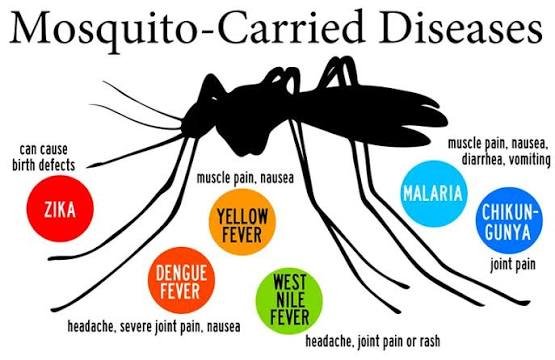
A small group of highly specialized mosquito species are responsible for the vast majority of human illnesses worldwide. The chart below details the characteristics of these dangerous diseases:
Global Vector-Borne Pathogen Analysis
| Disease | Regions Affected | Main Symptoms | Mosquito Species Involved | Prevention Methods |
| Dengue | Tropics/subtropics, expanding to temperate areas. | Severe joint pain, high fever, rash, bleeding. | Aedes aegypti & Aedes albopictus | Eliminate small puddles; apply DEET repellents. |
| Malaria | Sub-Saharan Africa, South Asia, parts of Latin America. | Chills, shaking, flu-like illness, severe anemia. | Anopheles species | Use insecticide-treated bed nets; take prophylaxis. |
| Zika Virus | Americas, Pacific Islands, Southeast Asia | Mild fever, red eyes, joint pain; causes birth defects. | Aedes aegypti & Aedes albopictus | Prevent container breeding; use structural screens. |
| Chikungunya | Africa, Asia, recent surges in the Americas. | Severe, debilitating joint pain, rash, headache. | Aedes aegypti & Aedes albopictus | Wear long sleeves; remove backyard leaf litter. |
| West Nile Virus | North America, Europe, Africa, Middle East. | Mostly asymptomatic; can cause fatal encephalitis. | Culex species | Keep gutters clear; repair torn window screens. |
| Yellow Fever | Tropical areas of Africa and Central/South America. | Jaundice, high fever, internal bleeding, liver failure. | Aedes aegypti & Haemagogus species | Receive the yellow fever vaccine; apply personal repellent. |
Why Outbreaks Are Increasing
Public health monitors report a steady rise in the frequency and geographical scope of mosquito-related epidemics. Several major factors drive this global trend:
- Climate Change: Warmer ambient temperatures accelerate the metabolic and reproductive rates of mosquitoes. Milder winters mean that invasive species can successfully overwinter in areas that used to be too cold, extending their transmission season.
- Rapid Urbanization: Unplanned urban expansion creates high-density human populations living close to poor drainage systems. This environment provides species like Aedes aegypti with an endless supply of artificial breeding containers right next to their primary food source: humans.
- International Travel: Fast international flights allow an asymptomatic person carrying a virus like dengue to travel across the globe in a matter of hours. If that person is bitten by local mosquitoes upon arrival, they can inadvertently spark a localized transmission cycle in a completely new region.
- Accumulated Standing Water: Poorly maintained infrastructure, neglected construction sites, and uncollected waste provide millions of tiny, water-filled pockets. These micro-habitats are perfect for supporting heavy mosquito egg production.
- Global Population Growth: As human populations encroach further into wild environments and tropical forests, people come into frequent contact with wild mosquito vectors, increasing the risk of zoonotic (animal-to-human) pathogen spillover.
Countries and Regions Frequently Affected
Tropical and subtropical zones bear the heaviest long-term burden of vector-borne illness. Sub-Saharan Africa remains the epicenter for global malaria outbreak cases, where the disease strains local healthcare systems and economies.
Simultaneously, Southeast Asia and Latin America frequently experience large-scale dengue outbreak cycles, often tied to heavy seasonal monsoon rains. However, these diseases are no longer restricted to traditional tropical zones. Public health agencies in both Southern Europe and the Southern United States now regularly issue seasonal local transmission warnings for West Nile Virus and Dengue, proving that these vectors are steadily moving into temperate climates.
How Public Health Agencies Respond
International and local health organizations utilize an Integrated Vector Management (IVM) protocol to counter growing disease surges:
1.Deploy Ovitraps and Track Viral Loads:Vector Monitoring.
Sanitarians place specialized egg-laying traps throughout communities to evaluate vector density and test captured adult specimens for active viral presence before an outbreak begins.
2.Initiate Target Spraying and Larviciding:Source Control.
Municipal crews apply biological larvicides to storm drains and marshes, combined with ultra-low volume (ULV) truck mounted misting to reduce adult populations during an active health alert.
3.Issue Coordinated Alerts and Health Guidance:Public Response.
Agencies send real-time warnings to local hospitals, distribute insecticide-treated bed nets in high-risk zones, and share public safety information to help homeowners clear breeding sites.
How Homeowners Can Reduce Mosquito Risks
Implementing a comprehensive program of mosquito prevention around your property is your best personal defense against vector-borne illness.
- Tip, Toss, and Drain Standing Water: Walk your property every three days and empty water from flowerpots, tarps, old tires, pet bowls, and toys. Mosquitoes need less than a tablespoon of water to complete their life cycle.
- Apply Microbial Larvicides to Permanent Water Features: If you have birdbaths, unmanaged ponds, or rain barrels, treat them monthly with eco-friendly larvicide rings containing Bacillus thuringiensis israelensis (BTI) to eliminate larvae without harming wildlife.
- Keep Gutters Clean and Clear: Clear out compacted fall leaves and debris from your roof gutters. Clogged channels trap rainwater, creating an elevated, invisible nursery for mosquitoes right along your roofline.
- Maintain Window and Door Screens: Inspect all exterior window and door screens for small tears or gaps. Repair holes promptly using mesh patches to block evening-feeding mosquitoes from sneaking indoors.
- Trim Tall Grass and Dense Vegetation: Keep your lawn mowed and trim back thick bushes. Adult mosquitoes spend the hot daylight hours resting in shaded, humid foliage, so keeping it trimmed reduces their daytime shelter.
Travel Safety Tips During Outbreaks
Traveling into regions experiencing active mosquito disease news alerts requires deliberate preparation to minimize your exposure:
- Research Local Outbreak Advisories: Check up-to-date travel health notices from agencies like the WHO or CDC before departure to see if prophylactic medication or vaccines are recommended for your destination.
- Use EPA-Registered Repellents: Apply personal insect repellents containing active ingredients proven to provide long-lasting protection, such as DEET, Picaridin, or Oil of Lemon Eucalyptus (OLE). Always follow label application instructions.
- Treat Your Gear with Permethrin: Spray your hiking clothes, boots, backpacks, and camping tents with 0.5% permethrin spray. This specialized fabric treatment repels and kills mosquitoes on contact through multiple wash cycles.
- Choose Air-Conditioned Lodging: Opt to stay in hotels or rentals that feature functional air conditioning and well-sealed windows rather than open-air rooms, keeping flying insects out of your sleeping space.
- Sleep Under a Treated Bed Net: If you are staying in rural or rustic settings within active malaria zones, always sleep beneath an insect-treated bed net tucked securely under your mattress.
Frequently Asked Questions
Which mosquito species is responsible for spreading the Dengue virus?
The Dengue virus is primarily spread by the bite of an infected Aedes aegypti mosquito, and to a lesser extent by Aedes albopictus (the Asian tiger mosquito). These species are distinct because they bite primarily during the daytime.
Do all types of mosquitoes bite humans and transmit dangerous diseases?
No. Out of more than 3,500 known species of mosquitoes worldwide, only a small percentage bite humans. Furthermore, it is exclusively the female mosquito that takes a blood meal, using the protein to develop her eggs.
How does an insect repellent like DEET actually protect my skin?
DEET does not kill mosquitoes. Instead, it works by masking your natural human odors, such as carbon dioxide and lactic acid, confusing the mosquito’s sensory receptors so they cannot recognize you as a food source.
Can mosquito-borne viruses be passed directly from person to person?
No. The vast majority of these viruses cannot be passed through casual human contact, coughing, or touching. Transmission requires a mosquito vector to bite an infected person and then later bite a healthy individual.
What is the primary difference between Dengue and Malaria?
Dengue is caused by a virus and is transmitted by daytime-biting Aedes mosquitoes, mostly in urban settings. Malaria is caused by a microscopic parasite and is spread by nighttime-biting Anopheles mosquitoes, often in rural regions.
Can a mosquito transmit the HIV virus through a blood bite?
No. Mosquitoes cannot transmit HIV. The virus is digested within the mosquito’s stomach rather than multiplying inside its body, and mosquitoes do not inject blood from a previous host into a new one.
How quickly do symptoms typically appear after an infected bite?
The incubation period varies by pathogen. Symptoms for viral infections like Dengue or Zika usually surface 3 to 14 days after a bite, while Malaria symptoms can take anywhere from a week to several months to appear.
Are natural home remedies like citronella candles effective for outbreaks?
Citronella candles provide mild, localized relief directly within their smoke plume, but they do not offer reliable protection during an active outbreak. For dependable defense, rely on EPA-registered repellents like DEET or Picaridin.
Key Takeaways
- Day and Night Monitoring: Different mosquito species bite at different hours; protect yourself around the clock with proper clothing and repellents.
- Eliminate Micro-Water Sources: Drain all standing water around your home weekly to destroy potential vector breeding grounds.
- Select Registered Repellents: Rely on proven, EPA-registered active ingredients like DEET or Picaridin for dependable protection.
- Stay Informed When Traveling: Check international public health updates and secure appropriate vaccinations before visiting outbreak zones.
Suggested Internal Linking Opportunities
- Link to your primary master framework: Pest Control: The Complete Homeowner’s Guide to Safe and Effective Pest Management (Context: “…making these tiny vectors a permanent fixture on international…”)
- Link to your core inspection framework: Signs of Pest Damage: How to Identify Damage Before It Gets Worse (Context: “…look for hidden signs of mosquito breeding activity in overlooked…”)
- Link to your comprehensive DIY primer: DIY Pest Control: A Complete Homeowner’s Guide (Context: “…implementing a comprehensive program of mosquito prevention around your…”)
- Link to your dedicated yard health resource: Outdoor Pests: Common Backyard Pests and How to Control Them (Context: “…adult mosquitoes spend the hot daylight hours resting in shaded, humid…”)
External Authoritative References
- World Health Organization (WHO): Vector-Borne Diseases Hub
- Centers for Disease Control and Prevention (CDC): Mosquito-Borne Illness Information
- European Centre for Disease Prevention and Control (ECDC): Disease Vectors Dashboard
- Pan American Health Organization (PAHO): Dengue and Chikungunya Alerts
- National Institutes of Health (NIH): Vector Biology and Infectious Disease Research