Over the past two decades, metropolitan areas across the globe have witnessed an alarming biological comeback. Bed bugs, nearly eradicated in developed nations during the mid-20th century, have firmly re-established themselves in major urban centers as part of a global bed bug resurgence.
This modern bed bug resurgence has transformed these insects from a historical footnote into a pressing public health and economic issue. Because these nocturnal parasites adapt rapidly to human environments, understanding how infestations take root has become essential for anyone living in or traveling through densely populated areas.
Table of Contents
What Is the Bed Bug Resurgence?
The term refers to the rapid, widespread return of the common bed bug (Cimex lectularius) to homes, hotels, and public spaces where they were once rare. After World War II, widespread use of synthetic insecticides like DDT cleared these pests out of most major cities.
By the late 1990s and early 2000s, pest control operators began reporting a sharp spike in calls. Today, the bed bug resurgence shows no signs of slowing down, fueled by a mix of human mobility and insect evolution.
Why Bed Bugs Are Making a Comeback
Several intersecting factors are driving the bed bug resurgence in urban environments:
- Increased international travel — bed bugs are expert hitchhikers, crawling into luggage seams in one country and unpacking in another within hours
- Urban population growth — dense living gives bed bugs a continuous, closely packed supply of hosts
- Widespread insecticide resistance — decades of exposure have made bed bugs highly resistant to common over-the-counter pesticides like pyrethroids
- Shared housing and apartment buildings — untreated infestations spread through electrical conduits, wall voids, and plumbing chases
- The second-hand furniture market — thrifted mattresses and couches can harbor hidden bugs or eggs
- Frequent movement of luggage and belongings — daily transit through hubs, workplaces, and schools keeps bugs circulating
Cities and Places Most Commonly Affected
The bed bug resurgence isn’t limited to homes — these insects can survive anywhere humans sit or rest for extended periods:
- Hotels and motels — high guest turnover makes them a persistent threat across all price ranges
- Apartment complexes — shared walls and utilities make multi-family housing especially difficult to manage
- Dormitories and student housing — seasonal moves create ideal conditions for transmission
- Public transportation — fabric seats on trains, buses, and planes can carry bugs to commuters
- Shelters and group homes — limited pest budgets and constant movement of residents cause recurring issues
- Office buildings — bugs rarely breed there but can drop off bags into cubicles and breakrooms
Signs of a Bed Bug Infestation
Early detection keeps removal costs down and prevents a building-wide outbreak:
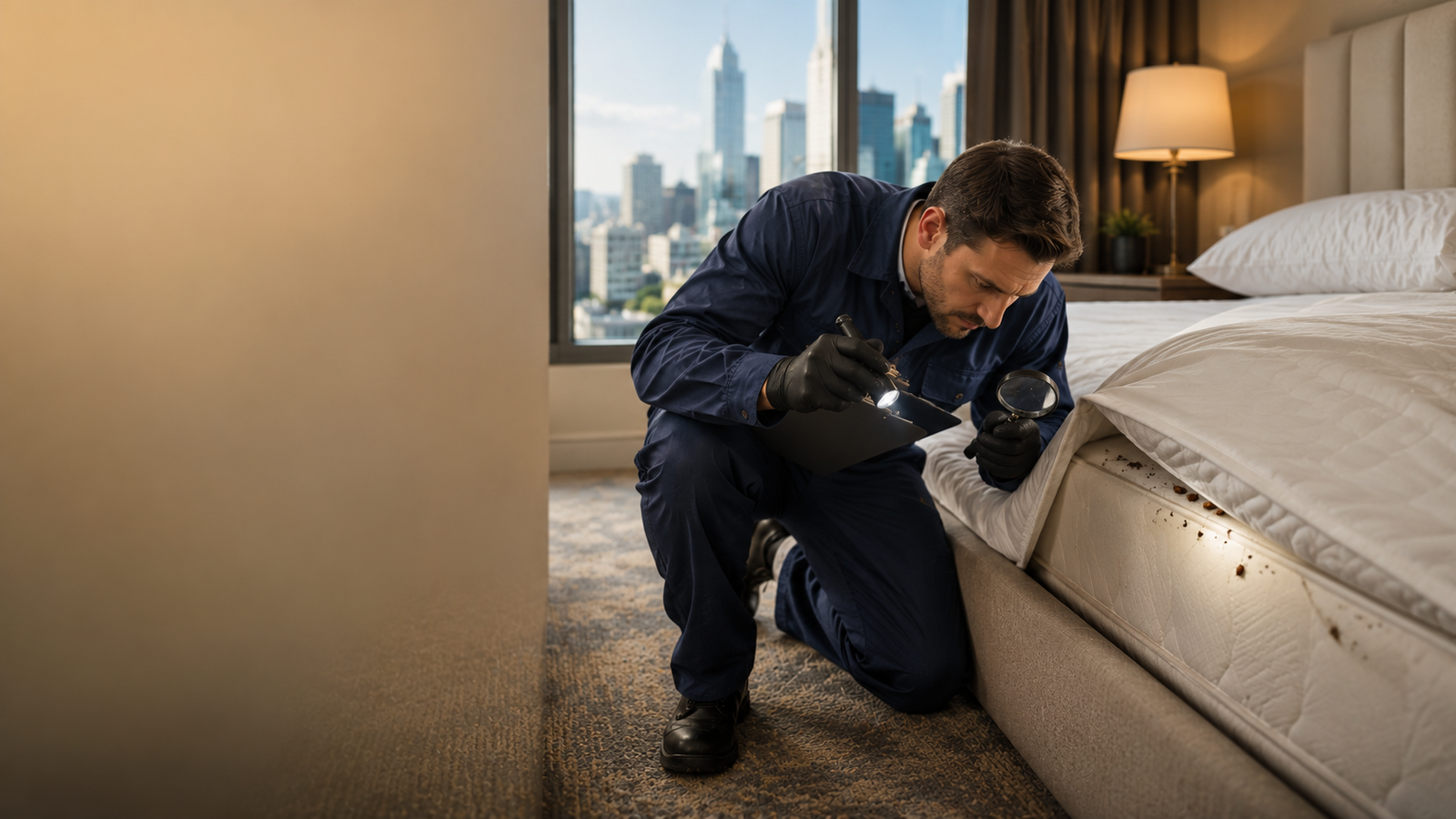
- Live insects in seams — reddish-brown, oval, apple-seed-sized bugs in mattress welts and box spring corners
- Small dark fecal spots — digested blood droppings on sheets and pillows that smudge when wiped
- Discarded cast skins — translucent, golden-brown shells shed as nymphs mature
- Unexplained red welts — clusters or lines of itchy bites, especially on areas exposed while sleeping
Health and Economic Impact
The bed bug resurgence carries real costs beyond the bite itself. These insects aren’t known to transmit infectious diseases, but their impact is still significant. Intense itching can lead to secondary skin infections if scratched heavily, and dealing with an infestation can trigger anxiety, insomnia, and emotional stress.
Financially, professional treatments are complex and expensive, often requiring specialized heat equipment or multiple chemical applications. For hospitality businesses, a public report of bed bugs can mean lost revenue and long-term reputation damage.
How Professionals Respond
Modern pest management companies use data-driven Integrated Pest Management systems:
- Conduct accurate property inspections — visual checks or certified scent-detection canines pinpoint hiding spots.
- Deploy targeted eradication treatments — commercial heaters raise room temperature to a lethal 122°F, or precise non-repellent chemicals treat cracks and crevices.
- Install encasements and interceptor traps — bite-proof mattress encasements and interceptor cups catch migrating bugs and monitor activity.
How Homeowners and Travelers Can Protect Themselves
- Inspect your hotel room immediately — keep luggage off the bed and carpet, check the mattress and headboard for spots or live bugs
- Isolate your travel luggage — seal clothing in zip bags, unpack directly into the wash, and store empty luggage in a sealed space
- Wash and dry travel clothes on high heat — a hot dryer cycle for at least 30 minutes kills all life stages, including eggs
- Examine used furniture carefully — never bring curbside mattresses or couches home; inspect second-hand wood items with a flashlight
- De-clutter your sleeping areas — fewer hiding spots make inspections far more effective
Frequently Asked Questions
Do bed bugs only live in dirty or unkempt homes? No. They feed exclusively on blood and can thrive anywhere, from luxury hotels to cluttered apartments, as long as a host is nearby.
Can bed bugs fly or jump from the floor onto my bed? No. They have no wings and can’t jump — they move strictly by crawling.
How long can an adult bed bug survive without a blood meal? Around two to five months at typical indoor temperatures, longer in cooler conditions.
Why didn’t I feel it when the bed bug bit me during the night? Their saliva contains a natural anesthetic and anticoagulant, numbing the area so you don’t wake up.
Are over-the-counter bug bombs effective for clearing an infestation? No. The mist doesn’t reach hidden cracks, and the chemicals often cause bugs to scatter deeper into walls.
How can I distinguish a bed bug bite from a mosquito bite? Bed bug bites often cluster in lines of three or four, while mosquito bites tend to be isolated and swell faster.
Can my family pets bring travel bed bugs into the house? They may occasionally bite pets but don’t live or breed in fur — they prefer nearby furniture instead.
Can extreme cold weather kill bed bugs if I put my things outside? It’s possible but unreliable — it takes a constant temperature below 0°F for at least four days to penetrate cushions and kill eggs.
Key Takeaways
- Travel smart — inspect hotel bedding before unpacking and keep bags off the floor
- Apply high heat — a hot dryer for 30 minutes eliminates hidden bugs and eggs
- Avoid free furniture — skip curbside mattresses and thoroughly check second-hand purchases
- Act early — contact a licensed professional the moment you spot dark spots or skin welts
Understanding what’s driving the bed bug resurgence — and taking these prevention steps seriously — is the best way to keep your home and travels bug-free. For related reading, see our Pest Control overview, our Signs of Pest Damage guide, our DIY Pest Control guide, or our Outdoor Pests guide.
Sources: EPA: Bed Bug Information Clearinghouse · CDC: Bed Bugs Frequently Asked Questions · WHO: Vector Biology and Control Resources · Cornell University Diagnostic Laboratory: Cimex lectularius · University of Kentucky Entomology: Bed Bug Advice