The kitchen is the heart of the home, but it’s also the most vulnerable area for insect and rodent invasions. Because kitchens concentrate food, water, and warmth into a single space, they create the ultimate survival zone for kitchen pests.
Dealing with kitchen pests requires an approach that prioritizes food safety while aggressively targeting their vulnerabilities. Proper prevention protects your family from foodborne illness and stops minor invasions from turning into deep-set infestations.
Table of Contents
Why Kitchens Attract Pests
Even a thoroughly swept kitchen holds hidden micro-sources of sustenance. A film of grease behind the stove, condensation on a refrigerator line, or spilled flour in a dark pantry all represent resource caches. Combined with heat from appliance motors, kitchens provide the exact humidity, nutrition, and shelter kitchen pests need to nest and breed rapidly.
Most Common Kitchen Pests
A select group of specialized insects, beetles, and rodents are known as primary food pests:
| Pest | What Attracts It | Health Risks | Best Control Method |
|---|---|---|---|
| Cockroaches | Grease, food residue, damp pipes | Asthma triggers, Salmonella, E. coli | Non-repellent gel baits in cabinet hinges |
| Ants | Sugars, syrups, pet food crumbs | Surface contamination, bacteria vector | Slow-acting borate baits along trails |
| Pantry Moths | Open grains, flour, dry pet food | Webbing and larval feces in dry goods | Discard infested grains, pheromone traps |
| Flour Beetles | Damaged grains, cracked corn | Ruined food quality, odors | Freeze incoming grains, clean crevices |
| Fruit Flies | Overripe fruit, damp sink drains | Bacteria transfer to fresh food | Vinegar traps, scrub drain slime |
| House Flies | Exposed garbage, rotting meat | Transmit 60+ pathogens | Tight door screens, UV light traps |
| Rodents | Exposed food bags, entry points | Hantavirus, Leptospirosis, chewed wires | Snap traps in locked cabinets |
| Silverfish | Cardboard, paper linings, starch | Ruined wallpaper, packaging, books | Dehumidifier, plastic storage bins |
Signs of a Kitchen Pest Infestation
Since many kitchen pests operate at night, watch for these subtle indicators:
- Pantry webbing or clumping — fine silk threads or grain clumps signal active moth larvae
- Fecal smear marks or specks — dark specks along cabinet corners point to cockroaches
- Musky, pungent odors — an oily scent under the sink often signals a dense infestation
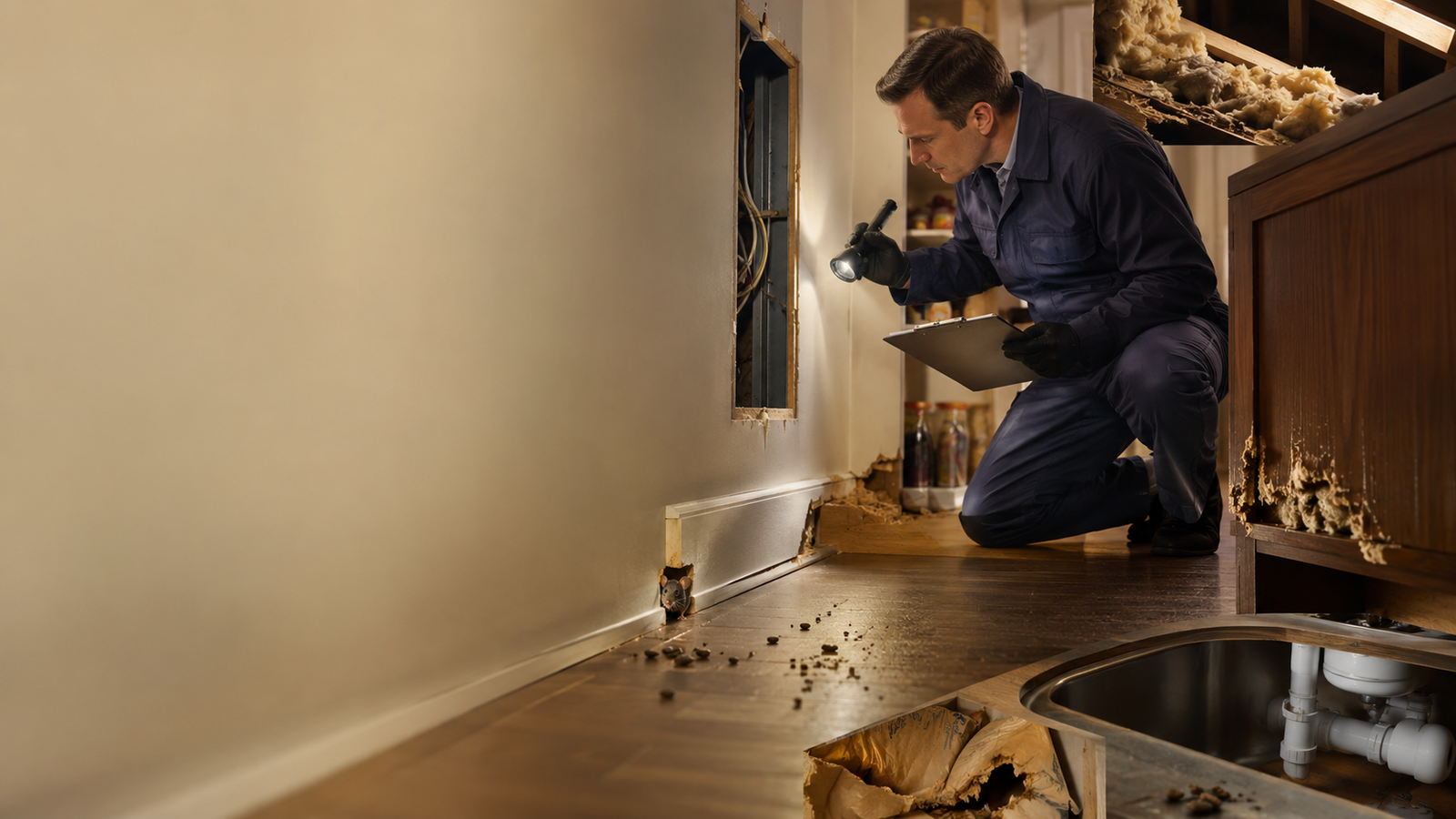
- Fine wood shavings or debris — piles near baseboards point to active rodent nesting
How to Identify Kitchen Pests
- Monitor appliance bases — check under the stove and refrigerator with a flashlight
- Deploy sticky monitor boards — place flat against walls near the trash or pantry
- Use a flashlight in dead spaces — check where countertops meet drywall or pipes pass through cabinets
- Identify larvae vs. adults — a tiny white worm on the ceiling is a pantry moth larva, a key clue to the source
How to Prevent Kitchen Pests
- Store food in airtight containers — glass, plastic, or stainless steel with rubber-sealed lids
- Clean spills immediately — honey drips, grease splatters, and crumbs draw pests fast
- Empty the trash regularly — a tight, step-activated lid and monthly bin cleaning
- Fix plumbing leaks under sinks — eliminates the water source roaches and silverfish need
- Seal structural cracks and gaps — silicone caulk and copper mesh around pipes
- Clean behind and beneath appliances — twice a year to clear crumbs, dust, and grease
- Keep countertops clean — wipe nightly with a mild disinfectant or vinegar solution
- Inspect groceries before storing — check packaging for holes or webbing before it hits your cupboards
Best Kitchen Pest Control Methods
- Encase and starve out the nest — seal food and scrub away grease and moisture to force pests into the open.
- Deploy slow-acting pesticide baits — gel baits or bait stations in cracks and pipe cutouts.
- Utilize non-chemical traps indoors — pheromone traps for moths, glue boards or snap traps for crawling pests.
Safe Pest Control Around Food Preparation Areas
Never use broad-spectrum aerosol sprays, bug bombs, or contact sprays on or above countertops, prep islands, or dining tables — chemical mist settling onto surfaces risks direct food contamination.
Instead, rely on targeted baiting deep inside structural cracks, behind cabinet hinges, or in electrical wall voids where food, kids, and pets won’t come into contact with the product. Use non-toxic mechanical traps like vinegar traps for fruit flies or pheromone cards for pantry moths on open food storage shelves.
Common Mistakes That Invite Kitchen Pests
- Using bug bombs or foggers — pushes residue onto plates while doing nothing to reach pests inside wall voids
- Leaving pet food bowls out overnight — a reliable feast for mice, rats, and foraging ants
- Storing excess paper bags and cardboard — starches and glues in packaging feed roaches and silverfish
When to Contact a Professional
Call a professional if you’re wiping away hundreds of ants daily with no decline, spot large numbers of German cockroaches during the afternoon, or find extensive mouse droppings in lower cabinets. Professionals have inspection tools and commercial-grade baits to clear deep infestations without contaminating food areas.
Frequently Asked Questions
Why do I suddenly have fruit flies when my kitchen is perfectly clean? They often hitchhike in as eggs on store-bought produce, then breed rapidly in damp drains or garbage disposals.
How do pantry moths manage to get inside factory-sealed boxes? Their larvae have sharp mouthparts that chew through thin cardboard and plastic packaging to reach grains.
Is it safe to use borax or boric acid powder on kitchen countertops? No. Only apply it inside hidden cracks or wall voids where it can’t blow onto food or dishes.
What’s the most effective way to eliminate fruit flies in kitchen drains? Scrub the pipe with a stiff brush and biological drain gel to strip away the organic slime where eggs are laid.
Why are ants ignoring the sweet sugar baits I set out for them? Colonies shift nutritional needs seasonally — try protein or fat-based baits, especially in early spring.
Can flour beetles bite or sting humans? No, they’re harmless to people and pets, but they ruin and contaminate dry baking goods.
How long can German cockroaches survive inside a dry, clean kitchen? Up to a month without food, but only about a week without any water source.
Should I throw away all my food if I find a pantry moth infestation? No — discard items with active webbing or larvae, and freeze uninfested packages for 4 days to kill hidden eggs.
Why do roaches keep coming back even after I spray the baseboards? Sprays act as a temporary repellent that drives roaches deeper. Slow-acting baits reach the hidden nest instead.
Do bay leaves placed inside pantries actually repel kitchen pests? They have a mild deterrent scent for some moths and weevils but won’t stop an infestation on their own.
Key Takeaways
- Isolate dry foods — shift everything from boxes and bags into airtight containers
- Keep appliance zones clean — pull out the stove and fridge twice a year to clear grease and crumbs
- Use baits wisely — enclosed gel baits and stations instead of aerosol sprays near food prep
- Eliminate access to water — fix leaks and dry sinks before bed to cut off what pests need
Managing kitchen pests comes down to sanitation, sealed food storage, and targeted baiting instead of broad sprays. For related reading, see our Pest Control overview, our Signs of Pest Damage guide, our DIY Pest Control guide, or our Get Rid of Cockroaches guide.
Sources: EPA: Maintaining a Pest-Free Kitchen · CDC: Food Safety and Pest Contamination · USDA: Inspection Guidelines for Pantry Pests · University of Nebraska-Lincoln Extension: Pantry and Food Pests · Colorado State University Extension: Kitchen Insects